-

The Global Middle-Class Squeeze: When Progress Stops Feeling Like Progress
The Class That Made Modern Capitalism Stable The great economic achievement of the twentieth century was not simply mass production. It was the creation of mass economic security. Industrialisation produced factories, but rising wages, affordable housing, public education, pensions, healthcare systems and expanding consumer credit gradually created something politically even…
-
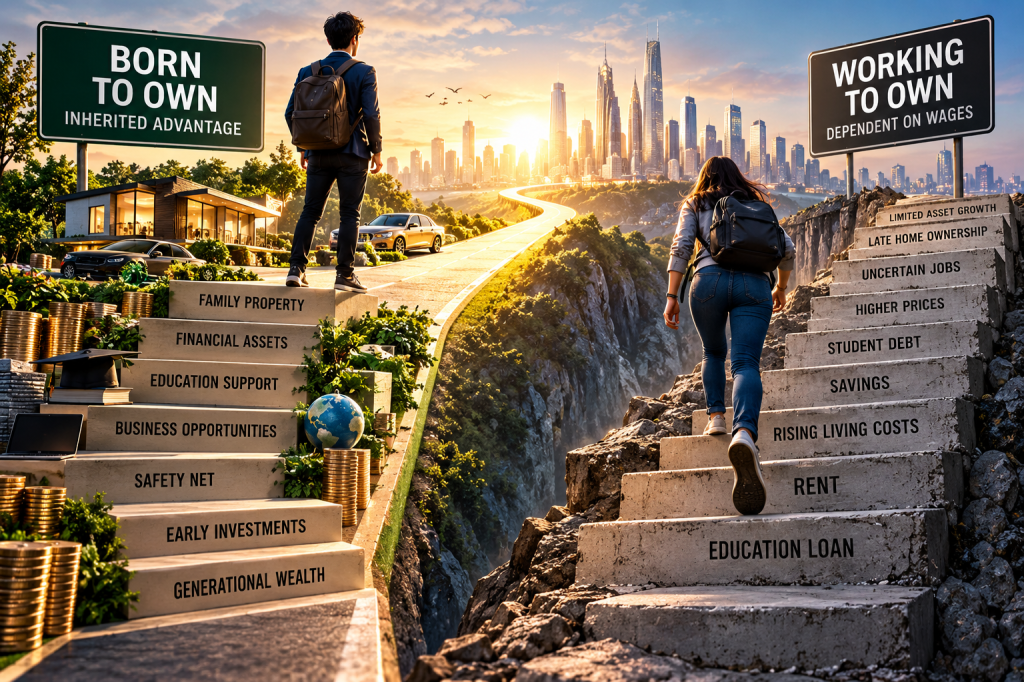
When Birth Begins to Matter More Than Work
The old economic promise was simple: work, save, progress. The emerging economy is quietly rewriting it: inherit, own, appreciate. For much of the twentieth century, the idea of economic progress was closely connected with employment. Education improved the probability of getting a better job; a better job produced a higher…
-

When the Digital Economy Meets the Invisible Economy
The Paradox of Progress — A country can have artificial intelligence, instant digital payments and world-class technology companies while millions of its workers still operate almost invisibly. This is one of the great contradictions of the twenty-first-century economy. A street vendor may receive payment through a QR code but have…
-
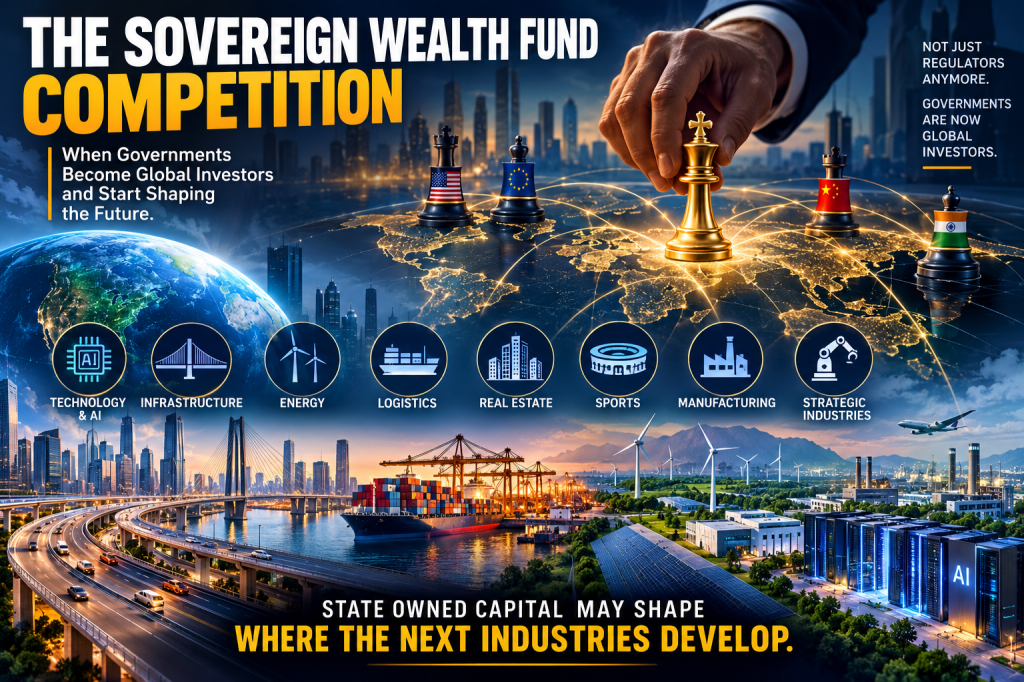
When Governments Become Global Investors
From Regulating Capital to Owning It For much of modern economic history, governments were expected to create the rules while private companies supplied the capital. The state taxed, regulated, built basic infrastructure and occasionally rescued industries during crises. Private investors decided where factories, technologies and commercial networks would grow. That…
-
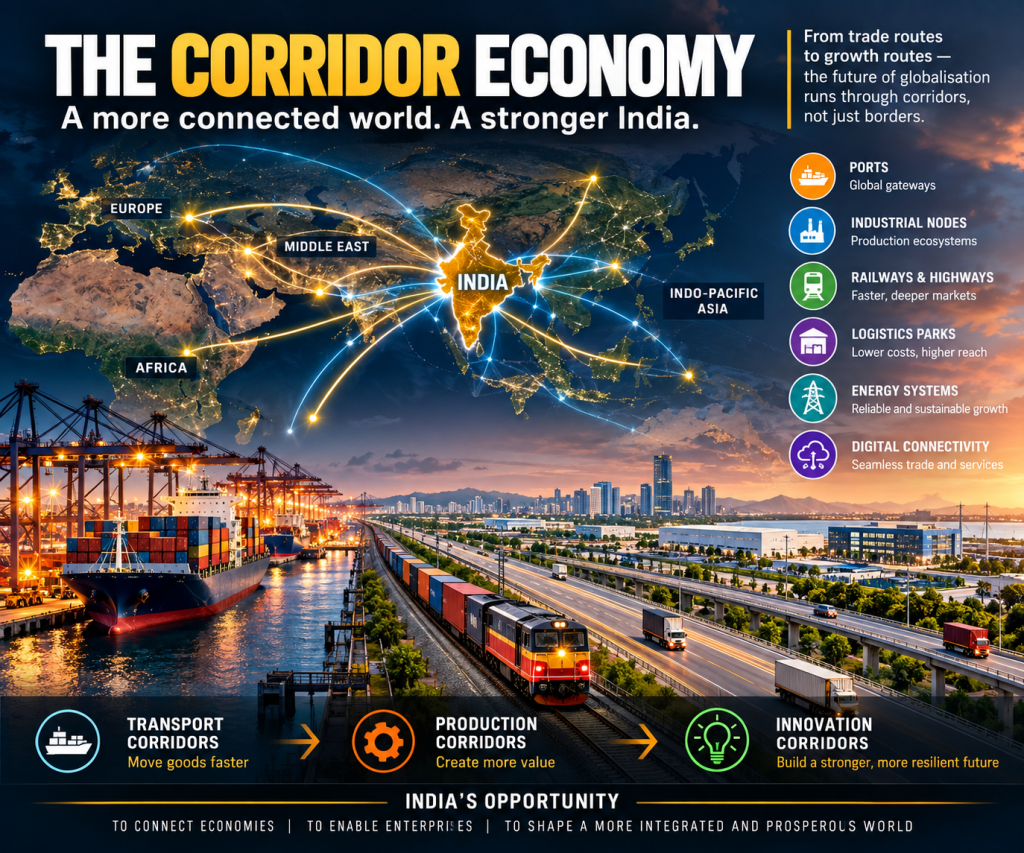
The Corridor Economy: When Geography Becomes Economic Infrastructure
For several decades, globalisation encouraged us to imagine that geography was becoming less important. Containers reduced transport costs, digital communication compressed distance, multinational firms spread production across continents, and trade agreements lowered borders. The dominant idea was simple: capital would go where costs were lowest and goods would move wherever…
-

The Most Important Semiconductor Factory May Build No Chips
Moving from the chip to the machines behind the chip Industrial history carries a lesson that is easy to overlook: countries rarely become manufacturing powers simply by producing more finished goods. They become powerful when they learn to build, improve and maintain the machines that make those goods. Britain’s industrial…
-
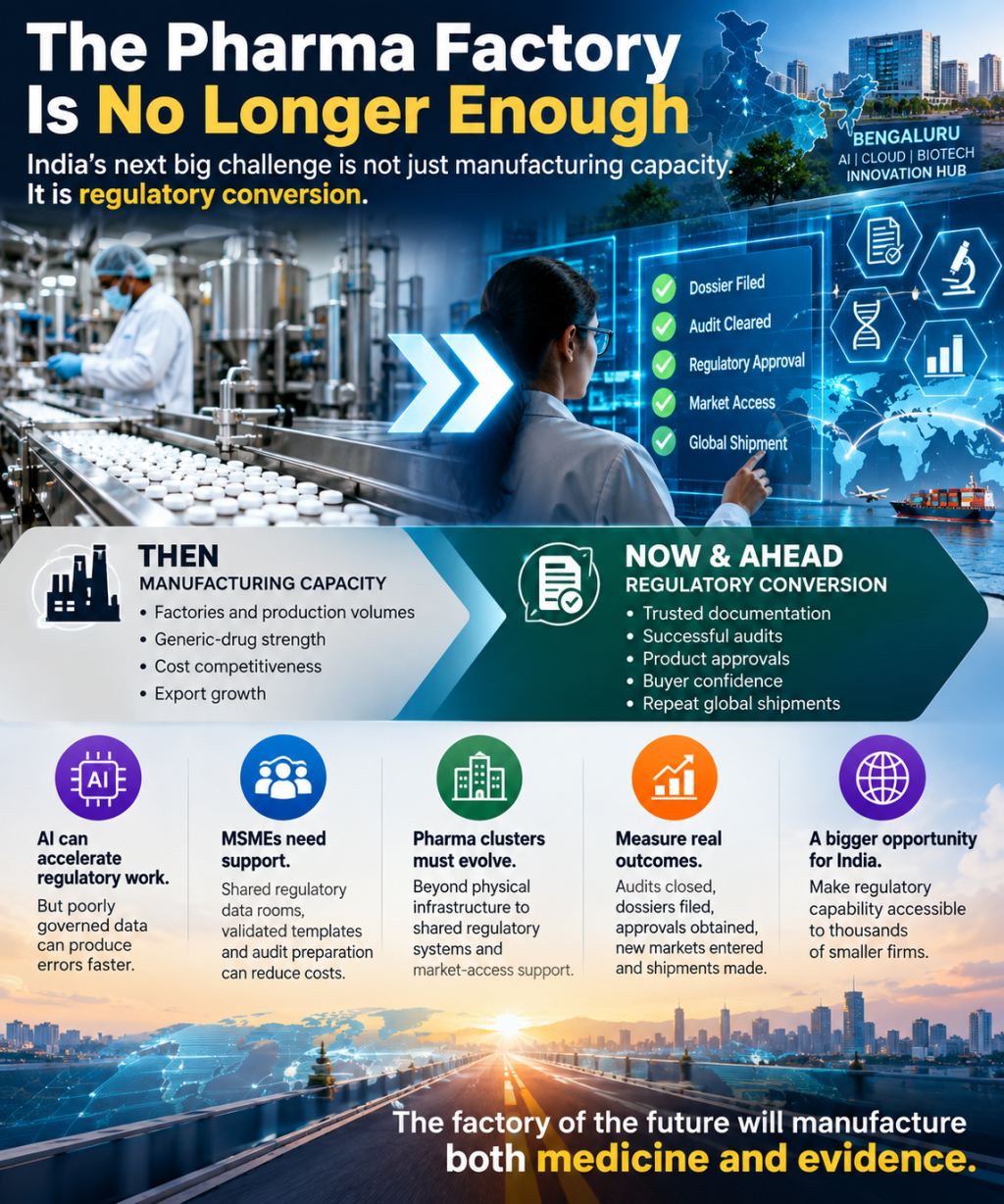
The Pharma Factory Is No Longer Enough: India’s Next Battle Is Regulatory Conversion
A Quiet Week Can Reveal a Bigger Change — Sometimes the absence of a major policy announcement is more useful than another headline. India’s pharmaceutical and biotechnology sector has spent decades thinking about industrial strength largely through factories, installed capacity, production volumes and exports. That model created enormous capabilities. But…
-

The Price of Being Ordinary
A jewellery market can sparkle while becoming harder to enter. More spending does not necessarily mean more buyers, and stronger retail sales do not automatically create opportunities for every producer. For Indian heritage jewellery exporters, the dangerous assumption is that a rich craft tradition will find its own customers. Heritage…
-
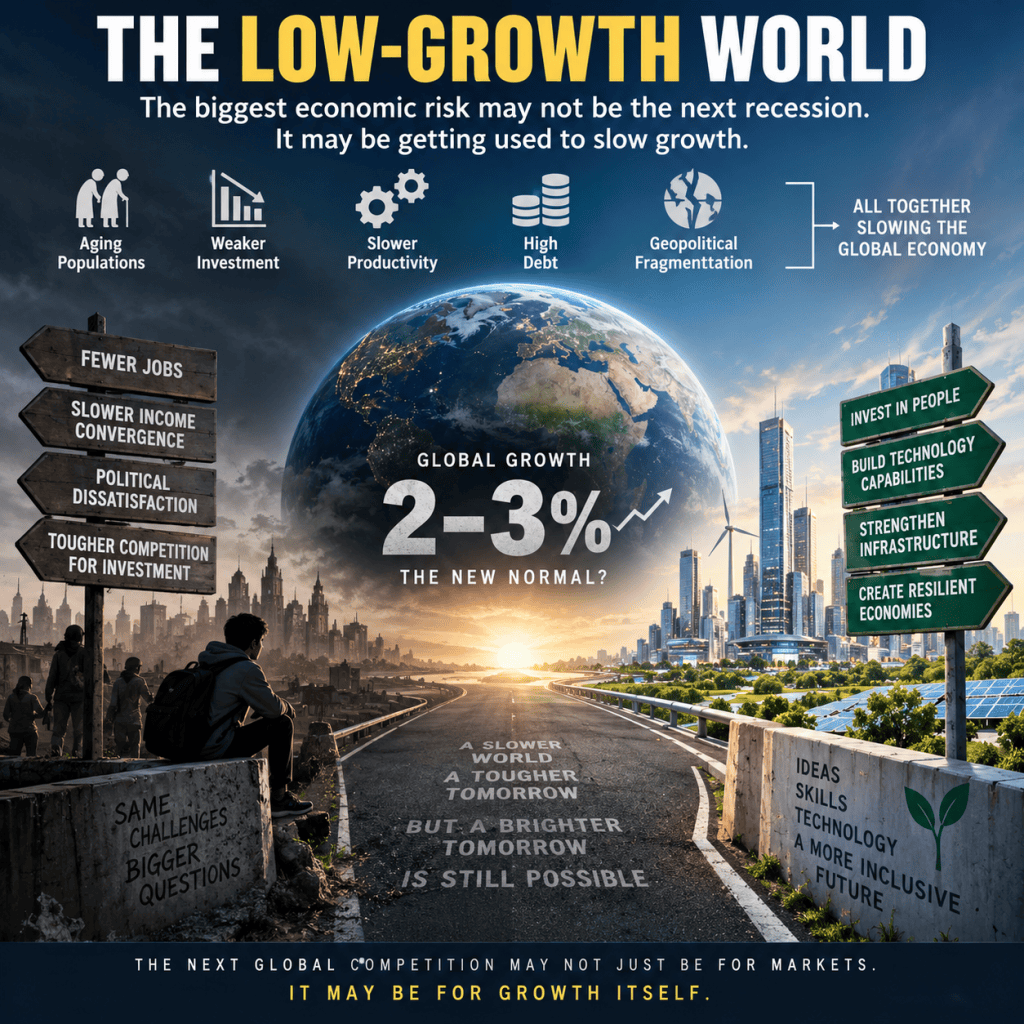
The Low-Growth World: When 2–3 Percent Becomes the New Normal
The danger is not recession. It is normality. For much of modern economic history, weak growth was treated as a temporary problem. Economies slowed, governments responded, interest rates changed, investment returned and another expansion began. The more uncomfortable possibility facing the world today is different. What if slow growth is…
-
The Price of Uncertainty: The Export Cost That Never Appears in the Statistics
The Invisible Export Loss — Trade statistics are good at counting what crosses a border. They are much weaker at counting what almost crossed it. A container that leaves an Indian port becomes an export. An order abandoned three weeks earlier because the exporter could not confidently quote a price,…
-
Subscribe
Subscribed
Have a WordPress.com account? Log in now.

