Category: regional development
-
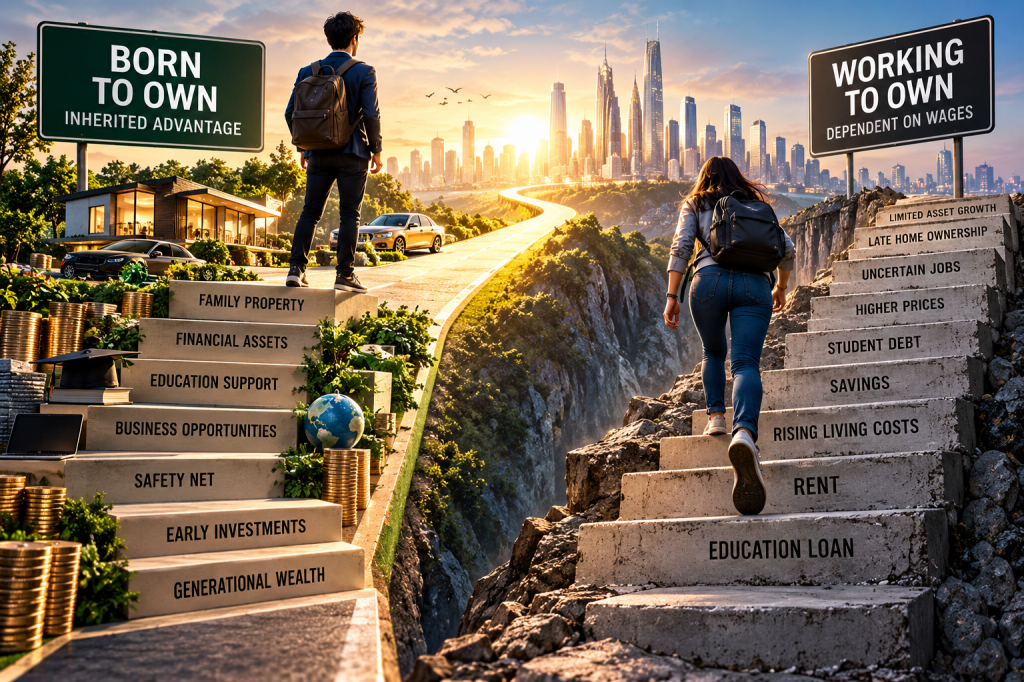
When Birth Begins to Matter More Than Work
The old economic promise was simple: work, save, progress. The emerging economy is quietly rewriting it: inherit, own, appreciate. For much of the twentieth century, the idea of economic progress was closely connected with employment. Education improved the probability of getting a better job; a better job produced a higher…
-
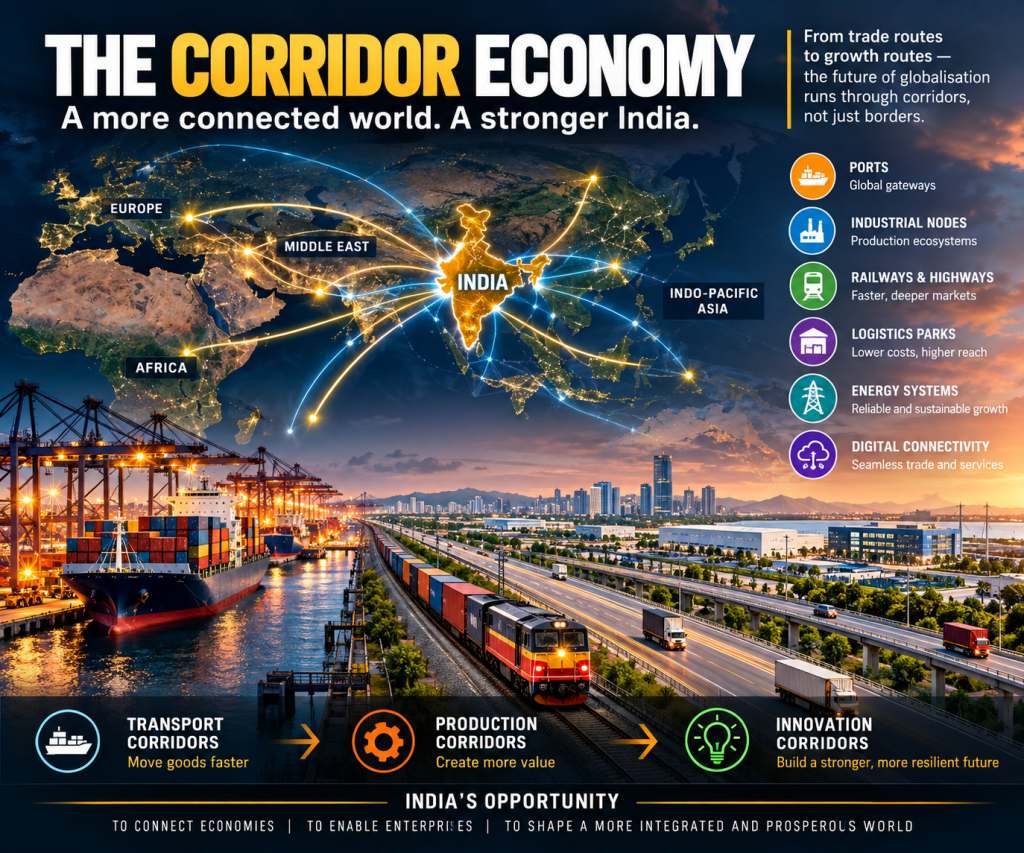
The Corridor Economy: When Geography Becomes Economic Infrastructure
For several decades, globalisation encouraged us to imagine that geography was becoming less important. Containers reduced transport costs, digital communication compressed distance, multinational firms spread production across continents, and trade agreements lowered borders. The dominant idea was simple: capital would go where costs were lowest and goods would move wherever…
-
The Developing-Country Convergence Crisis
For much of the modern development story, there was one powerful assumption: poorer countries would eventually become richer. They would industrialise, export, attract investment, acquire technology, improve productivity and gradually close the income gap with advanced economies. Globalisation was expected to make this process faster. That assumption is becoming much…
-
When Everyone Needs the Facility but No One Builds It
The Infrastructure That Exists in Everyone’s Interest—and No One’s Budget One of the deepest weaknesses of industrial development is created not by a shortage of entrepreneurs, markets or technology, but by an uncomfortable economic contradiction. A group of businesses may urgently need a testing laboratory, research centre, common effluent treatment…
-
The Regional Inequality Crisis: One Nation, Many Speeds
The Regional Inequality Crisis India is often described as the fastest-growing major economy in the world. The headline sounds impressive. The statistics look encouraging. New highways are being built, airports are expanding, digital payments are transforming commerce, and manufacturing ambitions are rising. Yet beneath this national story lies a more…
-
The Cost of Missing Vision, Strategy and Policy in Indian Economic Development
India has often achieved growth despite policy complexity, institutional fragmentation, and strategic inconsistency rather than because of a fully aligned long-term economic vision. The country has repeatedly demonstrated entrepreneurial energy, demographic strength, and technological adaptability, yet many opportunities have either arrived late, remained incomplete, or failed to scale due to…
-
Will Southern India One Day Contribute 50 Percent of India’s GDP
India is gradually witnessing the emergence of a new economic geography where growth is increasingly concentrating in a few high-productivity regions. Among these, the southern states of Telangana, Karnataka, Tamil Nadu, and Kerala are becoming central pillars of India’s economic transformation. Together, these states currently contribute nearly one-fourth of India’s…
-
The End of Cheap Globalisation: How Regional Supply Chains Are Redrawing the Industrial Map
From Hyper-Globalisation to Strategic Fragmentation For nearly three decades after the end of the Cold War, the world experienced an era often described as “cheap globalisation.” Production networks stretched across continents, trade barriers gradually declined, and multinational corporations built complex global value chains optimized primarily for cost efficiency. Manufacturing was…
-
DMIC Expansion: Nashik and Nagpur Poised for Industrial Growth
The Delhi–Mumbai Industrial Corridor (DMIC), one of India’s most ambitious infrastructure projects, is entering a decisive phase. The Maharashtra government has begun fresh surveys to include Nashik and Nagpur in Phase II of the corridor. If approved, this expansion could significantly alter the state’s industrial map by strengthening manufacturing, food…
-
BRICS vs USA: A Contest Without a Clear Winner—For Now
The global economic and geopolitical arena is witnessing one of its most defining rivalries: the growing influence of BRICS versus the entrenched dominance of the United States. While the media and political rhetoric often frame this as a battle for supremacy, the reality is more complex. There is no definitive…

