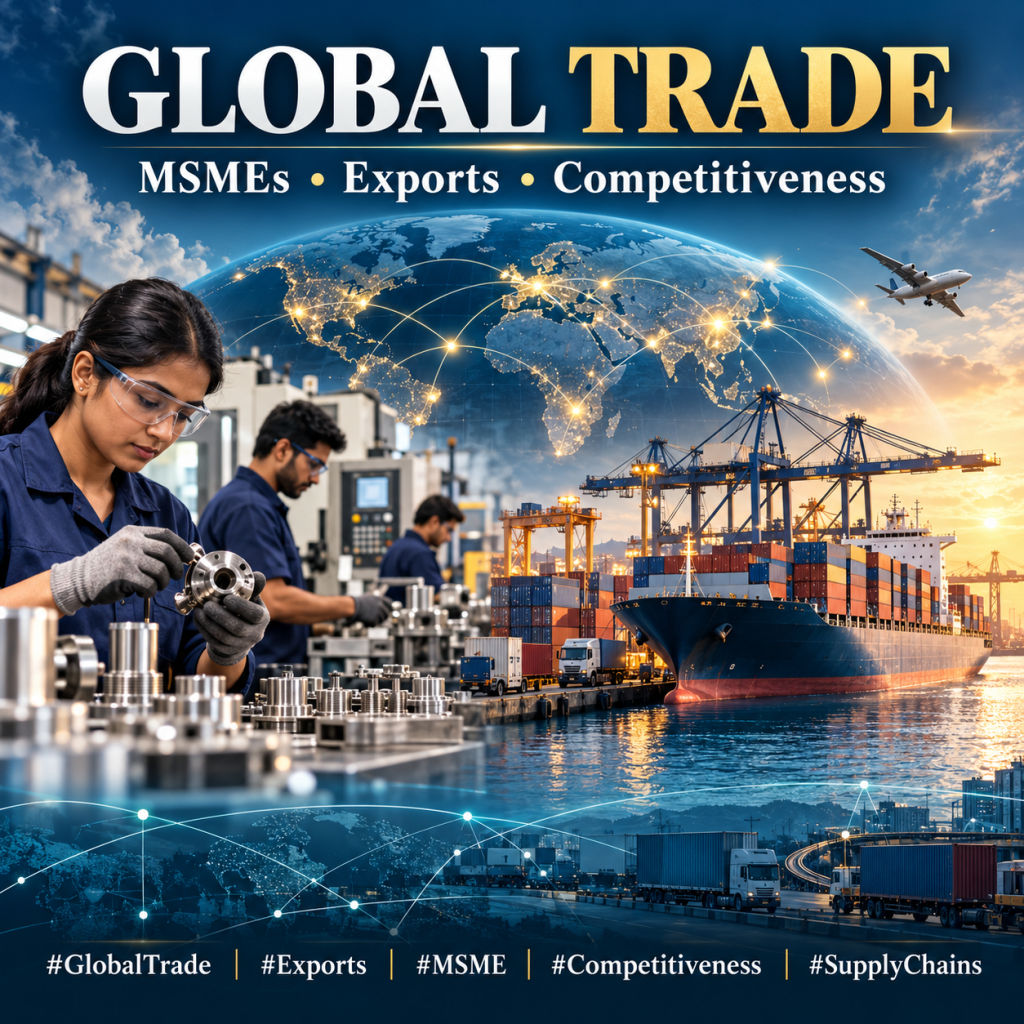
Exports Can Rise While External Vulnerability Deepens
India’s economic debate frequently treats exports as success and imports as failure. History is more complicated. Industrialisation depended on imported machines, and modern exporters require imported energy, electronics, chemicals and specialised materials. A growing economy can rationally import more while building future capability.
September 2026 illustrates this ambiguity. Merchandise exports reached US$44.40 billion, compared with US$43.81 billion in August. Imports rose to US$74.61 billion from US$70.67 billion, widening the merchandise deficit to US$30.21 billion. During April–September, combined goods and services exports grew 13.84% year on year to US$476.20 billion, while imports grew 15.68% to US$551.13 billion. �
Reuters
These are actual trade estimates rather than investment intentions. But they do not show how much domestic value was created, whether imported products were productive or consumptive, or what margins exporters retained.
Gross exports can conceal imported content
A solar module, medicine, garment or machine may be exported from India while containing imported components, energy or intellectual property. The export value is real, but it can overstate domestic income and technological capability.
The same distinction applies to the deficit. Imported machinery that raises future productivity differs from a recurring import caused by missing domestic capability. Imported crude oil reflects resource realities; imported industrial controls may expose an engineering gap; imported specialised cotton may solve a production problem while revealing one at home.
The useful objective is not indiscriminate import reduction. It is increasing the domestic value, learning and resilience generated by every rupee of trade.
For MSMEs, headline figures can be misleading. A company may record export growth while freight, imported inputs, compliance costs and finance reduce its contribution margin. Currency movements can create accounting gains or procurement pressure. One lost foreign supplier can interrupt production despite a strong order book.
Measure competitiveness after the border
Export clusters should maintain a product-market scorecard covering gross export value, imported-input share, contribution margin, payment time, logistics expense, standards burden, buyer concentration and after-sales requirements.
Associations can pool trade-law expertise, supplier-diversification research and currency-risk education. Common design and testing services can help firms replace imported subsystems gradually. Export agencies should measure repeat orders and domestic value addition rather than only buyer meetings and expressions of interest.
Trade agreements remain important, but tariff access does not guarantee competitiveness. Enterprises still need standards compliance, distribution, service and reliable finance. Similarly, import substitution should not force manufacturers to buy inferior inputs. Domestic suppliers must earn adoption through quality and total cost.
India’s trade future should not be judged only by the number of containers leaving and arriving. It should be judged by how much knowledge, income and productive resilience remain after both flows have passed.
- Comment
- Reblog
-
Subscribe
Subscribed
Have a WordPress.com account? Log in now.


Leave a Reply