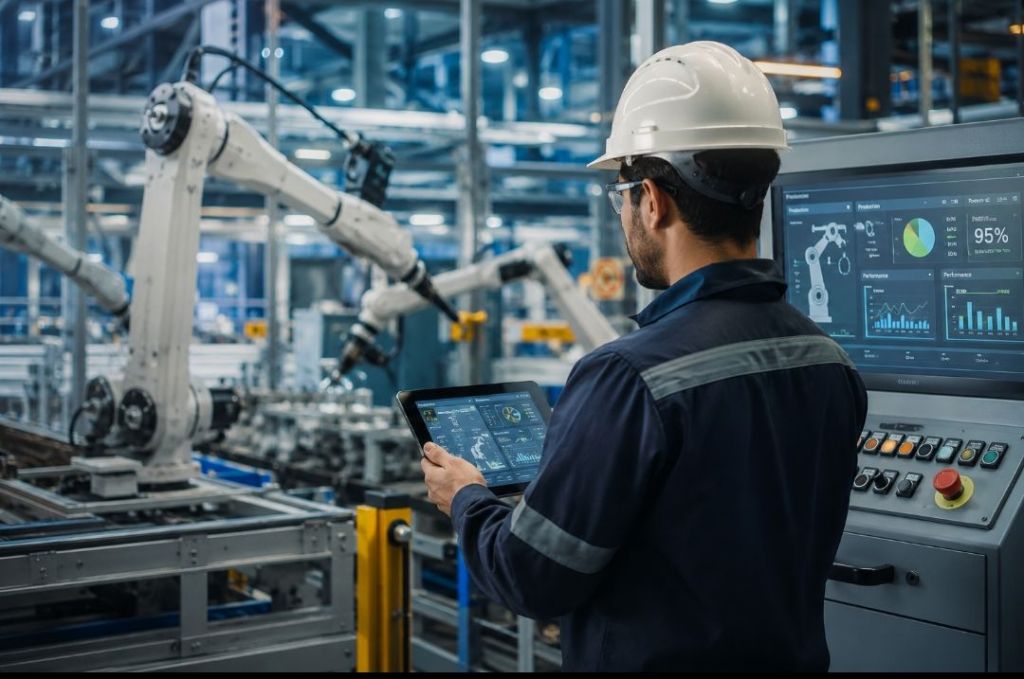
Factories Need Workers, But Industry Needs Skills
For decades, discussions about India’s economic future have focused on employment generation. Governments, industry bodies, and economists have repeatedly highlighted the need to create millions of jobs for a young and growing population. Yet beneath this familiar conversation lies a less visible and potentially more dangerous challenge. India does not simply face a shortage of workers. It faces a shortage of industrial workers who possess the skills required to operate, maintain, adapt, and improve modern production systems.
Historically, Indian manufacturing grew on the strength of abundant labour rather than highly specialized labour. Many industrial clusters emerged around family-owned enterprises where skills were transferred informally from one worker to another. This model served the country reasonably well when production processes were relatively simple, product standards were less demanding, and global competition was limited. Experience on the shop floor often mattered more than formal technical training. What was once an advantage, however, is increasingly becoming a limitation.
Learning by Experience Is No Longer Enough
Across many manufacturing sectors, machine operators continue to learn primarily through observation and repetition. While practical experience remains valuable, modern manufacturing requires far more than familiarity with equipment. Today’s production systems increasingly involve automation, digital controls, quality monitoring systems, data analytics, predictive maintenance, and integrated supply chains. Workers are expected not only to operate machines but also to understand processes, identify defects, solve technical problems, and adapt to changing technologies.
The gap between traditional shop-floor learning and the demands of advanced manufacturing is widening. Many enterprises report difficulty in finding workers who can handle sophisticated machinery, maintain quality consistency, or manage digitally enabled production environments. The result is often underutilized equipment, lower productivity, and slower technology adoption. Expensive machines are purchased, but their full potential remains unrealized because human capabilities fail to keep pace with technological investments.
The Attrition Trap
The challenge becomes even more complex when high labour turnover enters the picture. Several manufacturing sectors experience significant attrition as workers move frequently in search of marginally higher wages or better working conditions. From the worker’s perspective, this behaviour is rational. From the industry’s perspective, it creates a cycle of perpetual skill shortages.
Firms invest time and resources in training employees, only to lose them shortly after they become productive. New workers must then be recruited and trained again. Productivity suffers, quality fluctuates, and operational efficiency declines. Over time, companies become reluctant to invest deeply in workforce development because the return on that investment appears uncertain. This creates a self-reinforcing cycle where inadequate training contributes to attrition, and attrition discourages training.
Industry 4.0 Cannot Be Imported
India’s manufacturing ambitions increasingly revolve around Industry 4.0 technologies such as automation, artificial intelligence, robotics, digital twins, and smart factories. Yet technology adoption is not merely a matter of purchasing equipment. Successful industrial transformation depends on the availability of technicians, supervisors, engineers, and operators capable of working alongside these technologies.
Many policymakers assume that technology itself will solve productivity challenges. In reality, technology without skills often creates new bottlenecks. Machines can be imported. Software can be licensed. Consultants can be hired. Skilled industrial talent, however, cannot be created overnight. The countries that dominate advanced manufacturing today invested for decades in vocational systems, apprenticeship networks, technical education, and industry-academia collaboration. Their competitive advantage lies not only in technology but also in the depth of their industrial workforce.
The Productivity Paradox
One of the most important economic risks over the next decade may be the growing disconnect between wages and productivity. As living costs rise and labour markets tighten, wages are likely to increase across many sectors. Rising wages are not a problem in themselves. In fact, they are desirable if they reflect higher productivity and better living standards.
The danger emerges when productivity fails to grow at the same pace. If wages rise without corresponding improvements in efficiency, quality, innovation, and output, manufacturing competitiveness may gradually weaken. Enterprises face higher production costs while customers remain unwilling to pay significantly more for products that do not offer superior value. This pressure is particularly severe for export-oriented industries competing against producers from countries with stronger skill ecosystems.
The Future Battlefield Is Human Capability
The coming decades may fundamentally redefine how nations compete. Cheap labour alone is unlikely to secure long-term manufacturing success. The real competition will revolve around skilled labour, adaptable labour, and technologically capable labour. Countries that build strong industrial skill ecosystems may attract investment, absorb advanced technologies, and move up global value chains. Those that fail may remain trapped in low-value production despite large labour pools.
For India, the challenge is therefore larger than employment generation. It is about transforming human capability into productive industrial capacity. The future of manufacturing will depend less on how many workers enter factories and more on how effectively those workers can operate in an increasingly complex technological environment.
The industrial worker of the future will not simply be a machine operator. He or she will be a problem solver, a technology user, a quality manager, and a continuous learner. If India succeeds in creating such a workforce, its manufacturing ambitions may become reality. If not, the country could face a paradoxical situation where factories expand, machines multiply, investments grow, yet productivity remains stubbornly below potential. The next industrial revolution may therefore be decided not inside machines, but inside classrooms, training centres, workshops, and factory floors where the skills of tomorrow are being shaped today. :::
#IndustrialSkills #ManufacturingCompetitiveness #WorkforceDevelopment #Industry4Point0 #ProductivityGrowth #TechnicalTraining #SkilledLabour #IndustrialTransformation #AutomationReadiness #FutureOfManufacturing
 "Connecting communities, empowering nations: Unifying the Regional and Global Economy ."
Leave a comment