For decades, agricultural trade was presented as one of the greatest success stories of globalization. Countries specialized in crops where they enjoyed natural advantages, international markets connected producers and consumers across continents, and global food availability expanded significantly. Yet beneath this success lay a persistent reality. Food is not just another commodity. It is linked to livelihoods, political stability, national security, and social welfare. As a result, agricultural trade has always been different from trade in automobiles, electronics, or manufactured goods. Today, this distinction is becoming even more pronounced as the world enters an era where food security concerns increasingly compete with the principles of market liberalization.
The history of agricultural trade has always been shaped by a delicate balance between abundance and fear. During periods of surplus production, countries have enthusiastically supported open markets and export growth. During periods of shortage, however, governments have often reverted to protectionist measures. The food crises of the 1970s, the global food price spikes of 2008, and more recently the disruptions caused by the pandemic, geopolitical conflicts, and climate-related disasters all demonstrated that when food supplies become uncertain, nations frequently prioritize domestic consumers over international commitments. This behavior reflects a fundamental political reality. Governments are often judged more harshly for food shortages and inflation than for lost export opportunities.
India’s Balancing Act Between Farmers and Consumers
India represents one of the most complex examples of this challenge. On one hand, agriculture remains the primary source of livelihood for millions of rural households. On the other hand, affordable food prices are critical for hundreds of millions of consumers, particularly low-income families. Policymakers therefore find themselves balancing three objectives that often pull in different directions: ensuring fair returns for farmers, controlling food inflation, and expanding export opportunities.
When domestic prices rise sharply, governments frequently face pressure to intervene through export restrictions, stock limits, or other regulatory measures. Such interventions may help stabilize local markets in the short term, but they can also create uncertainty for exporters and international buyers. Farmers who could have benefited from higher global prices may lose potential income opportunities, while import-dependent countries may face increased supply uncertainty. The challenge is not unique to India, but India’s large population and significant role in global agricultural markets make these decisions particularly consequential.
Agriculture also occupies a unique place in trade negotiations. Unlike many industrial sectors, agricultural policies often involve strong political emotions and electoral considerations. Discussions about market access, subsidies, food procurement systems, and import tariffs frequently become debates about rural livelihoods, national sovereignty, and social stability. Consequently, agricultural trade negotiations tend to be among the most sensitive and difficult areas of international economic diplomacy.
Climate Change and the New Geography of Food
Perhaps the most transformative force shaping agricultural trade today is climate change. For centuries, agricultural production patterns evolved around relatively stable weather conditions. That stability is now increasingly under stress. Heat waves, droughts, floods, changing rainfall patterns, and extreme weather events are affecting crop yields across multiple regions simultaneously.
The result is growing volatility in agricultural markets. Traditional assumptions about predictable harvest cycles are becoming less reliable. A drought in one major exporting country can quickly trigger price increases across global markets. Simultaneous climate disruptions in multiple regions can create even larger shocks. This emerging reality means that agricultural trade is increasingly influenced not only by economics but also by environmental resilience.
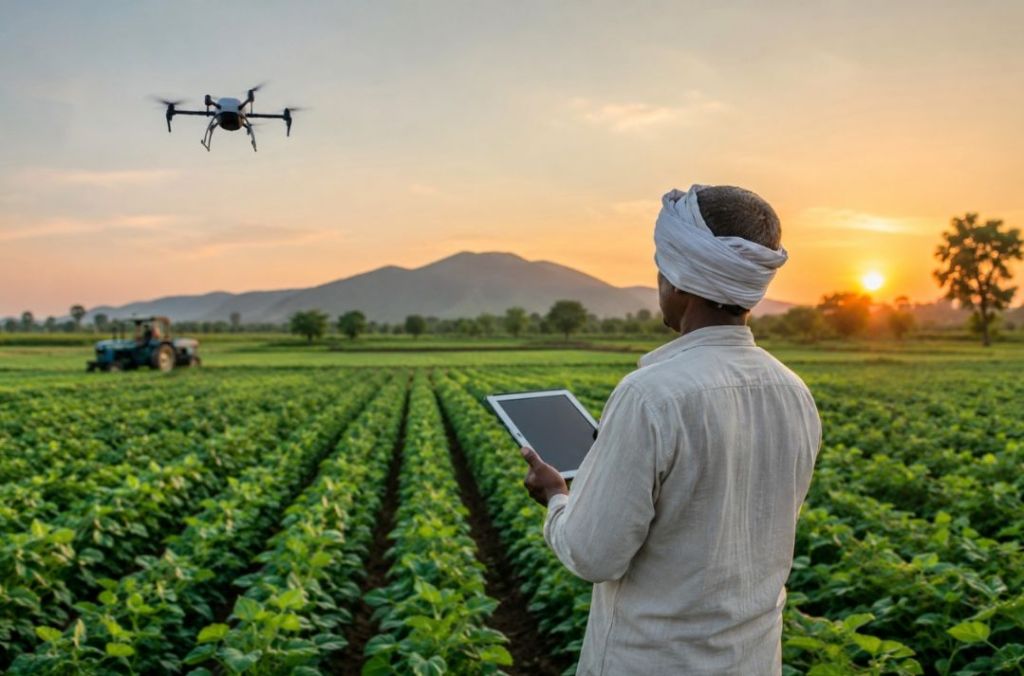
For countries like India, climate volatility presents both risks and opportunities. While changing weather patterns may threaten productivity in some regions, investments in climate-resilient agriculture, improved irrigation, biotechnology, digital farming, and precision agriculture could help create new competitive advantages. The countries that successfully adapt their agricultural systems may become the food suppliers of the future.
The Rise of Food Nationalism
One of the most visible trends emerging in recent years is the rise of food nationalism. During periods of global uncertainty, governments are increasingly willing to prioritize domestic food security even if it disrupts international markets. Export bans, export quotas, strategic stockpiling, and emergency procurement measures have become more common during crises.
This trend reflects a growing recognition that food security is closely linked to national security. Nations that depend heavily on imported food have become increasingly aware of supply chain vulnerabilities. At the same time, major exporting countries are discovering that controlling food exports can provide geopolitical influence during periods of scarcity.
The consequence is a gradual shift away from the assumption that global markets will always provide reliable access to food. Countries are increasingly seeking diversification of suppliers, domestic production capacity, and strategic reserves. This does not necessarily mean a return to complete self-sufficiency, which remains economically impractical for most nations, but it does suggest a future where resilience becomes as important as efficiency.
The Future of Agricultural Trade
The future of agricultural trade is unlikely to be defined solely by comparative advantage and market efficiency. Instead, it will increasingly be shaped by resilience, sustainability, climate adaptation, technological innovation, and geopolitical considerations. Food systems may become more regionalized, with countries seeking a balance between global integration and domestic security.
For India, the challenge will be particularly complex. The country must simultaneously support farmers, maintain affordable food prices, adapt to climate change, expand exports, and remain an active participant in global trade. Success will depend on improving agricultural productivity, strengthening storage and logistics infrastructure, reducing post-harvest losses, expanding value-added exports, and investing in climate-resilient farming systems.
The world is entering a period where agricultural trade will no longer be viewed merely as an economic activity. It will increasingly be seen as a strategic instrument that influences national stability, social welfare, diplomatic relations, and long-term resilience. The countries that understand this shift early and build adaptable agricultural ecosystems will be better positioned to navigate an increasingly uncertain future.
#AgriculturalTrade
#FoodSecurity
#ClimateResilience
#FarmerWelfare
#FoodInflation
#ExportRestrictions
#FoodNationalism
#AgriSupplyChains
#SustainableAgriculture
#GlobalFoodMarkets


Leave a Reply