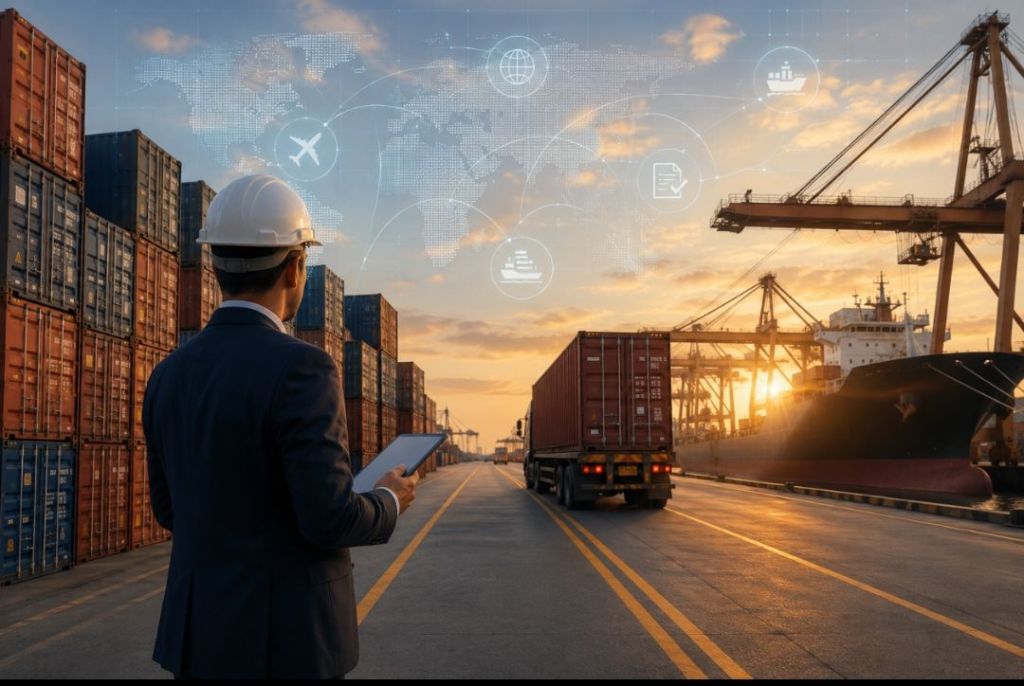
For much of modern economic history, trade disputes revolved around tariffs. Countries raised import duties to protect domestic industries, retaliate against competitors, or generate government revenue. From the protectionist policies of the nineteenth century to the tariff battles between major economies in recent years, customs duties have long been the visible weapon of economic competition. Yet the global trading system is now entering a new phase. The future battlefield may no longer be tariffs but regulations. Standards, certifications, environmental norms, digital governance rules, labour conditions, carbon accounting systems, and traceability requirements are emerging as the new instruments shaping international trade.
From Border Taxes to Behind-the-Border Regulations
The global reduction of tariffs over the last several decades under the framework of the World Trade Organization created an environment where traditional import duties became less significant for many products. As tariff barriers declined, governments increasingly turned toward regulatory measures to address environmental concerns, worker welfare, consumer protection, cybersecurity, and sustainability objectives.
While many of these objectives are legitimate and necessary, they are also creating a new form of trade restriction. Unlike tariffs, which are visible and measurable, regulatory barriers often operate quietly behind the scenes. A product may enter a market with zero import duty but still fail to gain access because it lacks the required sustainability certification, carbon footprint disclosure, labour compliance documentation, or digital security verification.
This shift represents a fundamental transformation in global commerce. Market access is increasingly determined not by price alone but by compliance capability.
The Rise of Compliance as a Competitive Advantage
Historically, competitive advantage was often linked to low-cost production, economies of scale, or access to raw materials. Today, an equally important factor is the ability to demonstrate compliance with increasingly complex regulatory frameworks.
A textile exporter may now need to prove that cotton was sourced sustainably. A food processor may need complete farm-to-fork traceability. An electronics manufacturer may be required to disclose carbon emissions throughout the supply chain. Digital service providers may need to comply with multiple data privacy regulations across jurisdictions.
As a result, compliance is becoming a productive asset rather than merely an administrative requirement. Companies that can manage certification, testing, quality assurance, environmental reporting, and supply-chain transparency are increasingly securing market access, while others are being left behind.
India’s MSMEs at a Critical Crossroads
For India, this transformation presents both opportunities and challenges. The country has built a strong reputation as a manufacturing and service hub, supported by millions of micro, small, and medium enterprises. However, many of these enterprises continue to struggle with regulatory compliance requirements in international markets.
Traditionally, Indian MSMEs focused on production efficiency and cost competitiveness. In the emerging trade environment, production alone is no longer sufficient. Buyers increasingly demand documentation, testing reports, sustainability audits, social compliance certificates, carbon disclosures, and digital traceability systems.
Many smaller firms lack awareness, technical expertise, or financial resources to meet these requirements. For them, obtaining certifications often involves significant costs, complex procedures, and continuous monitoring. Consequently, market access risks are shifting from manufacturing capability to compliance capability.
The future exporter may not necessarily be the producer with the lowest cost but the producer with the highest level of verified compliance.
Environmental Rules and the Green Protectionism Debate
One of the most significant developments is the rapid expansion of environmental regulations in international trade. Climate change concerns are driving governments to introduce carbon reporting systems, sustainability requirements, circular economy standards, and environmental due diligence obligations.
Supporters argue that such measures are essential to achieve global climate goals. Critics, however, increasingly view them as a new form of green protectionism. Developed economies possess advanced technology, stronger regulatory institutions, and greater financial resources to meet these standards. Developing countries often face higher adjustment costs despite contributing less historically to global emissions.
This creates a difficult question. Are environmental standards protecting the planet, or are they inadvertently protecting markets?
The answer is likely a mixture of both. Nevertheless, the economic consequences for exporters in developing countries are becoming increasingly significant.
Labour Standards and the New Social Contract of Trade
Labour conditions are emerging as another major area of regulatory scrutiny. International buyers increasingly require compliance with workplace safety standards, wage transparency, gender inclusion measures, child labour prevention protocols, and ethical sourcing practices.
While these initiatives contribute positively to worker welfare, they also increase compliance costs. Large corporations often have dedicated teams to manage audits and reporting. Small firms, however, frequently struggle to meet these expectations.
As a result, access to global markets is increasingly linked to social responsibility credentials. The future of trade may therefore depend not only on what products are made but also on how they are made and under what conditions.
Digital Regulations: The Emerging Invisible Border
Perhaps the most important future battleground lies in digital regulation. As economies become increasingly data-driven, governments are introducing rules concerning cybersecurity, privacy protection, artificial intelligence governance, cross-border data flows, and digital taxation.
These regulations effectively create new digital borders. Unlike traditional customs checkpoints, digital borders operate through legal and technological frameworks that determine how information moves across countries.
For exporters of digital services, software solutions, e-commerce products, and AI-enabled applications, compliance with these regulations may become as important as physical logistics.
Countries that successfully align their digital infrastructure with global regulatory expectations will likely gain a significant competitive advantage in the coming decade.
The Rising Cost of Compliance
A paradox of modern trade is beginning to emerge. In many industries, compliance costs are rising faster than customs duties. Companies now spend substantial resources on audits, certifications, laboratory testing, sustainability reporting, traceability systems, and regulatory documentation.
For large multinational corporations, these expenses can often be absorbed across global operations. For smaller exporters, however, compliance costs can become prohibitive.
This trend risks creating a two-tier trading system where larger firms continue expanding internationally while smaller enterprises struggle to participate.
Such a development could undermine one of globalization’s key promises: providing market opportunities for businesses of all sizes.
Building the Compliance Economy
The future may therefore require countries to build what can be called a compliance economy. Investment in testing laboratories, certification agencies, quality infrastructure, accreditation systems, digital traceability platforms, and regulatory training may become as important as investment in factories and industrial parks.
For India, strengthening quality infrastructure and compliance ecosystems should become a national competitiveness priority. Capacity-building programs for MSMEs, affordable certification support, sector-specific compliance advisory services, and digital compliance platforms could determine future export success.
The next generation of industrial policy may need to focus as much on standards and certification as on manufacturing incentives.
Trade in the Age of Regulation
The global economy is entering an era where regulations increasingly determine who participates in international trade. Tariffs may still exist, but their relative importance is gradually declining compared to standards, sustainability requirements, digital governance frameworks, and compliance systems.
The danger is that these regulations could unintentionally exclude millions of small producers and exporters across developing economies. The opportunity is that they could also drive higher quality, greater sustainability, improved labour standards, and stronger consumer trust.
The central challenge for policymakers will be balancing legitimate regulatory objectives with inclusive market access. The countries that succeed will not simply be those that produce more goods. They will be those that help their enterprises navigate a world where compliance has become the new currency of international trade.
In the coming decade, the most successful exporters may not be those who can cross borders cheaply. They may be those who can prove, document, certify, verify, and digitally demonstrate that they deserve to cross them at all.
#InternationalTrade #MSME #GlobalTrade #ExportCompetitiveness #QualityInfrastructure #Sustainability #ComplianceEconomy #DigitalTrade #SupplyChains #EconomicDevelopment


Leave a Reply