Infrastructure, and Industrial Strategy
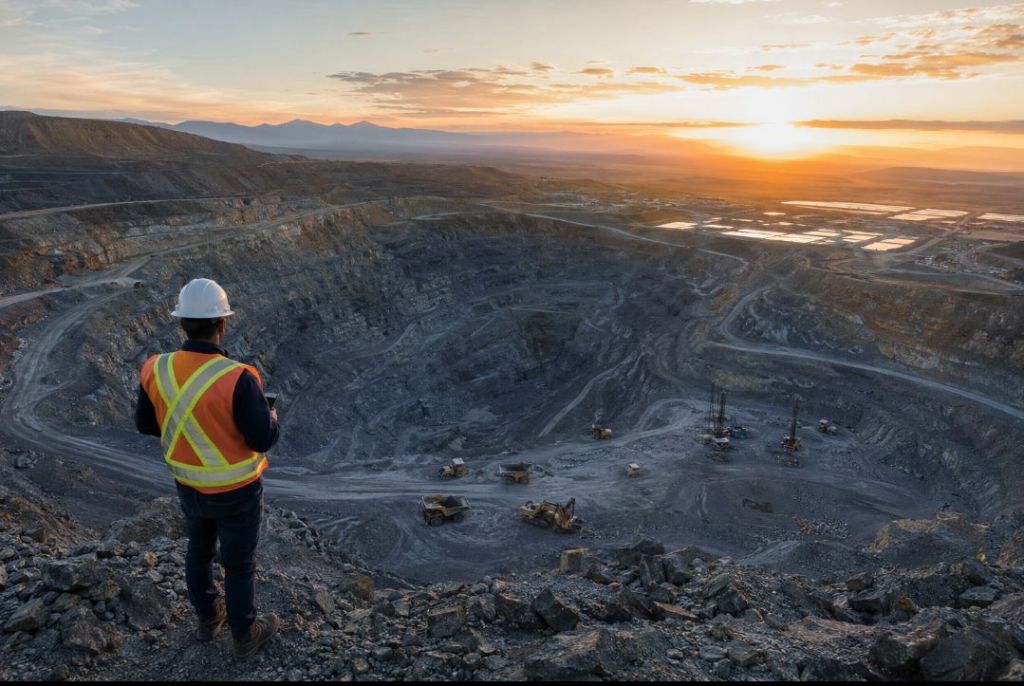
The world is entering a new resource era. As countries accelerate their transition toward renewable energy, electric vehicles, batteries, semiconductors, and advanced manufacturing, demand for critical minerals such as lithium, cobalt, nickel, copper, graphite, and rare earth elements is expected to rise dramatically over the next two decades. Some projections suggest that global mineral demand could double by 2040. For resource-rich developing countries, this appears to be a once-in-a-generation opportunity. Yet history repeatedly reminds us that possessing natural resources and achieving prosperity are not the same thing.
The modern global economy offers numerous examples of countries blessed with abundant resources but trapped in poverty, instability, and weak industrial development. Equally, there are nations with limited natural resources that have built prosperous economies through strong institutions, technological capability, and industrial innovation. The real question therefore is not who owns the minerals, but who captures the value created by them.
The Resource Curse Is Still Alive
For decades economists have discussed the resource curse, a phenomenon where countries rich in natural resources often grow more slowly than those with fewer resources. Easy revenues from mining and commodity exports can reduce incentives for industrial diversification, weaken governance systems, and create excessive dependence on volatile global commodity cycles.
Many developing economies continue to export raw minerals while importing finished products at significantly higher values. The result is a persistent pattern where wealth leaves the producing country while higher-value jobs, research, technology, and manufacturing remain concentrated elsewhere.
The emerging green economy risks reproducing this same pattern. A lithium-rich country may supply raw lithium to global markets, but the greatest value may ultimately be captured by countries manufacturing batteries, electric vehicles, energy storage systems, and advanced electronics.
Infrastructure Determines Whether Resources Become Wealth
Natural resources buried underground generate no economic value until they are connected to markets. Roads, ports, railways, energy systems, digital connectivity, logistics infrastructure, and skilled human resources are often more important than the mineral deposits themselves.
Many mineral-rich countries struggle not because they lack resources but because they lack the infrastructure needed to extract, process, and export them competitively. Poor logistics increase costs, reduce investor confidence, and limit industrial development.
The experience of several developing economies demonstrates that infrastructure investments can generate economic benefits far beyond a single sector. A bridge, highway, railway, or port may support agriculture, manufacturing, tourism, and services simultaneously. Infrastructure therefore acts as a multiplier rather than merely a construction project.
Conservation and Growth Are No Longer Opposites
One of the most significant shifts in development thinking is the recognition that natural capital itself is an economic asset. Forests, coastlines, biodiversity, water systems, and protected ecosystems are increasingly being viewed not as obstacles to development but as contributors to long-term economic resilience.
Countries that successfully integrate environmental conservation into economic planning are discovering that sustainability can generate employment, tourism revenues, agricultural productivity, and climate resilience. In a world increasingly affected by climate change, natural ecosystems are becoming productive assets rather than passive environmental concerns.
The future winners may be countries that learn how to monetize environmental stewardship without destroying the ecological systems upon which long-term growth depends.
Industrial Policy Matters More Than Ever
The next stage of global competition will not be fought merely through resource extraction. It will be fought through industrial ecosystems.
Countries that develop domestic processing capabilities, manufacturing clusters, research institutions, and skilled workforces will capture a far greater share of global value chains. Those that remain exporters of raw materials may continue to face fluctuating commodity prices and limited employment generation.
The experience of emerging pharmaceutical manufacturing hubs offers a powerful lesson. Regulatory reforms, quality standards, research capabilities, and industrial support systems can transform sectors previously dependent on imports into engines of domestic growth and exports.
This principle extends far beyond pharmaceuticals. It applies equally to critical minerals, renewable energy equipment, semiconductors, food processing, and advanced manufacturing.
Lesson for India
India stands at an interesting crossroads in this global transition. The country possesses significant ambitions in renewable energy, electric mobility, electronics manufacturing, and advanced industrial development. However, India remains dependent on imports for several critical minerals and strategic materials.
The challenge for India is therefore twofold. First, secure reliable access to critical mineral supply chains through domestic exploration, overseas partnerships, and strategic alliances. Second, move aggressively toward value-added manufacturing rather than simply participating in raw material trade.
The Production Linked Incentive programmes, semiconductor initiatives, battery manufacturing plans, and renewable energy investments are steps in this direction. However, long-term success will depend on building integrated industrial ecosystems rather than isolated projects.
India’s experience with cluster development offers an important lesson. Sustainable competitiveness emerges when suppliers, manufacturers, research institutions, financial institutions, and skilled workers operate within interconnected ecosystems. The same logic must now be applied to critical mineral value chains.
The New Geopolitics of Minerals
Critical minerals are rapidly becoming strategic assets similar to oil in the twentieth century. Governments are increasingly viewing supply chains through a national security lens. Trade agreements, investment treaties, diplomatic partnerships, and development finance are all being reshaped by concerns over access to critical resources.
This creates opportunities but also risks. Developing countries may find themselves caught between competing geopolitical blocs seeking secure access to strategic minerals. The challenge will be maintaining national interests while attracting investment and technology.
Future negotiations will increasingly revolve around value addition, local employment, technology transfer, environmental standards, and supply-chain resilience rather than simple resource extraction agreements.
Looking Beyond Minerals
The deeper lesson emerging from global development experiences is that prosperity is rarely built on resources alone. Minerals, forests, agricultural land, coastlines, and biodiversity provide opportunities, but institutions determine outcomes.
Countries that invest in governance, infrastructure, skills, innovation, and industrial capacity convert natural wealth into sustainable prosperity. Those that focus solely on extraction often remain trapped in cycles of dependency.
The coming decades may witness the largest resource boom since the industrial revolution. Yet the countries that benefit most may not necessarily be those with the richest deposits. They will be those that understand a simple economic truth: natural resources create potential, but institutions, infrastructure, and innovation create development.
As the world races toward a greener and more technology-intensive future, the real competition is not for minerals beneath the ground. It is for the economic systems capable of transforming those minerals into lasting national prosperity.
#CriticalMinerals #ResourceEconomics #IndustrialPolicy #SupplyChains #EnergyTransition #IndiaEconomy #InfrastructureDevelopment #EconomicDevelopment #GreenGrowth #GlobalTrade
 "Connecting communities, empowering nations: Unifying the Regional and Global Economy ."
Leave a comment