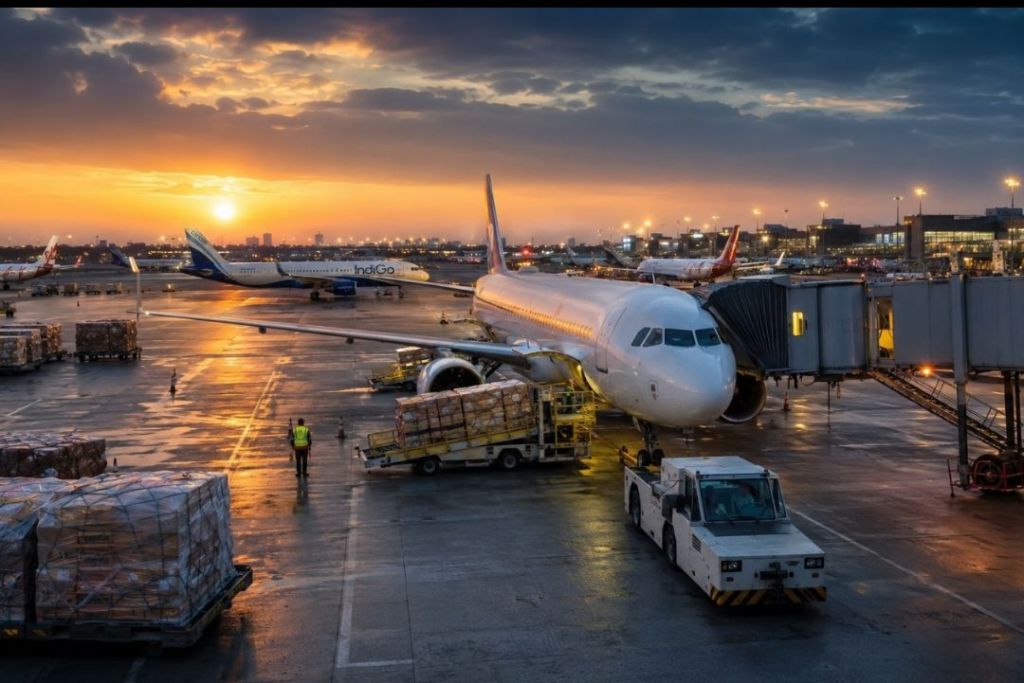
The aviation sector is no longer merely a mode of transportation. It is gradually becoming one of the most powerful engines of economic integration, strategic influence, technological advancement, tourism expansion, cargo logistics, and regional development. Historically, aviation was considered an elite sector dominated by developed economies, high-income travelers, and large global carriers. Today, however, the sector is entering a different phase where rising middle classes, e-commerce expansion, geopolitical shifts, and global supply-chain restructuring are transforming aviation into a critical infrastructure system for economic competitiveness. Countries that control efficient aviation ecosystems may increasingly control trade routes, tourism flows, investment patterns, and even geopolitical influence in the coming decades.
From Luxury Mobility to Mass Connectivity
In the early decades after independence, air travel in India remained limited to a very small section of society. Railways dominated passenger movement, while aviation was viewed as expensive and inaccessible. Liberalization in the 1990s changed the trajectory significantly. The entry of private airlines, lower ticket prices, and increasing urbanization gradually expanded the market. Over the last fifteen years, India has emerged as one of the fastest-growing aviation markets in the world. Rising disposable incomes, migration for employment, growth of service industries, and aspirational consumption patterns have pushed millions of first-time travelers toward aviation.
Yet this growth also reflects a deeper transformation in Indian society. Air travel is no longer only about convenience. For many families, boarding a flight has become associated with social mobility, dignity, and economic participation. Small entrepreneurs, students, migrant workers, medical travelers, and religious tourists increasingly depend on affordable aviation networks. This democratization of aviation has changed the economic landscape of several smaller cities.
Airport Infrastructure and the Politics of Connectivity
India’s investment in airport infrastructure reflects recognition that aviation is closely tied to regional economic development. Expansion of airports in Tier-2 and Tier-3 cities, modernization of terminals, and private sector participation have significantly improved capacity. The UDAN scheme attempted to connect underserved regions and make air travel affordable for smaller towns. This initiative carried both economic and political significance because connectivity is increasingly linked with investment attraction, tourism growth, and integration into national markets.
However, the deeper reality is more complex. Many regional routes continue to struggle with profitability. Several smaller airports face low passenger volumes, weak surrounding industrial ecosystems, and limited economic activity. Infrastructure alone cannot guarantee sustainable aviation growth. Airports built without parallel investments in manufacturing, tourism, logistics, urban planning, and local enterprise development risk becoming underutilized assets.
The challenge is especially visible in states where airports exist but last-mile connectivity, public transport integration, warehousing systems, and industrial clusters remain weak. Aviation growth without broader economic planning may create islands of infrastructure without meaningful local economic transformation.
Cargo Logistics and the Rise of the New Supply Chain Economy
One of the biggest structural changes in aviation is the rapid expansion of cargo logistics. Historically, passenger travel dominated aviation discussions in India. Today, cargo movement is becoming equally important because of e-commerce, pharmaceutical exports, electronics manufacturing, perishables trade, and time-sensitive supply chains.
The pandemic exposed the strategic importance of aviation logistics globally. Vaccine transportation, semiconductor shortages, and disruptions in maritime trade demonstrated how critical air cargo networks had become. Countries with strong cargo infrastructure recovered faster and integrated more effectively into global supply chains.
India has significant potential in this area due to its growing pharmaceutical industry, agricultural exports, electronics manufacturing ambitions, and expanding digital economy. Yet the country still faces serious structural gaps in cold-chain systems, warehousing, multimodal integration, and customs efficiency. Airports are often treated as passenger hubs rather than integrated logistics ecosystems.
In the future, the competition between nations may not depend only on production capacity but also on how quickly products can move across borders. Aviation logistics may increasingly determine export competitiveness in sectors such as fresh food, biotechnology, medical devices, electronics, and precision manufacturing.
The Missing Link: Aircraft Manufacturing and MRO Ecosystems
Despite becoming one of the world’s largest aviation markets, India remains heavily dependent on foreign manufacturers for aircraft, engines, avionics, and critical aviation technologies. This exposes a major contradiction in the Indian aviation story. The country is creating demand but not capturing enough value from the ecosystem.
Historically, nations that developed strong aviation industries also developed advanced engineering ecosystems, precision manufacturing capabilities, defense technologies, and innovation clusters. The United States, France, and more recently China used aviation as a strategic industrial policy tool. India, however, largely remains a consumer market.
The Maintenance, Repair, and Overhaul sector reflects a similar challenge. A large share of Indian aircraft maintenance work still moves overseas due to cost structures, taxation issues, regulatory complexities, and capability gaps. This results in significant foreign exchange outflows and lost employment opportunities.
If India fails to build domestic manufacturing and MRO capacity, it risks becoming merely a high-volume aviation market controlled by foreign technology suppliers. The long-term economic implications of this dependency may become severe as aviation technology grows more sophisticated and geopolitically sensitive.
Fuel Volatility and the Fragile Economics of Airlines
Aviation remains one of the most financially fragile industries globally. Airline profitability is highly vulnerable to fuel price fluctuations, currency depreciation, geopolitical instability, and economic slowdowns. In India, Aviation Turbine Fuel taxation remains relatively high compared to several international markets, placing additional pressure on carriers.
The global aviation industry has historically witnessed repeated cycles of expansion followed by financial distress. Even large international airlines have struggled with bankruptcies, mergers, and restructuring. The Indian market has experienced similar turbulence with multiple airline failures over the years.
Low-cost aviation models expanded passenger access dramatically, but they also intensified price wars and reduced financial resilience. Many airlines operate with thin margins while facing rising lease costs, maintenance expenses, and operational uncertainties.
Future risks may become even more complicated due to geopolitical conflicts affecting oil supply routes, currency instability, and increasing environmental regulations. The aviation sector’s dependence on fossil fuels creates strategic vulnerability in an era where energy markets are becoming increasingly uncertain.
Global Supply Chains and the Aircraft Delivery Crisis
Another major challenge facing the aviation industry is the disruption of global manufacturing supply chains. Aircraft deliveries worldwide are being delayed due to shortages of engines, components, semiconductors, and skilled labor. The post-pandemic recovery created a sudden surge in demand, but production systems remain under stress.
This has serious implications for rapidly growing markets like India. Airlines planning fleet expansion are facing delays, increasing operational pressure and affecting route planning. Rising passenger demand without sufficient aircraft availability may eventually push up fares and strain service quality.
The deeper issue is that aviation manufacturing is concentrated among a few global players. Excessive dependence on limited suppliers creates systemic risks for the entire industry. The world is slowly realizing that supply-chain resilience is becoming as important as cost efficiency.
Green Aviation and the Sustainability Dilemma
The future of aviation will increasingly be shaped by environmental pressures. Aviation contributes significantly to carbon emissions, and global climate commitments are placing growing pressure on airlines, airports, and manufacturers to reduce environmental impact.
Sustainable Aviation Fuel is emerging as a major area of investment globally. Countries and corporations are investing heavily in alternative fuels, electric propulsion systems, hydrogen technologies, and carbon offset mechanisms. However, the transition will not be easy. Green aviation technologies remain expensive, commercially uncertain, and technologically immature for large-scale deployment.
For developing countries like India, the sustainability debate creates a difficult policy dilemma. Expanding aviation is necessary for economic growth, tourism, and regional integration. At the same time, environmental regulations may increase operational costs and create new barriers for airlines and airports.
There is also a larger ethical question. Developed economies historically built their aviation ecosystems during periods of limited environmental regulation, while developing economies are now expected to transition rapidly toward greener systems despite lower financial capacity. This imbalance may shape future geopolitical negotiations around climate responsibility and industrial competitiveness.
The Future Aviation Economy
The future aviation industry may evolve into a much broader ecosystem integrating airports, logistics parks, smart manufacturing zones, tourism corridors, digital commerce platforms, drone systems, defense technologies, and green energy infrastructure. Airports themselves may become economic cities rather than transportation facilities.
Artificial intelligence, predictive maintenance, digital air traffic management, autonomous systems, and advanced materials may fundamentally reshape aviation economics over the next two decades. Countries that combine technological capability with infrastructure efficiency and policy stability may dominate the next phase of global aviation growth.
For India, the opportunity is enormous but incomplete. Passenger growth alone cannot define success. The real challenge lies in converting aviation demand into industrial capability, technological depth, employment generation, export competitiveness, and strategic resilience. Without this transformation, India may continue flying high in passenger numbers while remaining grounded in terms of industrial value creation.
The coming decades may therefore determine whether aviation becomes merely a consumption story for India or a foundation for a larger economic and technological leap. The answer will depend not only on airports and airlines, but on the country’s ability to build an integrated ecosystem connecting manufacturing, skills, logistics, sustainability, and innovation into a single long-term national strategy.
#AviationEconomy #UDAN #AirportInfrastructure #AirCargo #AircraftManufacturing #MROServices #GreenAviation #SupplyChainResilience #SustainableAviationFuel #IndianEconomy
 "Connecting communities, empowering nations: Unifying the Regional and Global Economy ."
Leave a comment