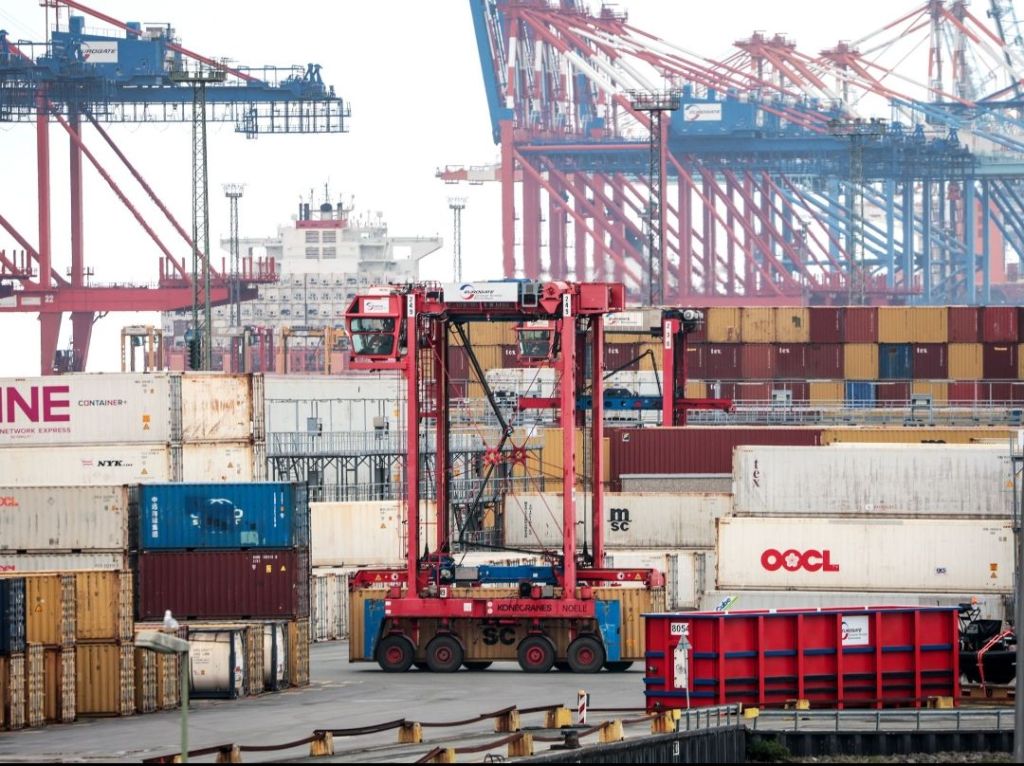
India’s external sector has entered a familiar but increasingly fragile phase. Merchandise exports remain under sustained pressure, reflecting not just cyclical weakness but deeper structural shifts in the global economy. Weak global demand, prolonged manufacturing slowdowns in advanced economies, and ongoing trade-policy uncertainty have combined to dampen orders for goods-intensive exports. This is not an isolated Indian phenomenon; it mirrors a broader contraction in global manufacturing trade that has followed periods of monetary tightening, supply-chain realignments, and subdued consumer demand in key markets.
Historically, export slowdowns have often been temporary setbacks—corrected by currency adjustments, cyclical recoveries, or commodity upswings. The current phase, however, is different in character. The slowdown in manufacturing-intensive markets is occurring alongside technological transitions, decarbonisation pressures, and geopolitical fragmentation. Traditional export engines such as textiles, light engineering goods, and low-to-mid value manufacturing are facing a double squeeze: weakening external demand on one side, and rising compliance, logistics, and sustainability costs on the other. This suggests that relying on volume-led merchandise exports alone may no longer be sufficient to drive external-sector resilience.
Yet, India’s external balance has not deteriorated as sharply as goods data might suggest, largely because services exports continue to act as a stabilising force. IT services, business process management, and knowledge-intensive services have provided a crucial buffer—absorbing external shocks and generating steady foreign exchange inflows. This services-led resilience reflects a long-term structural advantage: India’s integration into global value chains is increasingly digital rather than physical. Unlike merchandise trade, services exports are less exposed to inventory cycles, shipping disruptions, or tariff escalations, making them more adaptable in a volatile global environment.
Looking ahead, the critical question is not whether services can continue to compensate for weak goods exports—but whether this asymmetry is sustainable. Overdependence on services risks leaving manufacturing under-scaled, employment creation constrained, and trade diversification incomplete. A futuristic external-sector strategy must therefore move beyond viewing services as a mere buffer and instead treat them as a bridge—supporting a transition toward higher-value, technology-intensive, and green-compliant manufacturing exports. Advanced manufacturing, design-led exports, embedded services within goods, and digitally enabled trade logistics could redefine how India participates in global trade.
From a historical perspective, countries that successfully navigated export slowdowns did so by upgrading capabilities rather than defending legacy sectors. The present phase offers India a similar inflection point. The external sector is no longer just a barometer of global demand—it is a test of adaptability. In a world where trade growth is slower, more fragmented, and more regulated, resilience will come not from exporting more of the same, but from exporting differently.
#ExternalSector
#MerchandiseExports
#ServicesExports
#GlobalTradeSlowdown
#ManufacturingWeakness
#ITServices
#BusinessServices
#TradeResilience
#ExportDiversification
#StructuralShift
 "Connecting communities, empowering nations: Unifying the Regional and Global Economy ."
Leave a comment