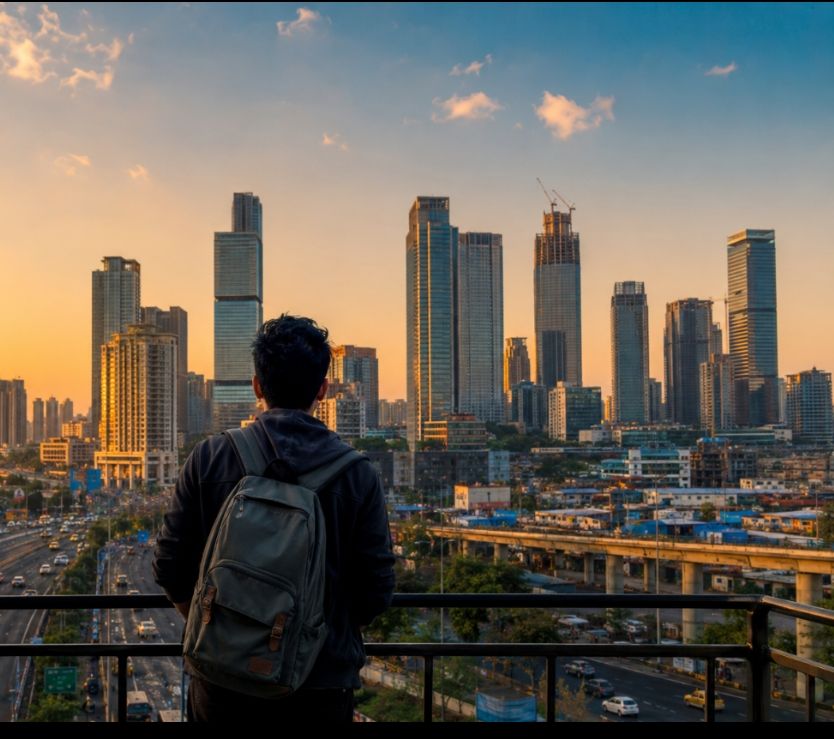
For decades, economists believed that capital, technology, and natural resources were the primary drivers of national power. Today, demographics are slowly overtaking all three. The structure of population itself is becoming the hidden engine that determines which economies rise, which stagnate, and which collapse under social and fiscal pressure. The future global economy may not be divided only between rich and poor countries, but between young and old societies, shrinking and expanding workforces, and regions capable of converting human numbers into productive capability.
Historically, population growth was often viewed as a burden. During the 1960s and 1970s, many developing countries feared overpopulation, food shortages, unemployment, and social instability. Developed economies worried about immigration and urban congestion. But the global economic system of the twenty first century has reversed many of these assumptions. Today, several advanced economies are facing a completely different crisis. Their populations are aging rapidly, birth rates are collapsing, and labour shortages are emerging across industries ranging from manufacturing and healthcare to logistics and agriculture. Countries that once feared too many young people are now struggling because they have too few.
This demographic inversion is reshaping the global balance of economic power. Nations like Japan, Italy, Germany, and South Korea are experiencing shrinking workforces and rising dependency ratios. Pension systems are under severe pressure because fewer workers are supporting larger elderly populations. Healthcare spending is rising sharply while tax-paying populations are slowing down. In some countries, rural towns are disappearing, schools are closing, and industries are unable to find workers despite technological advancement. Economic growth itself is becoming difficult to sustain when the working-age population declines year after year.
Japan became the first major warning sign for the world. Despite being technologically advanced and highly productive, its aging population slowed domestic demand, weakened labour supply, and increased social welfare burdens. Europe is now moving along a similar path. China too is entering an unexpected demographic slowdown after decades of the one-child policy. The same China that once powered the world with abundant young labour is now beginning to face declining birth rates, rising elderly populations, and increasing labour costs. This may fundamentally alter global manufacturing patterns in the coming decades.
Against this backdrop, India appears to possess a historic demographic advantage. India remains one of the youngest major economies in the world, with a large share of its population in working age groups. This youthful structure has created global optimism about India becoming the next major economic engine. Investors, multinational corporations, and policymakers increasingly view India not only as a market but as a labour reservoir for the world economy.
Yet the demographic dividend is not automatic. A young population can become either an economic miracle or a social disaster depending on the quality of institutions, employment generation, education systems, and governance capacity. India currently stands at this dangerous crossroads.
The biggest challenge is that employment generation has not kept pace with the growth of the workforce. Millions of young people enter the labour market every year, but sufficient high-quality jobs are not being created. Large sections of educated youth remain underemployed, trapped in informal work, low-paying services, or unstable gig employment. Many graduates possess degrees but lack employable skills. The gap between education and industry demand continues to widen. This mismatch is becoming one of the biggest structural weaknesses of the Indian economy.
The pressure on health, education, and skilling systems is becoming immense. Schools and colleges continue to produce large numbers of degree holders, but industry repeatedly points toward poor practical capability, weak communication skills, and limited technological readiness. Healthcare infrastructure remains deeply unequal across states, especially in rural and semi-urban regions. Malnutrition, learning gaps, and uneven digital access continue to weaken productivity potential even before young people fully enter the labour market.
Another emerging challenge is the growing regional demographic imbalance within India itself. Northern states continue to have relatively younger and faster-growing populations, while southern states are aging more rapidly due to lower fertility rates and higher social development indicators. This creates a complex political and economic tension. Southern states may face future labour shortages despite stronger industrial systems, while northern states may struggle with employment pressure despite having younger populations.
This imbalance may reshape migration patterns within India. Labour migration from states like Bihar, Uttar Pradesh, and Rajasthan toward southern and western industrial regions is likely to intensify. While migration can strengthen economic integration, it can also generate linguistic, political, and cultural tensions if urban infrastructure and governance systems fail to absorb growing populations. Indian cities are already showing signs of severe stress through rising housing costs, congestion, pollution, and pressure on public services.
Globally, migration is becoming both an economic necessity and a political flashpoint. Developed economies increasingly need migrants to fill labour shortages in healthcare, construction, agriculture, logistics, and elderly care. Yet political resistance to migration is simultaneously increasing across Europe and North America. This contradiction may define the future world order. Economies need workers, but politics resists outsiders. The result is growing social polarization and identity-based politics.
Climate change may intensify this demographic disruption further. Rising temperatures, water scarcity, sea-level rise, and agricultural instability could trigger large-scale internal and international migration over the next few decades. Future migration may not only be driven by employment but also by survival itself. Countries that fail to prepare for climate-linked demographic movement may face severe humanitarian and political crises.
The fiscal consequences of demographic change are equally serious. Aging societies require larger pension systems, healthcare spending, and elderly support infrastructure. Governments across the world are already struggling to finance retirement systems as dependency ratios worsen. Some countries may eventually need to raise retirement ages significantly, reduce welfare commitments, or increase taxes on younger generations. This could create intergenerational tensions where younger workers feel overburdened by systems designed for older populations.
Technology and artificial intelligence may partially offset labour shortages, but they may also create new inequalities. Automation can increase productivity in aging societies, but it may simultaneously reduce employment opportunities for low-skilled youth in developing economies. Countries with young populations may therefore face a paradox where they possess abundant labour but insufficient demand for human work due to automation-driven economic systems.
The future global competition may therefore revolve around human capital quality rather than sheer population numbers. Countries capable of producing healthy, skilled, adaptable, and technologically capable citizens will dominate the next economic cycle. Those failing to educate and employ their populations may face rising unrest, migration crises, fiscal instability, and political fragmentation.
India still possesses a historic opportunity, but the window may not remain open forever. Demographic dividend is time-sensitive. If millions of young people fail to find productive employment during their most economically active years, the dividend can quickly transform into demographic stress. The challenge is not simply creating jobs, but creating productive, dignified, and future-ready employment connected to manufacturing, green industries, healthcare, digital services, research, and advanced technologies.
The coming decades may prove that demography is not merely a social statistic. It is becoming the central battlefield of economics, politics, security, and global power. Nations that manage demographic transitions intelligently will define the future world order. Those that ignore them may discover too late that population trends are far more difficult to reverse than economic policies.
#DemographicDividend
#AgingPopulation
#YouthEmployment
#MigrationEconomics
#LabourMarkets
#PopulationShift
#SkillDevelopment
#HealthcareBurden
#EconomicTransformation
#FutureOfWork


Leave a comment