Historical Push Towards Energy Security and Rural Support
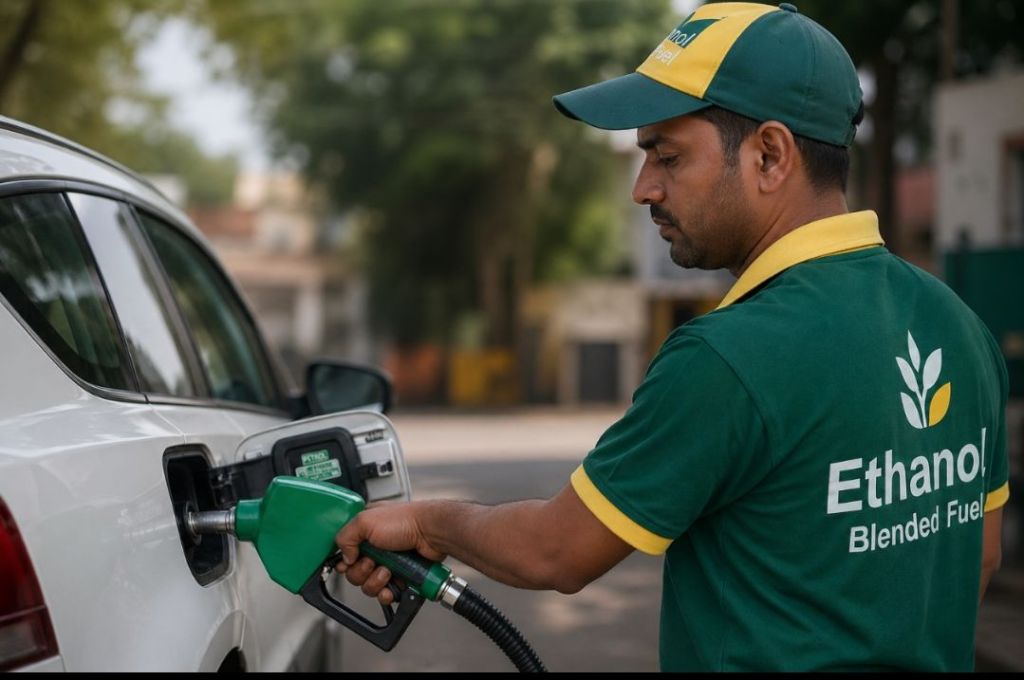
India’s journey with ethanol blending has been shaped by two long-standing concerns: dependence on imported crude oil and the need to support farmers, especially in the sugar economy. The ethanol blending programme, accelerated in the last decade, aimed to reduce oil imports, stabilise sugar prices, and provide an additional revenue stream to farmers. From a modest blending rate of around 2 to 3 percent in the early 2010s, India has moved aggressively toward targets of 20 percent blending. This transition reflects a policy shift where energy, agriculture, and industry are increasingly interconnected. However, while the economic logic appears strong on the surface, the deeper social and environmental costs are becoming more visible.
Social Cost and the Food versus Fuel Dilemma
One of the most critical concerns is the diversion of food crops toward fuel production. In India, ethanol is largely produced from sugarcane and increasingly from food grains such as maize and surplus rice. This raises a fundamental question about priorities in a country where food security and nutrition remain uneven. When agricultural resources are redirected toward fuel, it can lead to upward pressure on food prices, especially in years of weak monsoons or supply disruptions. For low-income households, even small increases in staple prices can have significant welfare impacts. The issue is not only about availability but also about affordability and nutritional access. The long-term social risk lies in creating a system where energy security is achieved at the cost of food security, particularly affecting vulnerable populations.
Water Stress and Agricultural Sustainability
Ethanol production in India is heavily dependent on sugarcane, one of the most water-intensive crops. Regions like Maharashtra and parts of Karnataka, already facing water stress, are major producers of sugarcane. Expanding ethanol production further incentivises cultivation of such crops, leading to over-extraction of groundwater and depletion of local water resources. This creates a paradox where a policy designed to promote sustainability in energy ends up aggravating unsustainable agricultural practices. Over time, this could reduce soil quality, increase dependence on irrigation, and intensify regional water conflicts. The environmental cost here is not immediate but cumulative, gradually weakening the ecological base of agriculture.
Carbon Balance and the Illusion of Clean Energy
Ethanol is often presented as a cleaner alternative to fossil fuels because it burns more efficiently and emits fewer tailpipe pollutants. However, a full lifecycle analysis tells a more complex story. The cultivation of crops, use of fertilizers, transportation, and processing all contribute to greenhouse gas emissions. When these factors are considered, the net environmental benefit of ethanol becomes less clear, especially if production relies on energy-intensive methods. In some cases, the carbon savings may be marginal, and in extreme scenarios, the overall emissions may not differ significantly from conventional fuels. This raises questions about whether ethanol blending is truly a long-term climate solution or a transitional compromise.
Impact on Land Use and Biodiversity
As demand for ethanol increases, there is a risk of expanding monoculture farming. Large-scale cultivation of a single crop like sugarcane or maize reduces biodiversity and disrupts natural ecosystems. It can also lead to higher use of chemical fertilizers and pesticides, which degrade soil health and affect surrounding flora and fauna. Land that could have been used for diverse cropping or ecological conservation may increasingly be allocated to fuel-oriented agriculture. This shift has long-term implications for ecological balance, especially in a country with already stressed natural resources.
Economic Gains Versus Uneven Distribution
While ethanol blending creates economic opportunities, particularly for sugar mills and certain segments of farmers, the benefits are not evenly distributed. Small and marginal farmers may not always have the resources to shift to ethanol-linked crops or may face risks due to fluctuating procurement policies. At the same time, consumers may indirectly bear higher costs through increased food prices or fiscal burdens from subsidies. This uneven distribution of gains and costs highlights the need to examine who benefits and who bears the burden in the ethanol economy.
Future Outlook and Policy Trade-offs
Looking ahead, ethanol blending in India sits at the intersection of multiple policy trade-offs. It offers a pathway to reduce oil imports and support rural incomes, but it also raises concerns about sustainability, equity, and long-term environmental impact. The future of this programme will depend on how effectively these trade-offs are managed. Moving toward second-generation ethanol, derived from agricultural waste rather than food crops, could reduce some of the pressure on food and water resources. Similarly, better crop planning, water management, and technological improvements in processing can enhance efficiency and reduce environmental costs.
Human Reality Behind Policy Choices
At the ground level, the story of ethanol blending is not just about policy targets or blending percentages. It is about farmers deciding what to grow, families adjusting to changing food prices, and communities dealing with water shortages. It is about balancing immediate economic benefits with long-term sustainability. The challenge for India is not whether to pursue ethanol blending, but how to do it in a way that does not shift the burden from one sector to another.
A Balanced Path Forward
Ethanol blending represents a significant step in India’s energy transition, but it is not without consequences. The social and environmental costs, though less visible in the short term, can shape the long-term sustainability of both the economy and the ecosystem. A balanced approach that integrates energy policy with agricultural reform, environmental protection, and social equity will be crucial. Without such integration, the risk is that a solution designed to solve one problem may end up creating several new ones.
#EthanolBlending #EnergyTransition #FoodVsFuel #WaterCrisis #SustainableAgriculture #ClimatePolicy #RuralEconomy #Biofuels #EnvironmentalCost #IndiaEconomy
 "Connecting communities, empowering nations: Unifying the Regional and Global Economy ."
Leave a comment