Historical anchors of control and the slow fracture of unity
For decades, OPEC acted as the balancing force of the global oil economy, shaping supply to stabilize prices and protect producer interests. The Gulf region, particularly countries like Saudi Arabia and United Arab Emirates, played a central role in maintaining this equilibrium through coordinated production cuts and spare capacity. The system worked because discipline existed, even during wars, financial crises, and demand shocks. But over time, cracks began to appear. Rising domestic ambitions, diversification strategies, and geopolitical rivalries slowly weakened the idea of collective restraint. The decision of the UAE to step out is not just a policy shift, it is a signal that the old oil order is no longer binding in the same way it once was.
Fragile cohesion and the burden of leadership
With the UAE stepping away, the burden of stabilizing oil markets shifts even more heavily onto Saudi Arabia. The problem is not just about one country leaving, but about what it represents. Once a key pillar of coordinated production, the UAE’s exit reduces the effectiveness of collective action. It weakens the credibility of quotas and introduces uncertainty about future compliance by other members. The oil market, which relied on a few large producers acting in sync, now risks moving toward a more fragmented system where national interests override collective discipline. This raises a critical question for the future of OPEC: can a cartel function when its members increasingly think like independent competitors rather than coordinated partners
Volatility becomes the new normal
Oil markets have always been cyclical, but they are now entering a phase where volatility could become structural rather than episodic. The UAE’s plan to expand production aggressively after stepping out of quota restrictions introduces a dual effect. In the short run, disruptions around the Strait of Hormuz, combined with geopolitical tensions, can push prices sharply upward due to supply fears. In the longer run, increased output without coordination can lead to oversupply and downward pressure on prices. This push and pull creates an unstable price environment where businesses, governments, and consumers struggle to plan. For industries dependent on energy inputs, this unpredictability directly translates into cost uncertainty, affecting investment decisions across sectors from manufacturing to transportation
Geopolitics reshaped through energy independence
Energy has always been a tool of geopolitical influence. The UAE’s move reflects a shift from collective bargaining power to individual strategic positioning. By stepping out, the country gains flexibility to align its oil strategy with broader economic and diplomatic goals. This could strengthen ties with countries seeking stable bilateral energy agreements, while also reducing the influence of OPEC as a unified geopolitical actor. At the same time, the risks are significant. The Persian Gulf remains one of the most sensitive energy corridors in the world, and disruptions in maritime routes threaten a large share of global oil supply. For major importers like India, the situation becomes complex. On one hand, independent pricing from the UAE may offer competitive opportunities. On the other, instability in the region exposes them to sudden supply shocks that can ripple through inflation, trade balances, and economic growth
The deeper shift: from oil dominance to energy pluralism
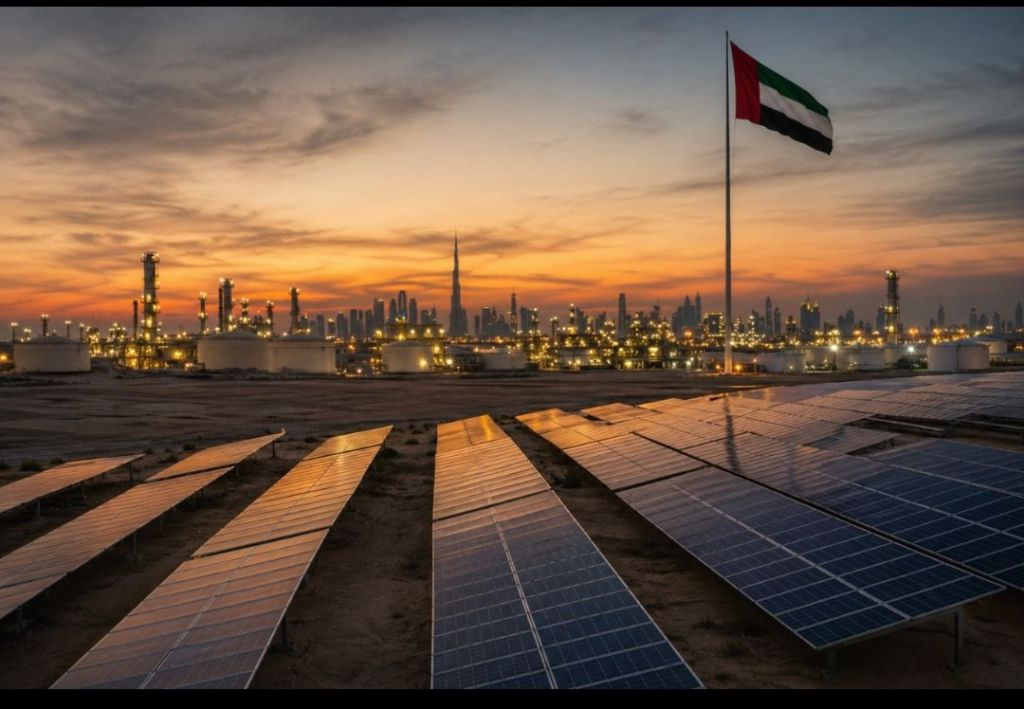
Perhaps the most important implication is not immediate but structural. The UAE’s exit reflects a deeper transformation in how energy economies think about their future. With a significant share of its economy already diversified beyond oil, the country is signaling that long-term growth cannot rely solely on hydrocarbon revenues. This aligns with global trends where renewables, hydrogen, and low-carbon technologies are gaining momentum. Ironically, instability in oil coordination accelerates this transition. When oil becomes unpredictable, both producers and consumers increase their investment in alternatives. This does not mean oil will disappear, but it does mean its dominance will gradually weaken as part of a broader and more diversified energy mix
A human perspective in an uncertain transition
Behind these macro shifts are real lives and livelihoods. Workers in oil-dependent economies face uncertainty as markets fluctuate. Consumers across the world feel the impact in the form of rising fuel costs and inflation. Policymakers struggle to balance energy security with sustainability. The UAE’s decision, while strategic, reminds us that global systems are deeply interconnected. A decision taken in one region can influence economic stability in another, highlighting the fragile nature of our current energy architecture
The future of the world energy system
The exit of the UAE from OPEC is not an isolated event, it is a marker of transition. The world energy system is moving from a controlled, cartel-driven structure to a more fragmented and competitive landscape. This shift carries risks of volatility and geopolitical tension, but it also opens space for innovation and diversification. The real question is not whether the old system will survive, but how quickly the new system will evolve. In this emerging order, resilience will depend less on controlling supply and more on managing uncertainty, diversifying energy sources, and building flexible economic systems that can adapt to rapid change
#GlobalEnergyShift #OPECFragmentation #OilMarketVolatility #EnergyGeopolitics #StraitOfHormuzRisk #EnergyTransition #RenewableShift #SupplyShock #EnergySecurity #PostOilEconomy
 "Connecting communities, empowering nations: Unifying the Regional and Global Economy ."
Leave a comment