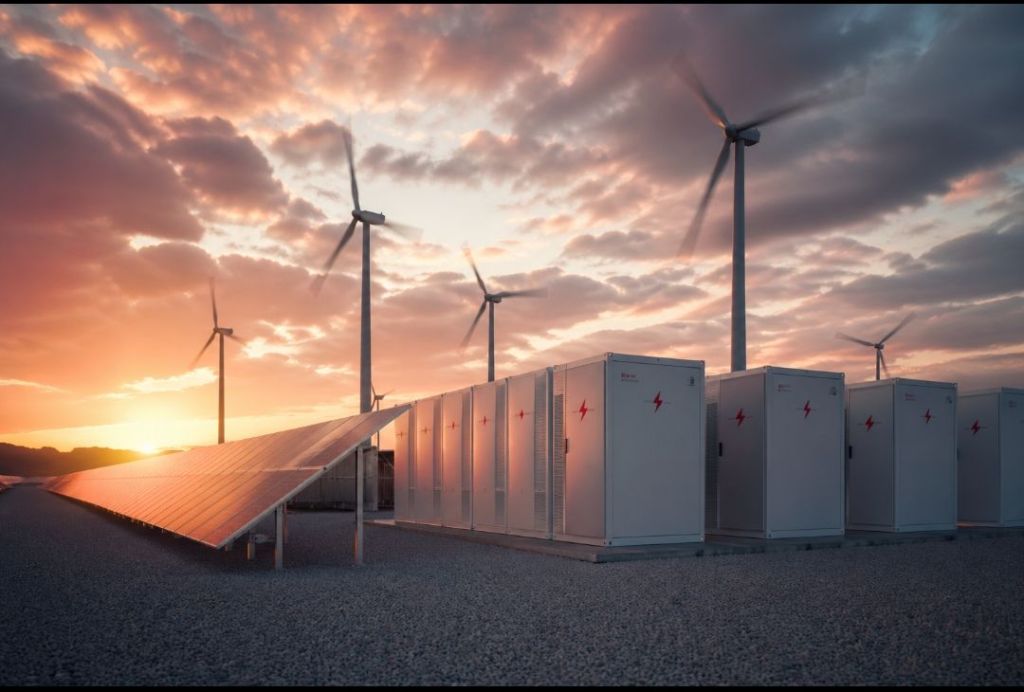
For decades, the global energy conversation was simple—add more capacity, generate more power, and extend access. From coal-based industrialisation in the 20th century to the rapid rise of renewables in the early 21st century, success was measured in megawatts installed. Countries competed on how fast they could build plants, whether thermal, hydro, or solar. But the energy transition is no longer about how much we produce; it is increasingly about how intelligently we manage what we produce.
The Illusion of Capacity and the Reality of Integration
The last fifteen years have seen an unprecedented surge in renewable energy capacity. Solar and wind installations have expanded rapidly, driven by falling technology costs and strong policy push. India, for instance, has made remarkable progress in solar capacity addition, while Europe accelerated its renewable transition after energy security concerns intensified. However, beneath this success lies a structural imbalance. Renewable energy is inherently intermittent, and adding capacity without integrating it into a stable system creates inefficiencies. A solar plant that produces power only during daylight hours or a wind farm dependent on seasonal patterns cannot independently sustain industrial demand. The real challenge has quietly shifted from generation to synchronization.
Grid Stability: The Invisible Backbone Under Stress
Historically, energy systems were built around predictable, controllable sources like coal and hydro. These systems allowed grid operators to balance supply and demand with relative ease. The entry of renewables has disrupted this balance. Today, grids are under pressure to manage fluctuations that were never part of their original design. Voltage instability, frequency deviations, and curtailment of renewable power are becoming more frequent. In countries with weak transmission infrastructure, the problem is even more severe. The irony is striking—nations are generating clean energy but are often unable to use it efficiently due to grid constraints. Without significant investment in smart grids, transmission corridors, and digital monitoring systems, the transition risks becoming a fragmented success.
Storage: The Missing Link in the Energy Equation
Energy storage is emerging as the central pillar of the next phase of transition. Batteries, pumped hydro, and emerging storage technologies are expected to bridge the gap between intermittent supply and continuous demand. Yet, despite technological advancements, storage remains expensive and unevenly deployed. The cost economics of large-scale storage projects still do not align with the pace of renewable expansion. Moreover, supply chain dependencies for battery materials such as lithium, cobalt, and nickel introduce geopolitical vulnerabilities. The transition, therefore, is not just technological but deeply strategic. Countries that control storage technologies and raw materials will shape the future energy order.
Financing the Transition: The Silent Constraint
While technological discussions dominate policy debates, financing remains the most underappreciated bottleneck. The earlier phase of renewable expansion was supported by subsidies, concessional financing, and strong investor sentiment. However, the next phase—focused on grid upgrades, storage systems, and integrated infrastructure—requires significantly higher and more complex investments. These are long-gestation assets with uncertain returns, making private investors cautious. Developing economies, including India, face an additional challenge of balancing affordability with sustainability. High capital costs can translate into higher tariffs, creating political and social resistance. The transition is therefore not just about energy economics but about financial architecture and risk distribution.
India’s Position: Between Opportunity and Constraint
India stands at a critical juncture. On one hand, it has the advantage of a rapidly expanding renewable base and strong policy intent. On the other, its grid infrastructure, DISCOM financial health, and storage deployment remain areas of concern. The country’s industrial growth ambitions require reliable and affordable power, which intermittent systems alone cannot guarantee. If India successfully integrates storage, strengthens its grid, and innovates in financing models, it could emerge as a global leader in integrated energy systems. If not, it risks creating a paradox of surplus capacity but unreliable supply.
Global Power Shift: From Energy Producers to System Integrators
The future energy landscape will not be dominated by those who produce the most energy, but by those who manage it best. System integration—combining generation, storage, transmission, and digital intelligence—will define competitiveness. Countries and companies that invest in energy management technologies, smart grids, and integrated platforms will gain strategic advantage. This marks a shift similar to what happened in manufacturing, where efficiency and supply chain management became more important than mere production capacity.
A Critical Outlook: Transition Without Integration is Incomplete
The current narrative around energy transition often celebrates targets—gigawatts installed, emissions reduced, and investments announced. But these metrics can be misleading if they ignore system-level realities. An incomplete transition, focused only on capacity, can lead to stranded assets, financial stress, and unreliable energy systems. The real test lies in building a resilient, flexible, and financially viable energy ecosystem.
The Road Ahead: From Speed to Stability
The next decade will demand a shift in mindset. Policymakers must move beyond capacity targets and focus on system performance. Investments must prioritize grid modernization, storage scalability, and innovative financing mechanisms. Technology must align with institutional reform, especially in power distribution and pricing structures. The energy transition is entering a more complex and demanding phase—one where speed alone is not enough, and stability becomes the ultimate measure of success.
In the end, the energy transition is not just about replacing one source with another. It is about redesigning the entire system. And in that redesign lies both the greatest challenge and the most transformative opportunity of our time.
#EnergyTransition #GridStability #EnergyStorage #RenewableIntegration #PowerSystems #CleanEnergyEconomics #InfrastructureFinance #SmartGrids #SustainableGrowth #EnergySecurity


Leave a Reply