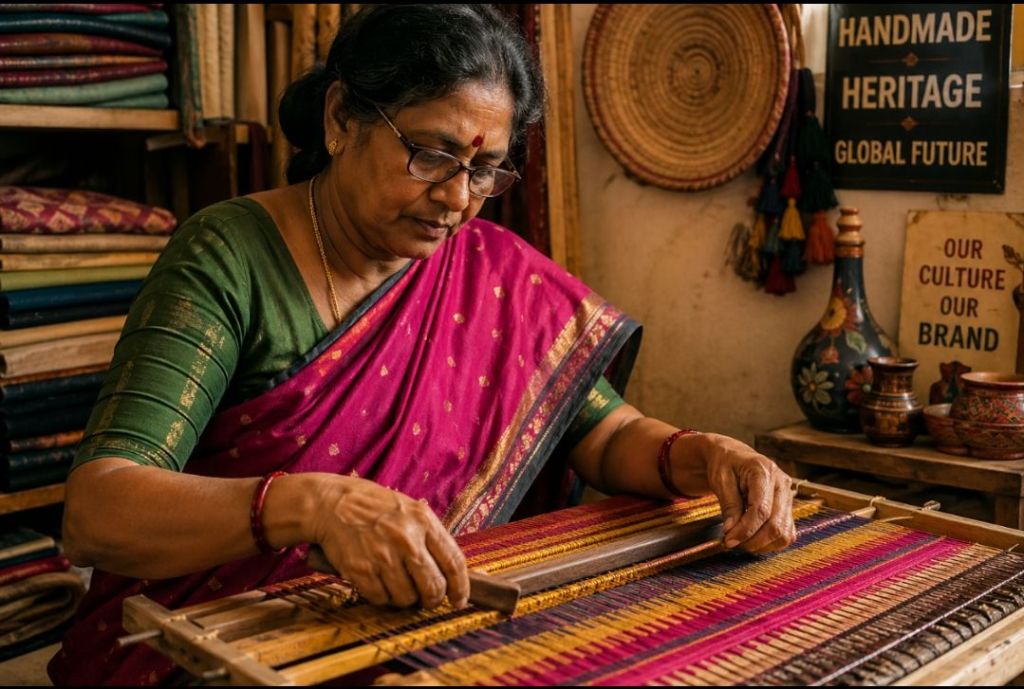
Cultural industries were once seen as soft expressions of tradition, often confined to local markets and seasonal tourism, but over time they have moved into the center of economic strategy where identity itself has become a tradable asset; historically, India’s crafts, textiles, and artisanal products were embedded in community life and regional economies, yet lacked structured pathways to scale, and today the shift is not just about selling products but about telling stories that connect a consumer in a distant market with the hands and heritage behind the product, making identity a source of economic value rather than just cultural pride.
India’s Quiet Transformation: Between Potential and Constraint
India is witnessing a visible rise in interest around Geographical Indication products and artisanal goods, reflecting a growing awareness that origin, authenticity, and tradition can command premium value in both domestic and international markets, yet the reality on the ground remains complex as many artisans still operate within fragmented ecosystems where access to branding, logistics, finance, and global market intelligence is limited, which restricts their ability to convert cultural richness into sustainable income; while digital platforms and tourism have opened new windows of opportunity by directly connecting artisans to consumers, the benefits are uneven, often favoring those who are already digitally aware or institutionally supported, leaving a large base of traditional producers still struggling to find consistent market access.
The Human Story Behind Economic Value
At the core of this transition is not just a shift in markets but a shift in how people see their own work, as an artisan who once produced for survival now begins to understand that their craft carries a story, a lineage, and a uniqueness that can travel globally, yet this transformation also brings emotional and social challenges as communities navigate the tension between preserving authenticity and adapting to changing consumer tastes, raising questions about whether economic scaling might dilute the very cultural essence that creates value in the first place.
Global Markets: Opportunity Wrapped in Competition
Across the world, there is a clear movement toward premiumisation where consumers are increasingly willing to pay higher prices for handmade, sustainable, and heritage-linked products, positioning cultural industries as a high-value niche in global trade, but this opportunity is accompanied by intense competition as machine-made imitations replicate traditional designs at lower costs, often eroding the market for genuine products and creating confusion among consumers, which makes it difficult for authentic producers to differentiate themselves unless supported by strong branding and certification systems.
Intellectual Property and the Battle for Authenticity
The future of cultural industries will be shaped significantly by how effectively countries and communities protect and promote their intellectual property, as Geographical Indications and other forms of IP protection are not merely legal tools but economic shields that safeguard identity and ensure that value flows back to the original producers, yet enforcement remains uneven and global awareness about these protections is still limited, making it essential to integrate IP strategies with marketing, storytelling, and international trade negotiations.
The Road Ahead: From Fragmentation to Strategic Ecosystems
Looking forward, the real transformation will depend on whether cultural industries can move from isolated success stories to structured ecosystems where artisans are supported by design innovation, digital integration, financial access, and global branding strategies, enabling them to participate competitively in international markets without losing their cultural integrity; the challenge for India is not a lack of heritage but a lack of systemic alignment that connects production with markets, policy with practice, and tradition with technology, and if this alignment is achieved, cultural industries could emerge not just as niche segments but as significant drivers of inclusive growth, employment, and global cultural influence.
A Human-Centred Future of Cultural Economics
In the end, the evolution of cultural industries is as much about people as it is about markets, as it redefines dignity of work, restores pride in traditional skills, and creates pathways where economic growth does not come at the cost of cultural erosion, but rather builds upon it, offering a future where development is not just measured in output but also in identity, continuity, and the stories that societies choose to carry forward into a rapidly changing world.
#CulturalEconomy #GeographicalIndications #ArtisanLivelihoods #HeritageBranding #CreativeIndustries #DigitalMarketAccess #GlobalValueChains #IntellectualPropertyRights #SustainableCrafts #InclusiveGrowth


Leave a Reply