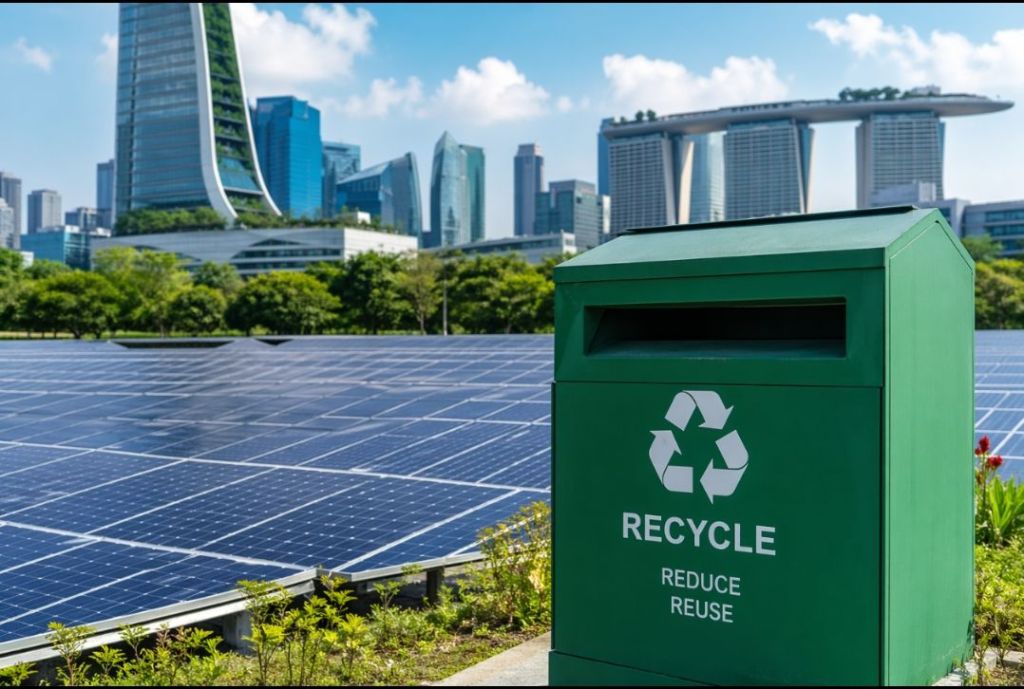
The linear to circular transition is not just an environmental shift but a deep restructuring of how economies produce value and manage resources, and it carries both historical continuity and future disruption in its trajectory. Historically, industrial growth across the world followed a simple path of extraction, production, consumption, and disposal, a model that delivered scale and efficiency but ignored resource limits and environmental costs; however, as resource scarcity, waste accumulation, and climate pressures intensified, economies began to explore circular systems where materials are reused, recycled, and reintegrated into production cycles, fundamentally altering the logic of growth itself.
India at an inflection point between informality and innovation reflects this transition in a uniquely complex way, where the circular economy is not entirely new but has existed in fragmented and informal forms for decades through scrap dealers, waste pickers, and local recycling networks; today, this informal backbone handles a significant share of plastic and e waste recycling, often with high efficiency but low income security and limited technological support, creating a paradox where sustainability is achieved through vulnerability rather than structured policy design. At the same time, the formal sector is beginning to step in with investments in organized recycling systems, waste to energy plants, and digital tracking of material flows, yet the integration between informal and formal systems remains weak, limiting scale efficiency and social equity.
Policy evolution is visible but enforcement gaps continue to define the real outcomes, as India has introduced rules around plastic waste management, e waste handling, and extended producer responsibility, pushing companies to take accountability for post consumer waste; however, compliance varies widely across regions and industries, and monitoring mechanisms are still evolving, resulting in uneven implementation where leading firms adapt quickly while smaller enterprises struggle to meet regulatory expectations. This creates a dual-speed transition, where progress exists but is not uniformly distributed, raising questions about inclusivity and long-term sustainability.
Global shifts are accelerating this transformation by turning circularity into a trade and competitiveness issue rather than just an environmental concern, as stricter extended producer responsibility norms, carbon border measures, and sustainability standards are increasingly influencing market access; exporters are now required to demonstrate not only product quality but also lifecycle responsibility, pushing industries to rethink design, sourcing, and waste management practices. In this context, circular economy practices are emerging as a new form of competitive advantage, where firms that can close material loops and reduce waste intensity gain access to premium markets and long-term contracts.
Technology and cost barriers remain critical challenges that will shape the pace of transition, as advanced recycling technologies, especially for complex plastics and electronic waste, require significant capital investment, technical expertise, and stable supply chains of segregated waste; for many developing economies including India, these prerequisites are not fully in place, making it difficult to scale circular solutions beyond pilot projects. Without addressing these structural constraints, the circular economy risks remaining a niche rather than becoming a mainstream economic model.
The future trajectory suggests that circularity will not replace linear systems overnight but will gradually embed itself within them, creating hybrid models where efficiency, sustainability, and profitability intersect; in such a scenario, the role of policy will shift from regulation to ecosystem building, enabling linkages between informal workers, formal enterprises, technology providers, and financial institutions. India’s opportunity lies in leveraging its existing informal strengths while upgrading them with technology, finance, and institutional support, transforming a survival-driven recycling system into a value-driven circular economy.
In the long run, the shift to circular systems will redefine growth itself, moving from volume based expansion to value based efficiency, where the ability to do more with less becomes the central economic principle; this transition will not be easy, as it challenges entrenched production systems, business models, and consumer behavior, but it also opens pathways for innovation, employment, and resilience. The real test will be whether economies can align incentives, technology, and social structures to make circularity not just an aspiration but a practical and inclusive reality.
#CircularEconomy #SustainabilityTransition #ResourceEfficiency #EPR #WasteManagement #RecyclingEconomy #GreenGrowth #MSMETransformation #ClimateEconomics #FutureOfProduction


Leave a Reply