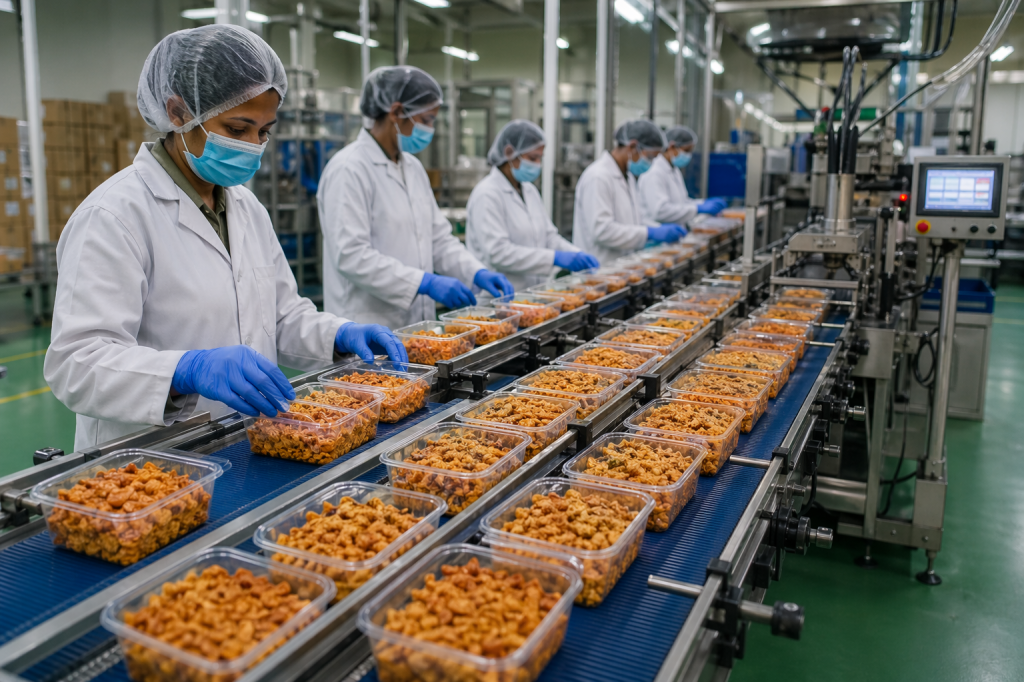
The food and consumption sector has undergone a profound transformation over the past few decades, moving from subsistence and basic consumption toward a more sophisticated ecosystem driven by branding, health awareness, and value addition. Historically, food systems were local, seasonal, and largely unprocessed, with minimal differentiation across products. However, as urbanisation accelerated and disposable incomes began to rise, particularly after economic liberalisation phases in countries like India, consumption patterns started shifting toward convenience, packaged formats, and aspirational brands. This transition reflects not just economic growth but also deeper socio-cultural changes where food is increasingly linked with lifestyle, identity, and health consciousness.
India’s Structural Shift and Expanding Demand Base
India today stands at a critical inflection point in this transition. The growth of packaged food demand is no longer confined to metropolitan areas; semi-urban and rural markets are emerging as powerful consumption drivers. This shift is supported by rising incomes, better connectivity, digital penetration, and exposure to branded products through media and e-commerce platforms. At the same time, government initiatives promoting food processing clusters, cold chain infrastructure, and supply chain integration are attempting to reduce wastage and improve value realisation for producers. These interventions are particularly important in a country where post-harvest losses have historically been high, often estimated between 5 to 15 percent depending on the commodity.
Yet, a fundamental structural constraint persists. The informal sector continues to dominate a large share of food production and distribution. While this provides employment and flexibility, it limits economies of scale, quality standardisation, and access to formal finance. The absence of strong aggregation mechanisms also weakens the bargaining power of small producers, preventing them from fully benefiting from the value-added segment of the market. This duality between a rapidly modernising formal segment and a deeply entrenched informal base creates both opportunities and inefficiencies.
Global Consumption Patterns and Emerging Risks
At the global level, the evolution of the food sector is being shaped by a combination of consumer preferences and systemic risks. There is a clear and accelerating shift toward organic, health-oriented, and sustainably sourced products. Consumers are increasingly willing to pay a premium for transparency, nutritional value, and ethical sourcing. This trend is pushing companies to rethink product formulations, sourcing strategies, and branding narratives. However, this transition also raises critical questions about affordability and accessibility, particularly in developing economies where price sensitivity remains high.
Simultaneously, global supply chains are becoming more vulnerable. Commodity price volatility, driven by climate change, geopolitical tensions, and energy price fluctuations, is directly impacting input costs for food producers. For instance, fluctuations in global prices of edible oils, grains, and fertilizers have a cascading effect on retail food inflation. Supply chain disruptions, as seen during recent global crises, have exposed the fragility of just-in-time logistics models and overdependence on limited sourcing geographies. Large FMCG companies are increasingly investing in supply chain diversification, digital tracking, and localised sourcing, but these adjustments come with higher costs.
The Future: Health, Technology, and Localisation
Looking ahead, the future of the food sector is likely to be shaped by the intersection of health awareness, technological integration, and localisation strategies. Functional foods, fortified products, and nutraceuticals are expected to grow rapidly as consumers become more conscious of preventive healthcare. Digital technologies such as blockchain for traceability, artificial intelligence for demand forecasting, and precision agriculture for input optimisation will redefine efficiency across the value chain.
For India, the challenge and opportunity lie in bridging the gap between its vast informal base and the emerging formal, technology-driven ecosystem. Scaling up food processing while ensuring inclusivity of small producers will be critical. Cluster-based development, combined with digital platforms for market access, can play a transformative role in this regard. At the same time, policy frameworks must balance growth with sustainability, ensuring that the push toward processed and packaged foods does not come at the cost of nutritional diversity or environmental degradation.
A Critical Reflection
The transition from basic consumption to value-driven food systems is not merely an economic shift; it is a structural transformation with implications for health, livelihoods, and sustainability. While rising incomes and urbanisation are driving demand, the real test lies in creating a system that is resilient, inclusive, and aligned with long-term well-being. Without addressing structural inefficiencies, particularly in the informal sector and supply chains, the sector risks becoming fragmented and unequal. The future will belong not just to those who can produce more, but to those who can produce smarter, healthier, and more sustainably.
#FoodProcessing #ValueAddition #RuralDemand #ColdChain #InformalSector #HealthFoods #SupplyChain #CommodityPrices #FMCG #SustainableConsumption


Leave a Reply