Introduction: The Evolution of India’s PLI for Textiles
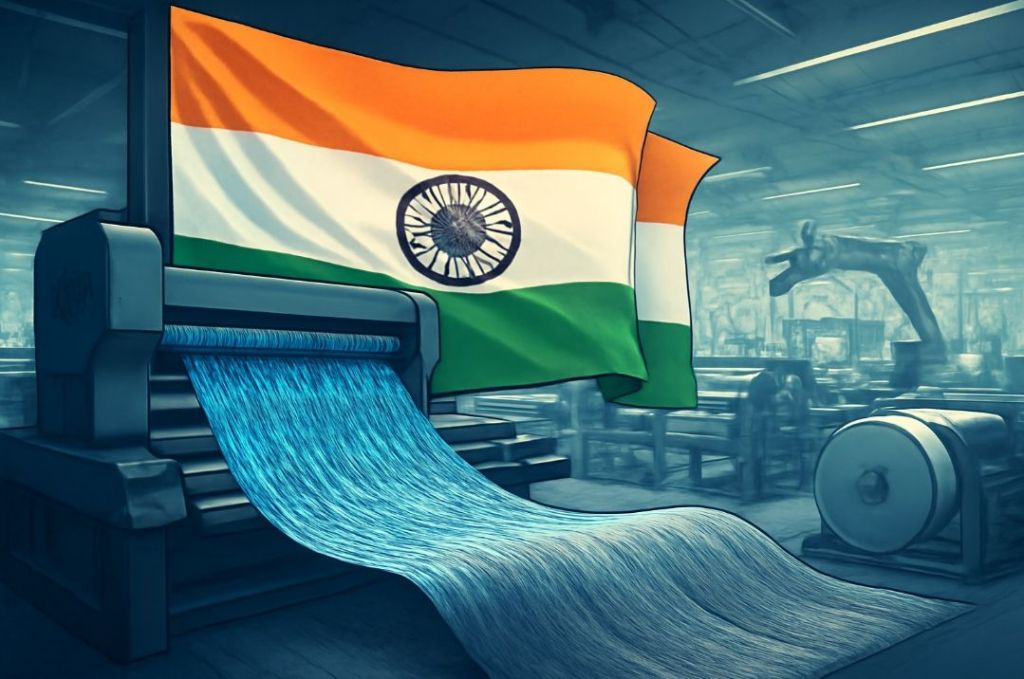
When India launched its Production Linked Incentive (PLI) Scheme for Textiles in September 2021, it was a bold step to strengthen domestic manufacturing, attract global investments, and position India as a competitive player in man-made fibres (MMF) and technical textiles. However, despite the scheme’s promise, industry participation was limited. The reasons were clear — high investment thresholds, strict turnover criteria, and procedural rigidity.
In a decisive policy correction, the government has dramatically reduced the minimum investment requirements and relaxed turnover targets, making the scheme more inclusive and business-friendly. This reform, in effect, transforms PLI for Textiles into a more pragmatic industrial policy instrument designed to align with India’s evolving manufacturing landscape.
The Core Amendments: Cutting the Investment Barrier
Under the revised framework, the Part-1 category investment threshold has been slashed from ₹300 crore to ₹150 crore, while the Part-2 category now requires only ₹50 crore instead of ₹100 crore. This 50% reduction is not just administrative—it’s structural. It directly targets the core bottleneck that had deterred medium-sized textile firms from joining the PLI race.
Historically, India’s textile sector has been dominated by micro, small, and medium enterprises (MSMEs) that contribute to employment and exports but often struggle to meet large-scale investment mandates. By halving the entry thresholds, the government has effectively opened the door for these enterprises to scale operations, integrate with global supply chains, and invest in modern MMF technologies.
Ease of Doing Business: Flexibility and Turnover Reforms
Equally transformative is the reduction of the incremental turnover requirement—from 25% to just 10% starting in the second year. This change acknowledges the practical realities of the textile business cycle, which depends on seasonal trends, export orders, and raw material volatility.
Additionally, companies can now set up new project units within existing organizations instead of creating separate entities, reducing duplication of resources and bureaucratic delays. This seemingly small tweak enhances operational efficiency and accelerates project readiness—key factors in the competitive global apparel and MMF markets.
Broader Product Coverage: Expanding the MMF Horizon
The scheme’s expansion to include eight new HSN codes for MMF apparel and nine new codes for MMF fabrics represents a strategic recalibration. This move recognizes the global shift from natural fibres to synthetic and blended materials, where India had long lagged behind competitors like China, Vietnam, and Bangladesh.
The historical dependency on cotton-based production made India vulnerable to climatic fluctuations and price shocks. By incentivizing MMF, the policy signals a structural shift toward value-added, innovation-driven textile exports—an area where India can capture new markets in technical textiles, sportswear, and sustainable fibres.
Historical Perspective: From Protectionism to Production-Linked Incentives
India’s textile policies have evolved from import substitution and protectionism in the post-independence decades to export-oriented competitiveness in the 21st century. The PLI framework marks the next phase in this journey—linking fiscal incentives to measurable performance metrics such as production, investment, and employment.
Historically, government support often came in the form of subsidies or tax exemptions that lacked accountability. The PLI approach, however, ties incentives directly to incremental output, encouraging efficiency and long-term growth rather than short-term relief.
The current amendment, therefore, can be viewed as PLI 2.0—a fine-tuned policy that learns from both past limitations and global industrial trends.
Critical Outlook: Challenges and Cautions Ahead
While the lowered thresholds will widen participation, they also raise questions about monitoring, quality assurance, and fiscal prudence. Expanding the pool of eligible companies may increase administrative complexity and dilute the scheme’s focus on high-tech, globally competitive units.
Moreover, textile investments require long gestation periods and are sensitive to global demand cycles. Unless complemented by infrastructure upgrades, skill development, and trade facilitation, the incentive structure alone may not guarantee global competitiveness.
A futuristic success of this reform will depend on whether the scheme drives technology adoption, export diversification, and sustainability compliance—the three pillars defining the next era of textile manufacturing.
Futuristic Perspective: Toward a Global Textile Renaissance
Looking ahead, the revised Textile PLI could be a turning point for India’s manufacturing strategy. By aligning investment and turnover norms with industry realities, the government has made a calculated move to blend scale with inclusivity.
As the world shifts toward eco-friendly and digitalized textile ecosystems, India’s competitive advantage will depend on innovation, traceability, and circular economy practices. If the revised policy triggers a wave of new investments in technical textiles, performance wear, and recycled fibres, India could emerge not just as a production base—but as a global design and innovation hub.
Conclusion: Policy Pragmatism for the Next Growth Cycle
The amendments to the Textile PLI scheme exemplify policy pragmatism in action—responsive governance that listens to industry and recalibrates accordingly. The halved investment thresholds and eased compliance norms may finally unleash the sector’s true potential, enabling inclusive participation across the textile value chain.
In a historical continuum, this reform signals a move from policy prescription to policy participation—a shift that could well define India’s industrial narrative in the coming decade.
#TextilePLI #InvestmentReform #MakeInIndia #MMF #PLI2.0 #IndustrialPolicy #EaseOfDoingBusiness #ExportCompetitiveness #SustainableTextiles #ManufacturingIndia
 "Connecting communities, empowering nations: Unifying the Regional and Global Economy ."
Leave a comment