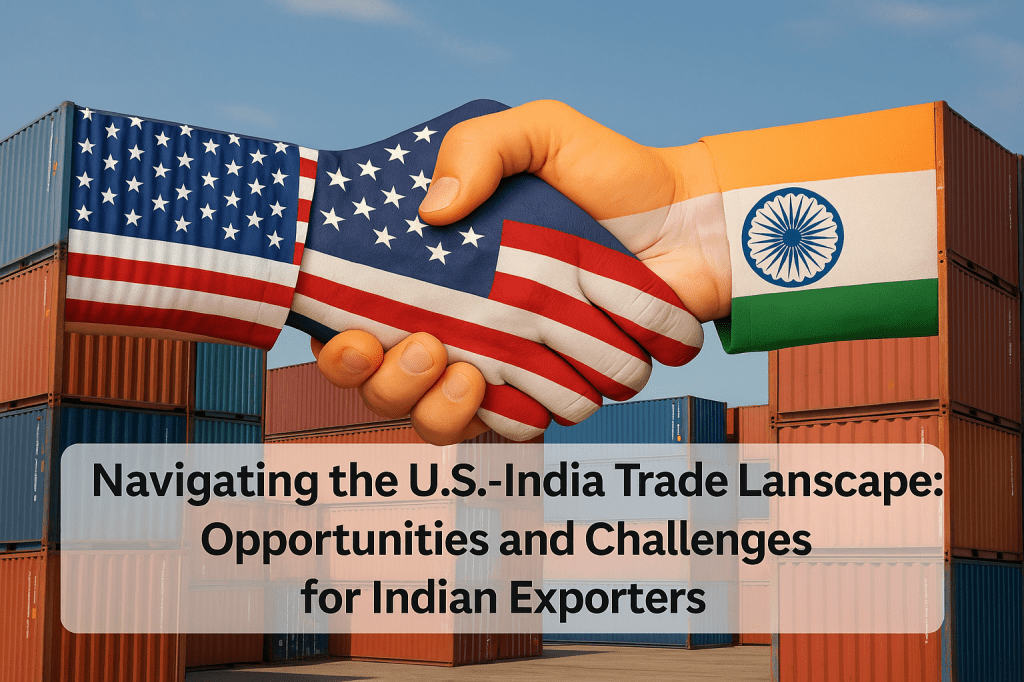
As the U.S. and India continue their complex and high-stakes trade discussions, the implications for Indian exporters are both promising and challenging. These dialogues are more than just bilateral negotiations—they are a reflection of shifting global trade dynamics, changing consumer patterns, and strategic realignments in supply chains. For Indian exporters, the stakes are high, and the potential gains, if leveraged effectively, could be transformative.
India’s exports to the U.S. have witnessed steady growth, with the U.S. emerging as India’s largest trading partner in recent years. In FY 2023, bilateral trade crossed $128 billion, with Indian exports accounting for more than $78 billion—driven by key sectors such as pharmaceuticals, IT services, textiles, gems and jewelry, and engineering goods. These figures underscore the scale of the opportunity and the reliance on a stable trade relationship with the U.S. However, sustaining and growing this relationship amid evolving U.S. domestic policies and global economic uncertainties demands strategic adaptation from Indian exporters.
A major milestone in the trade relationship was the termination of India’s Generalized System of Preferences (GSP) status in 2019 by the U.S., which impacted tariff advantages for over 2,000 Indian products. This move created headwinds for labor-intensive sectors like textiles, leather, and engineering goods, forcing Indian businesses to reevaluate cost structures and competitiveness. While discussions around reinstating GSP benefits or designing a new tariff framework have surfaced intermittently, they remain unresolved, adding to the uncertainty for exporters.
Despite these challenges, Indian exporters continue to tap into American demand through product diversification, compliance with stricter U.S. regulatory norms, and integration with digital and green supply chains. The growth of e-commerce, demand for clean technologies, and nearshoring trends in the U.S. offer fresh entry points for Indian small and medium enterprises (SMEs), particularly in niche manufacturing, health products, organic foods, and digital services.
Negotiations between the two countries increasingly focus on non-tariff barriers, digital trade rules, intellectual property rights, data localization, and climate-aligned trade practices. These areas present both obstacles and gateways. For instance, while Indian IT firms benefit from access to the U.S. market, concerns over visa regulations and data flow restrictions add operational risk. Similarly, India’s push for sustainable textiles and clean manufacturing aligns with U.S. buyers’ preferences, but compliance requires investment and upskilling.
To truly harness the export potential, Indian policymakers and industry stakeholders must work in tandem to resolve structural bottlenecks—improving port logistics, enhancing product standards, easing access to trade finance, and advocating for fair trade clauses. Equally important is the role of trade diplomacy in ensuring India’s voice is heard in shaping the future of digital and services trade frameworks with the U.S.
The road ahead for Indian exporters is layered with both possibilities and complexities. A balanced and forward-looking trade agreement with the U.S. could open new sectors, deepen supply chain integration, and reinforce India’s status as a reliable partner in global trade. However, this journey will require resilience, continuous policy support, and proactive engagement from all stakeholders to overcome regulatory friction and market volatility.
#IndianExports
#USTradePolicy
#BilateralTrade
#TradeNegotiations
#ExportChallenges
#GSPIndia
#DigitalTrade
#SupplyChainResilience
#TradeOpportunities
#ExportStrategy
 "Connecting communities, empowering nations: Unifying the Regional and Global Economy ."
Leave a comment