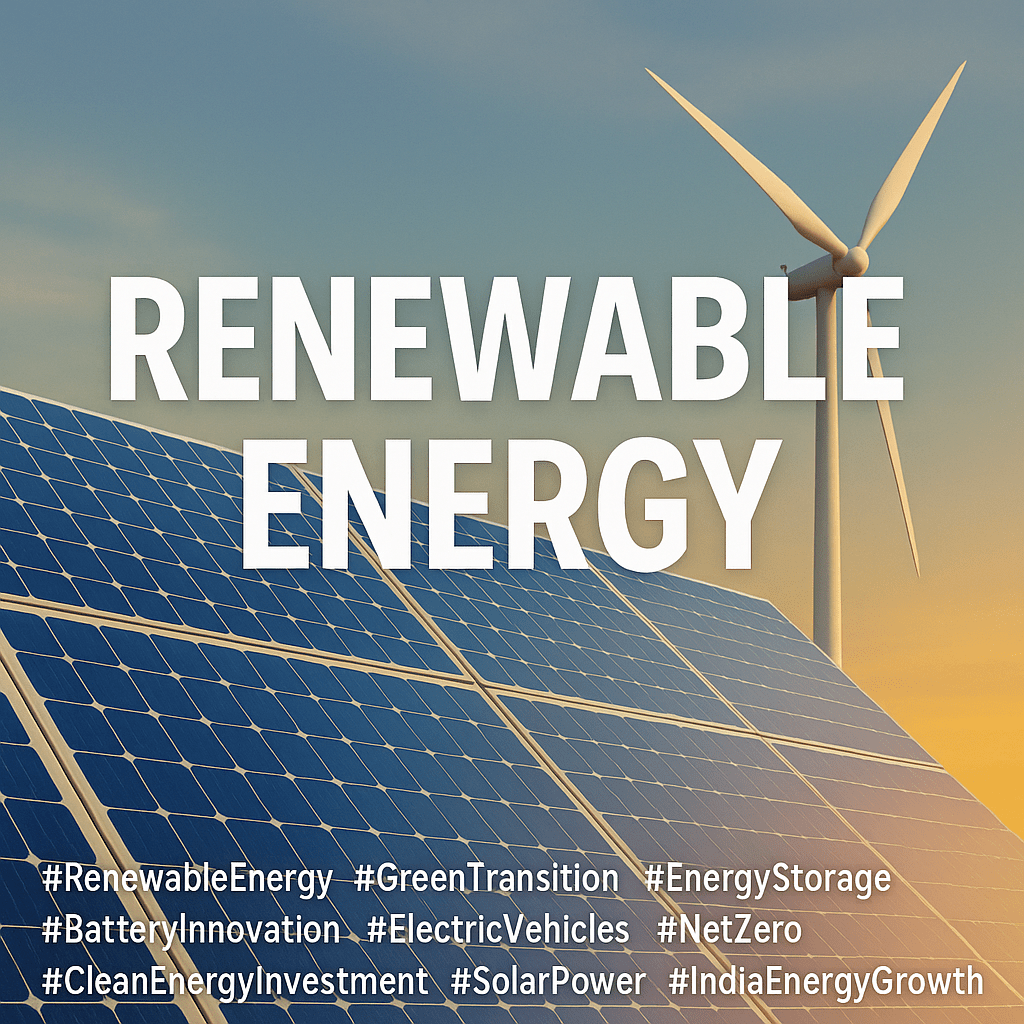
The global energy landscape is undergoing a fundamental transformation. At the heart of this shift is the rapid growth of the renewable energy sector, driven by a convergence of technological advancements, policy commitments, and evolving consumer preferences. As countries race toward net-zero targets and sustainable economic models, renewables are no longer just an environmental imperative—they are now a strategic economic opportunity.
The Green Surge: Drivers of Global Growth
Three critical forces are fueling the rise of renewable energy across continents:
1. Green Energy Transition Commitments:
Governments worldwide are setting ambitious decarbonization goals under frameworks like the Paris Agreement. Over 140 countries have pledged net-zero emissions targets, with many implementing large-scale public-private investments in renewable infrastructure. These policy signals are redirecting capital flows away from fossil fuels and toward clean energy technologies.
2. Electric Vehicle (EV) Adoption:
The electrification of transport is creating an explosive demand for clean, grid-compatible electricity. As EV sales are projected to comprise over 60% of global vehicle sales by 2030 (according to BloombergNEF), renewable sources such as solar, wind, and hydro are increasingly being integrated into national grids to meet this growing energy load.
3. Innovation in Battery and Energy Storage:
Historically, one of the biggest constraints to renewable energy has been intermittency—solar and wind energy depend on weather conditions. However, recent innovations in battery technology and energy storage systems are rapidly neutralizing this challenge. With cost reductions in lithium-ion batteries and the emergence of next-generation storage solutions (like sodium-ion and solid-state batteries), energy can now be stored and dispatched more reliably.
India’s Renewable Ascent: A Case in Point
India exemplifies how developing economies are embracing the renewable revolution. With one of the most ambitious renewable targets in the world—500 GW of non-fossil fuel capacity by 2030—India is aligning its energy policy with global sustainability trends.
In 2025 alone, India’s renewable energy sector is expected to grow at a robust rate of 18–25%, outpacing traditional energy segments. This growth is driven by a mix of utility-scale solar projects, wind energy installations in coastal states, and distributed solar adoption in rural areas. The government’s Production Linked Incentive (PLI) schemes, favorable tariffs, and foreign direct investment inflows are making the sector increasingly investor-friendly.
Clean Energy as an Investment Magnet
The renewable sector’s dynamism is also reflected in financial markets. Clean energy stocks have outperformed many conventional energy indices over the past three years, attracting institutional investors seeking ESG-aligned portfolios. Global investment in renewable energy exceeded $500 billion in 2023, with solar power accounting for the largest share, followed by wind and green hydrogen initiatives.
The sector’s attractiveness is enhanced by declining levelized costs of electricity (LCOE). According to the International Renewable Energy Agency (IRENA), solar PV costs have fallen by over 80% in the past decade, making renewables cost-competitive—even cheaper than coal in many regions.
Challenges and the Road Ahead
Despite the optimistic outlook, challenges remain. Supply chain disruptions for rare earth materials, grid integration issues, land acquisition hurdles, and policy uncertainties in some regions could slow down momentum. Addressing these challenges will require coordinated action across governments, industry players, and civil society.
However, the overall trajectory is unmistakably clear: renewables are not just an alternative—they are becoming the dominant energy form of the 21st century. With technological breakthroughs, supportive policies, and rising environmental consciousness, renewable energy is set to redefine global power dynamics.
As we move into a future marked by climate constraints and energy security concerns, renewable energy stands out as a pillar of resilience and opportunity. For countries like India—and indeed the global community—the shift to renewables is not merely about energy supply. It’s about redefining economic models, creating green jobs, and securing a sustainable legacy for generations to come.
 "Connecting communities, empowering nations: Unifying the Regional and Global Economy ."
Leave a comment