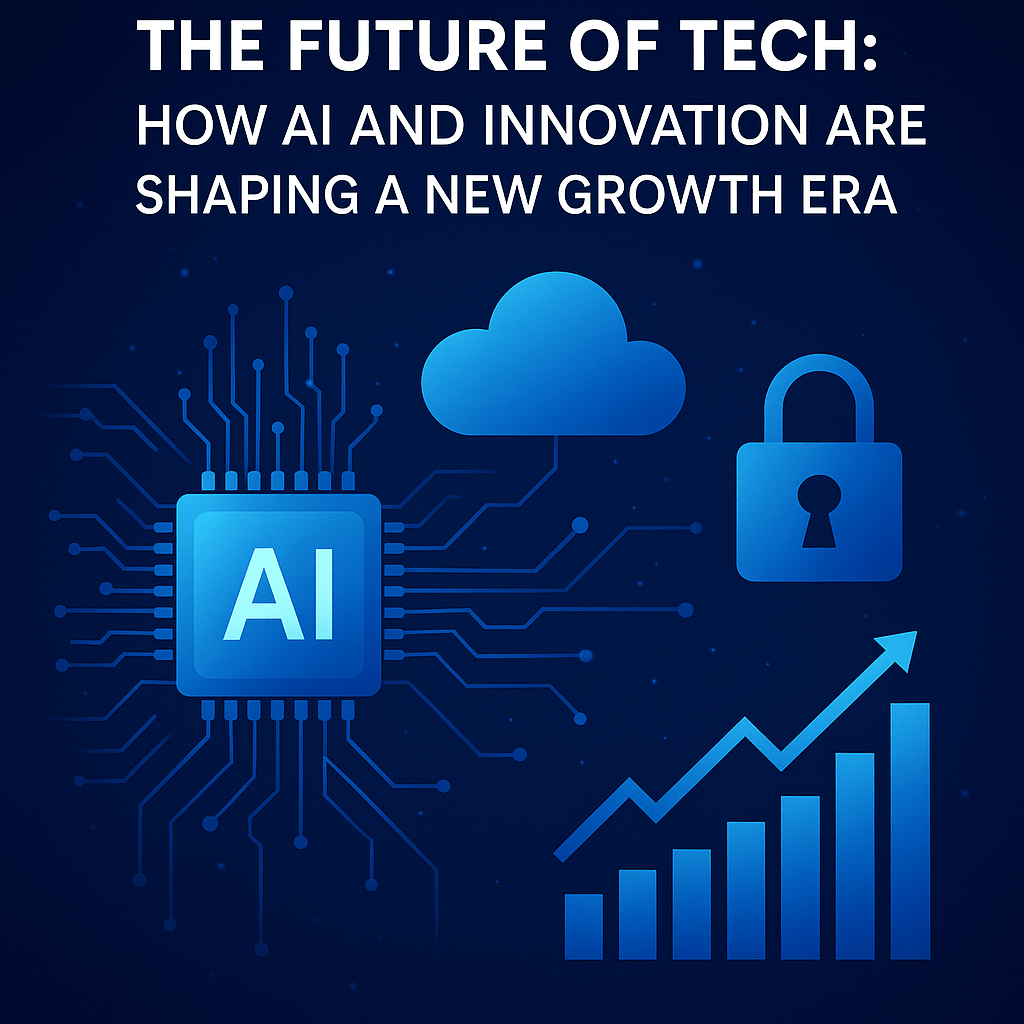
The global technology sector stands at the cusp of a transformative growth phase, driven by an unprecedented convergence of advanced computing, artificial intelligence (AI), and escalating IT spending. As businesses and governments alike recalibrate their strategies to leverage digital transformation, the sector’s trajectory is being redefined by breakthrough innovations in generative AI, cloud infrastructure, and cybersecurity.
A Surge in IT Spending: Setting the Pace for Expansion
According to recent forecasts by Gartner and IDC, global IT spending is projected to cross $5 trillion in 2025, marking one of the highest year-on-year growth rates in over a decade. The surge is primarily led by enterprises accelerating their digital transformation agendas post-pandemic and prioritizing operational resilience through technology.
Cloud computing, in particular, is absorbing a large share of this investment. Hybrid and multi-cloud strategies have become the backbone of enterprise IT environments, allowing organizations to manage data scalability, cost-efficiency, and innovation with greater agility. Leading cloud service providers like Amazon Web Services (AWS), Microsoft Azure, and Google Cloud are reporting strong double-digit growth, fueled by demand across industries ranging from healthcare to manufacturing.
Generative AI Chips: Fueling the Next Computing Revolution
One of the most groundbreaking developments lies in the rise of generative AI chips—high-performance semiconductors designed specifically to accelerate AI model training and inference. These chips are engineered to handle the computational load of large language models (LLMs), image generation systems, and other deep learning architectures.
NVIDIA, a key player in this space, has seen surging demand for its H100 GPUs, which are at the heart of generative AI platforms like ChatGPT and Google Gemini. Meanwhile, AMD and Intel are intensifying competition through new AI-focused architectures aimed at both data centers and edge devices.
The global AI chip market is expected to exceed $135 billion by 2030, growing at a CAGR of over 30%. This technological leap is unlocking possibilities in real-time AI processing, smart robotics, and autonomous systems that were previously infeasible due to computational limitations.
Cybersecurity: An Unshakeable Pillar in a Digital Age
As digital infrastructure grows, so do cyber threats. The global cost of cybercrime is forecasted to reach $13 trillion by 2028, prompting a parallel surge in cybersecurity investment. Innovations in AI-driven threat detection, zero-trust architecture, and quantum encryption are setting new standards in cyber defense.
Enterprises are also prioritizing Security-as-a-Service (SECaaS), which enables cloud-native and cost-efficient protection models. Moreover, regulatory frameworks like the European Union’s Digital Operational Resilience Act (DORA) and India’s Digital Personal Data Protection Act are mandating stricter cybersecurity compliance, pushing firms to upgrade their security ecosystems.
AI Investments Reshaping Business Models
From personalized healthcare diagnostics to algorithmic trading, AI is no longer a niche technology—it’s a general-purpose platform that is fundamentally altering how businesses operate. The venture capital ecosystem is responding accordingly. Global private investments in AI surpassed $100 billion in 2024, and a growing share of this capital is flowing into startups that combine domain expertise with AI capabilities.
This shift is prompting established firms to acquire AI-first startups, build in-house AI research labs, and partner with academic institutions to gain a competitive edge. The monetization models range from AI-as-a-Service (AIaaS) platforms to embedded AI within consumer devices and industrial machinery.
A Global Outlook: From Silicon Valley to Southeast Asia
While the U.S. continues to dominate core innovation, Asia-Pacific economies such as India, South Korea, and Singapore are emerging as vibrant hubs of technology development. India’s National AI Mission and semiconductor subsidy policies are catalyzing domestic production and AI adoption, while countries like South Korea are leading in 5G-enabled AI applications.
This global dispersion of innovation is enabling more inclusive tech growth, with localized AI models, edge computing for rural areas, and language-specific natural language processing (NLP) tools gaining traction in emerging markets.
A Defining Decade for Tech
The technology sector’s current momentum is not just about faster computing or smarter software—it’s about redefining productivity, reshaping economies, and reframing the human-machine interface. With increased IT spending, dedicated AI investments, and strong policy support, the 2025–2030 decade is set to be one of historic transformation.
Those who innovate, adapt, and invest wisely today will lead the digital economy of tomorrow.
#GenerativeAI #AIChips #Cybersecurity #CloudComputing #ITSpending #DigitalTransformation #AIInvestments #TechInnovation #DataSecurity #GlobalTechTrends
 "Connecting communities, empowering nations: Unifying the Regional and Global Economy ."
Leave a comment