Introduction
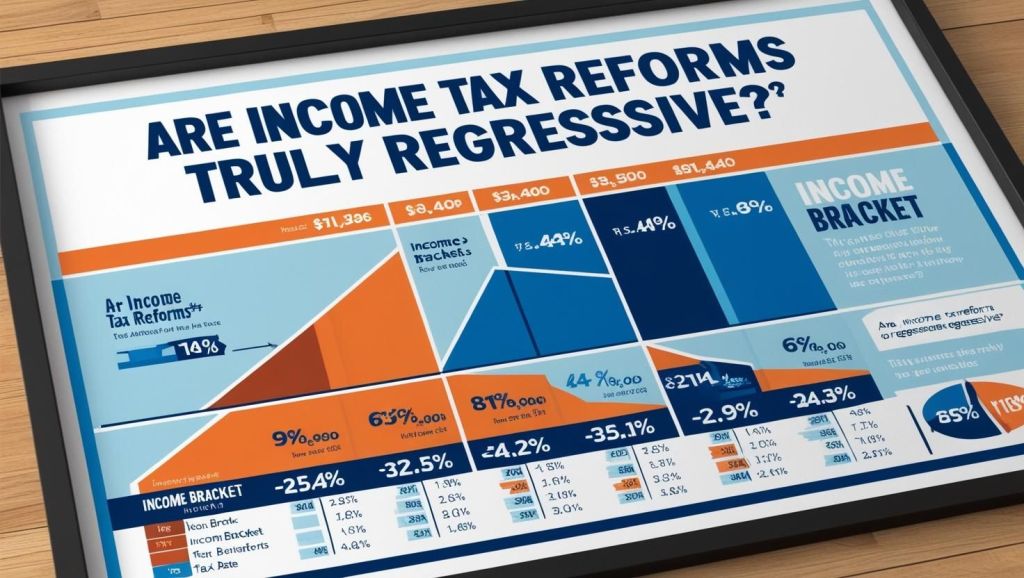
Taxation policies are central to economic governance, influencing revenue generation, wealth distribution, and economic behavior. Recent income tax reforms in India, which include an increase in the exemption threshold from ₹700,000 to ₹1.28 million per annum and a reduction in tax rates for higher income brackets, have sparked debates over their progressive or regressive nature. While the intention is to boost consumption, savings, and investment, the estimated annual revenue loss of ₹1 trillion raises concerns about potential fiscal imbalances and equity in the taxation system.
This blog critically examines whether income tax reforms are inherently regressive when adjusted relative to indirect taxes, considering data, reasoning, and broader economic implications.
Understanding Tax Progressivity and Regressivity
Taxation systems are generally categorized into progressive, regressive, or proportional structures:
Progressive Taxes: Higher income earners pay a greater proportion of their income in taxes. Personal income tax is traditionally progressive, as tax rates increase with income.
Regressive Taxes: Lower-income groups bear a disproportionately higher tax burden. Indirect taxes, such as GST and excise duties, are typically regressive since they apply uniformly to all consumers, regardless of income level.
Proportional Taxes: A flat tax rate applies to all income levels equally, neither benefiting nor burdening any particular income group.
When personal income tax rates are cut while indirect taxes remain unchanged or increase, the overall tax structure may shift towards regressivity.
Analyzing the Recent Income Tax Cuts: Who Benefits?
The Indian government’s decision to raise the income tax exemption threshold to ₹1.28 million and reduce tax rates for higher income brackets directly benefits:
1. The Upper-Middle Class and Higher-Income Groups – These individuals will see a significant increase in disposable income. Reduced tax rates for high earners disproportionately benefit those already in a strong financial position.
2. The Middle Class – The expanded exemption limit reduces their tax burden, potentially boosting their savings and consumption.
3. Low-Income Earners – Many of them already fall below the taxable threshold and thus do not benefit directly from these reforms.
While proponents argue that these cuts enhance economic activity, critics highlight that they reduce government revenue, leading to a higher reliance on indirect taxation, which disproportionately affects lower-income groups.
Revenue Loss and Its Fiscal Implications
With an estimated annual revenue loss of ₹1 trillion, the government will need to compensate for this shortfall. Historically, governments have bridged revenue gaps through:
1. Higher Indirect Taxes – Increased reliance on GST and excise duties could disproportionately impact lower-income households, making the overall tax system more regressive.
2. Cuts in Public Expenditure – Reduced spending on welfare programs, infrastructure, and essential services like healthcare and education could widen socio-economic inequalities.
3. Higher Borrowing – Increased fiscal deficits may lead to inflationary pressures, eroding real income and savings, particularly for the middle and lower classes.
Comparing Income Tax and Indirect Taxes: The Regressivity Concern
A fundamental issue with shifting from direct to indirect taxation is who bears the tax burden.
India already has a high reliance on indirect taxes, with GST collections forming a significant portion of tax revenue. If the government increases GST rates or fuel excise duties to recover revenue losses from income tax cuts, it will disproportionately burden lower-income households.
A case study from the past offers insights:
Demonetization and GST Implementation (2016-2017): The shift towards indirect taxation post-demonetization led to higher inflationary pressures and increased costs for essential goods.
Post-2008 Economic Crisis Tax Cuts: Many governments worldwide, including India, introduced income tax cuts but later relied on consumption taxes to compensate, inadvertently making the tax system more regressive.
Critical Perspective: Are These Reforms Truly Regressive?
From a policy perspective, income tax reductions themselves are not inherently regressive since they reduce tax burdens for higher earners. However, their regressive nature arises when:
1. They Lead to Higher Indirect Taxes – If GST rates increase to offset revenue loss, the burden shifts to lower-income groups.
2. They Result in Lower Public Spending – If welfare programs are cut due to reduced revenues, the most vulnerable groups suffer.
3. They Widen Income Inequality – Wealthier segments gain more purchasing power, while lower-income earners see limited benefits.
Economists often argue that progressive direct taxation is crucial for wealth redistribution. Countries with higher economic equality, such as the Nordic nations (Sweden, Norway, Denmark), maintain robust high-income tax brackets while keeping indirect taxation moderate.
Alternative Approaches to Balance the Tax Structure
A well-balanced tax reform should consider:
1. Expanding the Tax Base Instead of Cutting Rates – India has a low taxpayer base (only about 6% of the population pays income tax). Bringing more earners into the system could increase revenue without raising indirect taxes.
2. Targeted Indirect Tax Reductions – Lowering GST on essential goods while maintaining higher rates on luxury goods can create a fairer tax system.
3. Wealth and Property Taxes – Instead of reducing income tax for high earners, introducing a progressive wealth tax or higher property tax on luxury real estate can ensure revenue without regressive effects.
4. Incentivizing Tax Compliance – Strengthening digital infrastructure and reducing tax evasion among high-income groups could generate significant revenue without burdening the poor.
Conclusion: A Step in the Right Direction or a Regressive Shift?
While the latest income tax cuts offer relief to middle and high-income earners, the broader fiscal implications cannot be ignored. If the government offsets revenue losses through higher indirect taxes or reduced public spending, the reforms could inadvertently lead to a regressive tax shift.
To ensure fiscal sustainability and economic equity, policymakers must:
✔ Balance direct and indirect taxation carefully.
✔ Protect lower-income groups from disproportionate tax burdens.
✔ Strengthen wealth redistribution mechanisms.
India’s taxation system is at a critical juncture—whether these reforms lead to sustainable economic growth or deepen income inequality will depend on how the government compensates for revenue losses in the coming years.
What are your thoughts? Do you think income tax cuts should be prioritized over maintaining government revenue? Share your views below!


Leave a comment