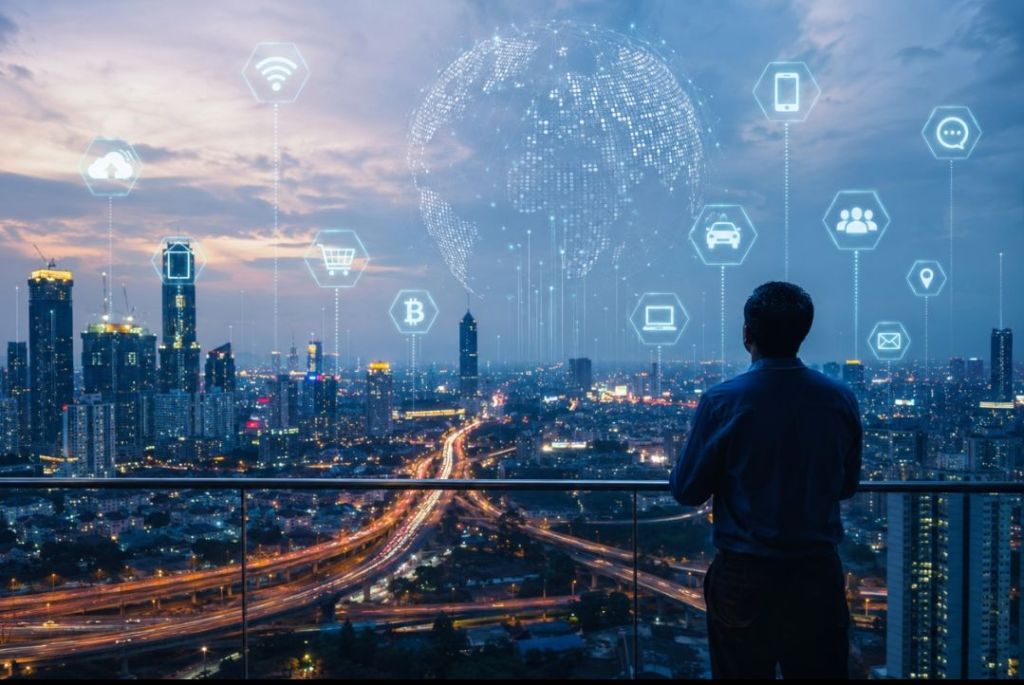
The history of economic power has always moved through different centres of control. In earlier centuries, landowners controlled agriculture, industrialists controlled factories, and banks controlled finance. Today, a new form of power is emerging through consumer technology platforms that increasingly shape how people buy, travel, communicate, learn, entertain themselves, and even think. What once appeared to be convenient digital services are slowly evolving into economic gatekeepers with the ability to influence markets, social behaviour, labour systems, and public opinion at a scale never witnessed before.
The rise of consumer technology platforms did not happen suddenly. It emerged gradually with the spread of smartphones, affordable internet, digital payments, cloud computing, and artificial intelligence. India became one of the most important laboratories of this transformation. With hundreds of millions of internet users and one of the world’s largest young populations, the country witnessed explosive growth in fintech, e-commerce, edtech, food delivery, ride-hailing, and online entertainment platforms. The speed of this transformation was extraordinary. A vegetable vendor started accepting QR payments, students shifted to online learning applications, households began depending on app-based delivery systems, and small businesses became dependent on digital marketplaces for survival.
At first, this transition looked highly democratic. Technology appeared to reduce barriers and create opportunities for ordinary people. Small sellers gained access to national markets, gig workers found flexible employment, consumers enjoyed convenience, and digital finance expanded rapidly. But over time, another reality started emerging beneath the surface. The same platforms that promised openness slowly began controlling access, visibility, pricing, customer relationships, and data. In many sectors, platforms no longer acted merely as intermediaries. They became invisible regulators of economic life.
The most important source of platform power today is not only money but data. Earlier industrial economies depended on ownership of factories, machines, oil fields, or ports. The digital economy depends on ownership of behavioural information. Every online purchase, ride booking, video watched, search made, payment completed, or location visited generates valuable data. Technology companies use this information to predict consumer behaviour, influence spending patterns, personalise advertisements, and shape future consumption. The consumer is no longer only a buyer. The consumer himself becomes the product being analysed, monetised, and guided by algorithms.
India’s digital transformation reflects both enormous opportunity and serious vulnerability. Digital payments through platforms have expanded financial inclusion at an unprecedented pace. Millions who were excluded from formal banking systems now participate in the digital economy. E-commerce has opened market access for small traders and artisans. Edtech platforms have reached students in smaller towns. Mobility applications have improved urban transportation convenience. Yet this success story also hides growing structural dependence. Small sellers increasingly depend on platform algorithms for visibility. Restaurants struggle with high commissions from food delivery applications. Drivers and delivery workers face unstable earnings controlled by opaque incentive systems. Teachers in edtech systems often lose autonomy as content becomes standardised and centralised.
The gig economy especially reveals the contradictions of platform capitalism. Platforms describe workers as independent partners, but in practice many workers operate under intense algorithmic control. Their ratings, incentives, work allocation, penalties, and even survival are shaped by systems they do not fully understand. Workers often carry operational risks while platforms retain technological and financial control. In many cases, a delivery worker or ride-hailing driver works longer hours than traditional employees without receiving comparable social security protection, health insurance, or long-term stability. Flexibility, which was once marketed as empowerment, is increasingly becoming economic insecurity disguised as entrepreneurship.
The situation becomes even more critical for small businesses and local economies. Earlier, a shopkeeper controlled customer relationships directly. Today, platforms increasingly own customer access. A seller may produce the product, manage inventory, and take financial risks, yet the platform controls search rankings, advertising visibility, payment systems, and customer data. This creates asymmetrical power where dependence continuously increases. Many businesses fear delisting, negative ratings, or reduced algorithmic visibility because survival itself becomes linked to platform approval.
The concentration of digital power among a few global firms is becoming one of the defining economic issues of the twenty-first century. A small number of companies now influence global advertising, cloud infrastructure, operating systems, online retail, digital payments, entertainment distribution, and artificial intelligence ecosystems. Their influence extends beyond markets into politics, culture, media, and even national security. Governments across the world are increasingly uncomfortable with this concentration of power. Antitrust investigations, data protection laws, platform regulation, and digital taxation debates are expanding in Europe, the United States, India, and many other economies.
However, regulation itself remains complicated. Governments need digital innovation for economic growth, financial inclusion, startup ecosystems, and employment generation. Excessive regulation may slow innovation and reduce investment. At the same time, weak regulation may allow monopolistic behaviour, exploitation of workers, manipulation of data, and erosion of consumer rights. India is currently walking this difficult path. Regulatory scrutiny around competition, consumer protection, digital lending, and privacy is increasing, yet institutional capacity often struggles to match the speed of technological change.
Artificial intelligence is likely to intensify this concentration of power further. AI systems depend heavily on computing infrastructure, data ownership, and advanced models that require enormous financial resources. Large platforms already possess these advantages. As AI becomes integrated into search engines, education systems, financial services, logistics, healthcare, and entertainment, dominant platforms may gain even deeper control over economic ecosystems. Smaller firms may increasingly depend on AI infrastructure owned by a few technology giants. This could create a future where innovation itself becomes dependent on access controlled by dominant digital networks.
Another emerging concern is behavioural influence. Platforms are no longer neutral technologies. Recommendation systems influence political opinions, cultural trends, consumption habits, and social behaviour. Digital addiction, misinformation, mental health stress, and attention fragmentation are becoming serious social concerns globally. Younger generations are growing up inside ecosystems designed to maximise engagement and screen time. The economic model of many platforms depends on keeping users emotionally attached for longer periods. In this system, human attention itself becomes a monetised commodity.
Historically, societies have often underestimated the long-term implications of concentrated economic power until crises emerged. Industrial monopolies once shaped labour exploitation and political influence during the early industrial revolution. Oil cartels influenced geopolitics for decades. Today, platform monopolies may become equally powerful but far less visible because their influence operates through convenience, habit, and digital dependence rather than physical force. The danger lies not only in economic concentration but in the silent normalisation of dependence.
India still has an opportunity to shape a more balanced digital future. The country possesses demographic scale, entrepreneurial energy, strong digital public infrastructure, and a vibrant startup ecosystem. But long-term resilience will require more than rapid platform growth. India must strengthen digital competition frameworks, support platform cooperatives, improve labour protections for gig workers, build domestic AI capabilities, encourage open digital ecosystems, and ensure data governance remains citizen-centric rather than platform-centric.
The future battle may not be between countries alone. It may increasingly be between sovereign governments and powerful digital ecosystems that influence citizens more directly than traditional institutions. Economic independence in the coming decades may depend not only on manufacturing capacity or military strength but also on who controls data, algorithms, digital infrastructure, and artificial intelligence systems.
Technology undoubtedly has the power to improve lives, democratise access, and create new opportunities. But when convenience becomes dependence and innovation becomes concentration, societies must pause and ask a deeper question. Are platforms serving humanity, or is humanity slowly reorganising itself around the priorities of platforms? The answer to that question may define the economic and social future of the twenty-first century.
#ConsumerTechnology #DigitalEconomy #PlatformEconomy #IndiaTech #ArtificialIntelligence #GigEconomy #DataEconomy #Fintech #Ecommerce #FutureOfWork


Leave a comment