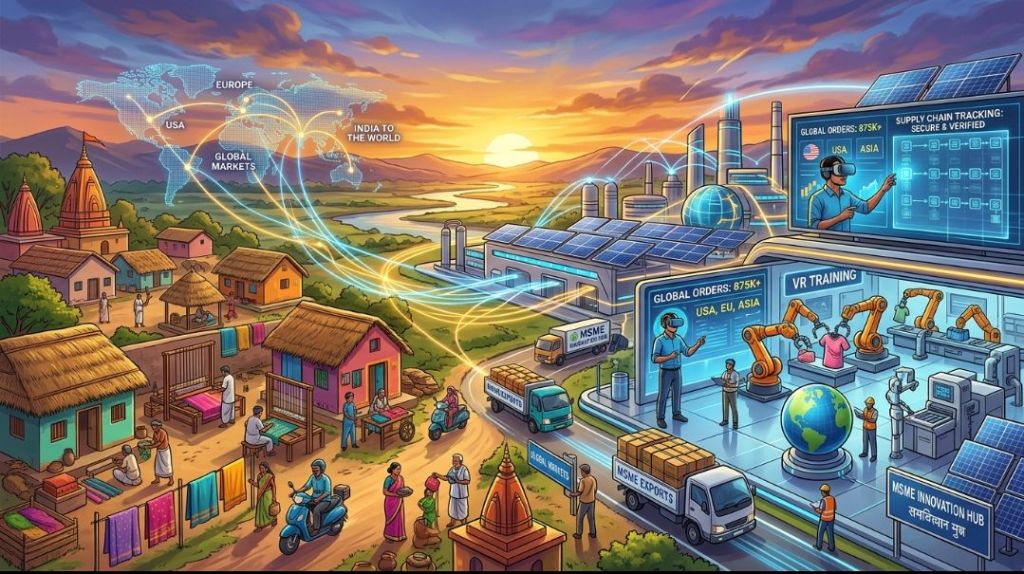
Micro, small, and medium enterprises form the unyielding spine of economies worldwide, fueling over 40% of India’s exports and employing millions, yet they teeter on the edge as formal digital and global value chains demand rapid evolution. Historically, India’s MSME journey ignited with the 1991 liberalization reforms, birthing cluster-based models in hubs like Tirupur for textiles or Moradabad for handicrafts, where geographic proximity slashed costs and sparked innovation through shared resources. These clusters, once organic responses to pre-globalization isolation, now reclaim policy spotlight via initiatives like the SFURTI scheme, aiming to formalize and scale them against a backdrop of stalled growth—MSME GDP contribution has hovered at 30% for decades despite ambitions to hit 50%.
Digital Leapfrogs and Persistent Hurdles
Yet, as clusters revive, digital tools offer a competitive edge that history’s analog eras could only dream of: UPI payments have exploded MSME transactions by 500% since 2016, e-commerce platforms like ONDC connect rural artisans to urban buyers, and ERP systems streamline operations for the digitally savvy. Critically, however, data reveals a chasm—only 20% of MSMEs use formal digital payments per World Bank metrics—exposing how uneven adoption widens divides between urban tech adopters and rural laggards. Access to credit, with formal lending reaching just one in six firms amid high NPAs from informal lending traps, and fragile market linkages perpetuate a vicious cycle, historically mirroring post-independence credit famines that stifled small-scale industrialization.
Global Storms: Opportunities Amid Exclusion Traps
Globally, supply chain upheavals post-COVID and geopolitical fractures like US-China decoupling herald both windfalls and wipeouts for Indian MSMEs; reshoring to “China-plus-one” strategies could funnel $100 billion in electronics inflows, yet critical analysis of WTO data shows smaller players risk exclusion as giants like Apple consolidate chains with fewer, larger suppliers. Rising compliance walls—ESG mandates demanding carbon audits and quality certifications like ISO 14001—further squeeze bargaining power, a futuristic escalation where AI-monitored traceability by 2030 could bar non-compliant clusters from EU markets, echoing historical protectionism that once shielded but now endangers.
Futuristic Pathways: AI, Sustainability, and Bold Reforms
Peering ahead to 2040, MSMEs must pivot to hyper-resilient models blending AI for predictive supply chains, blockchain for transparent ESG compliance, and green tech to capture trillion-dollar sustainable trade flows projected by McKinsey. India’s policy arsenal demands criticality: amplify cluster digital hubs with subsidized AI toolkits, forge public-private credit guarantees targeting 50% formal access by 2030, and negotiate trade pacts prioritizing MSME quotas to counter consolidation. Without this, historical patterns of marginalization repeat, but with proactive integration, these enterprises could propel India to a $10 trillion economy where clusters evolve into autonomous, global nodes of innovation
#MSMEs
#ClusterDevelopment
#DigitalAdoption
#ValueChains
#ESGCompliance
#SupplyChainRestructuring
#CreditAccess
#MarketLinkages
#EconomicResilience
#FuturisticReforms
.
 "Connecting communities, empowering nations: Unifying the Regional and Global Economy ."
Leave a comment