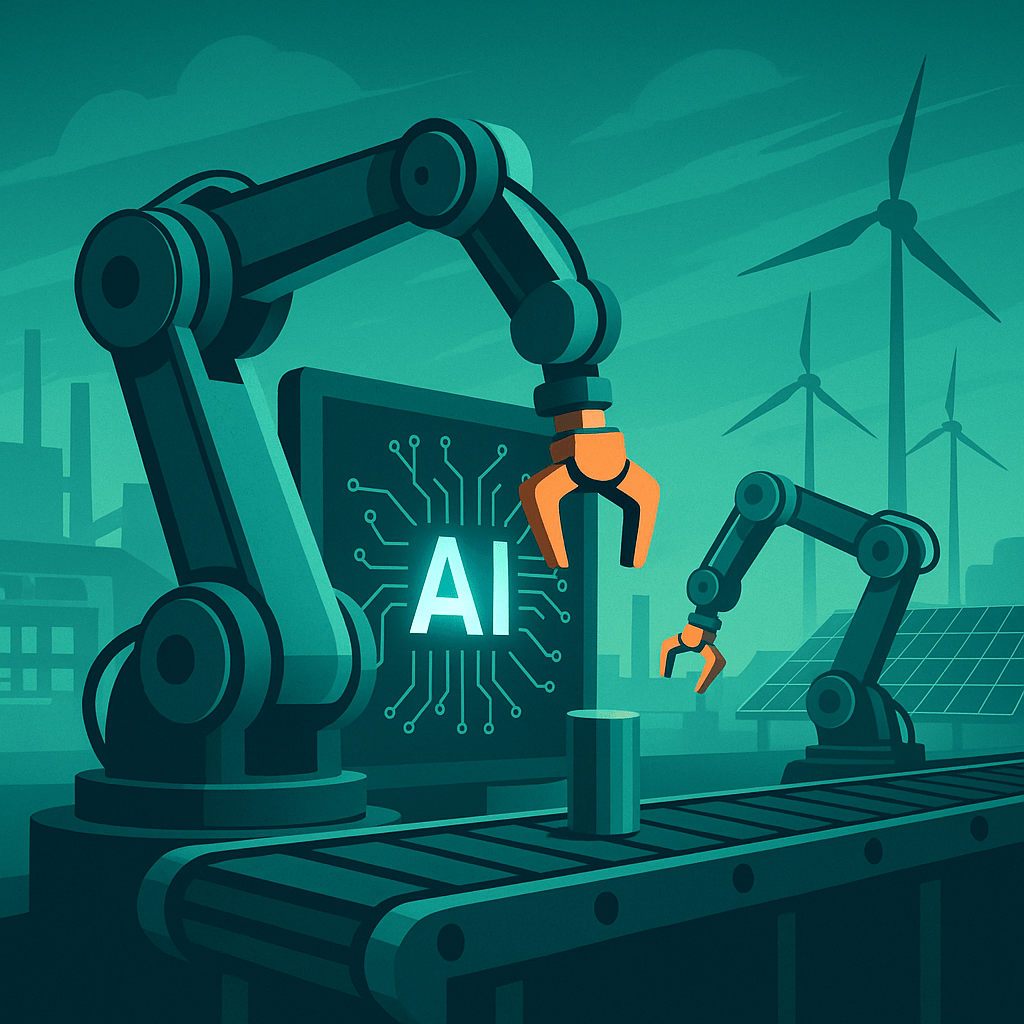
From Tariffs to AI, the New Industrial Order is Being Forged
Manufacturing in 2025 stands at a fascinating intersection — where technology, geopolitics, and labor dynamics are rewriting every known rule of industrial production. What began as an age of offshoring and scale in the late 20th century has transformed into a fragmented, technology-driven, and sustainability-conscious global system.
1. The Geopolitical Turn: Tariffs, Trade Friction, and a Rewiring of Supply Chains
The manufacturing world today mirrors the trade shocks of earlier decades — from the 1980s U.S.–Japan semiconductor tensions to the early 2000s “China shock.” Yet, the 2020s version is sharper and broader. With tariff regimes intensifying under nationalist trade policies — particularly in the U.S., Europe, and parts of Asia — the traditional flow of intermediate goods is being disrupted.
These protectionist measures were initially meant to revive domestic manufacturing. But by 2025, evidence suggests diminishing returns: costs are rising, supply chains are splintering, and the benefits of “localization” are often offset by inefficiencies. For many nations, the promise of re-industrialization through protectionism risks becoming an expensive illusion if global demand remains tepid.
The historical echo is clear — the 1930s Smoot-Hawley tariffs depressed global trade when demand was weak. Today’s industrial policies risk repeating that cycle, albeit in a technologically advanced setting.
2. The Technological Leap: AI, Robotics, and the Smart Factory Revolution
Artificial Intelligence and robotics have shifted from auxiliary roles to central pillars of manufacturing transformation. Factories are evolving into “smart factories” — ecosystems where sensors, predictive analytics, and machine learning algorithms continuously optimize operations.
The integration of AI copilots and autonomous robotics is addressing efficiency but deepening inequalities between capital-intensive and labor-intensive economies. Developing countries that once thrived on low-cost labor now face a paradox: the very automation that promises productivity also undermines their comparative advantage.
However, this is also where opportunity lies. Nations that invest early in AI-driven process innovation, digital skills, and interoperable standards could leapfrog into leadership roles in advanced manufacturing — just as Japan and South Korea did with electronics and automobiles in the late 20th century.
3. The Human Challenge: Labor Shortages in an Age of Automation
Paradoxically, even as machines proliferate, labor shortages persist — especially in skilled roles like mechatronics, maintenance, and data systems. The aging workforce in developed economies, combined with changing worker expectations post-pandemic, has created a persistent talent vacuum.
Manufacturers are now experimenting with hybrid human-AI teams, immersive training via AR/VR, and modular gig-work systems to retain flexibility. The future of industrial employment will depend on how well societies redesign education and migration policies to align with these new realities.
4. The Sustainability Imperative: Green Factories or Greenwashing?
Sustainability has moved from the margins to the manufacturing boardroom. The race to achieve net-zero supply chains by 2030 has accelerated investments in circular materials, renewable energy integration, and waste-heat recovery systems.
Yet, the tension between regulatory compliance and commercial viability remains unresolved. Many firms still treat sustainability as a reporting function rather than a competitive advantage. The coming years will test whether the “green factory” becomes a true production revolution — or merely a compliance exercise under ESG mandates.
5. The Regulatory Maze: Compliance, Enforcement, and Uncertainty
According to Grant Thornton’s 2025 analysis, the U.S. and parts of Europe face rising regulatory enforcement but declining clarity. Manufacturers are caught between rapidly evolving standards — from AI governance and cybersecurity to cross-border emissions reporting.
The uncertainty is stifling mid-sized firms that lack compliance infrastructure. In contrast, multinational giants are leveraging scale to shape regulations themselves — effectively turning compliance into a competitive moat.
The historical parallel here is striking: just as 19th-century railway barons influenced transport law, today’s tech-manufacturing conglomerates are defining the contours of 21st-century industrial governance.
6. The Global Demand Dilemma: Beyond the Illusion of Industrial Sovereignty
Many nations today believe that protective industrial policies will insulate them from global shocks. But this strategy assumes that domestic demand can offset declining international orders. In reality, weak global consumption and stagnant middle-class growth across multiple economies limit the multiplier effects of such policies.
Without coordinated efforts to boost global demand — through innovation, inclusion, and fair trade — even the most sophisticated factories will operate below capacity. The lesson from history is clear: industrial success has always thrived on open trade and dynamic demand, not isolation.
7. Looking Ahead: The Factory of the Future
The factory of 2030 will not be defined by walls, but by networks — digital, distributed, and decarbonized. AI-driven design, additive manufacturing, and real-time global collaboration will merge production and innovation into a continuous process.
The challenge for policymakers is not just to protect domestic industry but to enable adaptive ecosystems that can evolve with technology and demand. Industrial sovereignty must coexist with global interdependence — or risk sliding into obsolescence.
Manufacturing’s New Compass
As 2025 unfolds, manufacturing stands at a historic inflection point. The winners will be those who balance automation with adaptability, sovereignty with openness, and sustainability with profitability.
The future of manufacturing will not be decided by tariffs or protectionism — but by the intelligence of its systems, the resilience of its supply chains, and the inclusivity of its growth.
#Manufacturing2025 #SmartFactory #IndustrialPolicy #AIinManufacturing #GlobalTrade #Sustainability #Automation #ResilientSupplyChains #FutureOfWork #GreenIndustry
 "Connecting communities, empowering nations: Unifying the Regional and Global Economy ."
Leave a comment