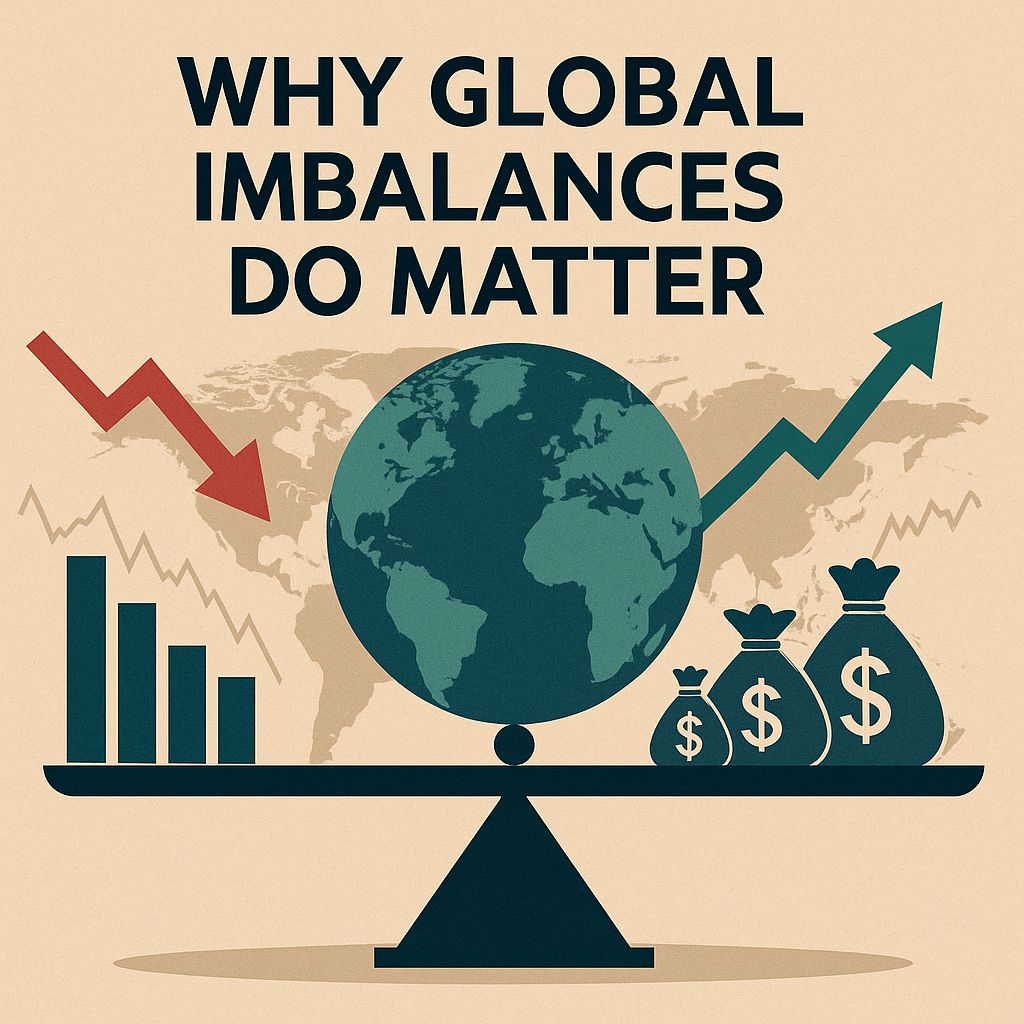
For much of the post-war era, global economic policymakers debated whether large current account surpluses and deficits were merely accounting quirks or deeper reflections of systemic fragility. Each time the world experienced a financial shock—from the Latin American debt crises of the 1980s to the Asian financial crisis of 1997, and finally the global meltdown of 2008—the evidence became clearer: global imbalances are not benign; they are structural stress points.
Historical Perspective: Cycles of Surplus and Deficit
In the early Bretton Woods period, U.S. deficits helped supply liquidity to a world starved of dollars. By the late 1970s, oil exporters had amassed vast surpluses, recycling petrodollars into Western financial markets. The 1980s saw Latin America trapped by dollar-denominated debt, while the 1990s brought Asia’s export-driven surpluses and fragile capital inflows. Each cycle revealed a pattern: capital imbalances produced distortions in investment, often fueling bubbles that ended painfully when flows reversed.
The U.S. twin deficits—fiscal and external—became the anchor of a system where Asia and later emerging markets accumulated reserves, essentially funding American consumption. For decades this arrangement seemed sustainable, until the 2008 crisis showed that over-reliance on U.S. demand and fragile cross-border capital markets could trigger global contagion.
The Present Landscape: More Multipolar, More Risky
Today, imbalances are more geographically diverse. China still runs large surpluses, but Germany, Japan, and the oil exporters also contribute. On the other side, the U.S., UK, and parts of Southern Europe persistently run deficits. The International Monetary Fund’s surveillance shows global current account imbalances exceeding 3% of world GDP—a scale large enough to influence interest rates, exchange rates, and investment decisions worldwide.
But what is different today is the overlay of geopolitics. Tariff wars, supply-chain diversification, and currency interventions all amplify the impact of imbalances. A U.S. tariff on Chinese goods does not just change bilateral trade—it reshuffles global capital flows, as firms adjust production networks and countries adjust reserve holdings.
Why They Still Matter
Critics often argue that imbalances are simply a byproduct of comparative advantage: some countries save more, others consume more. But ignoring their implications is dangerous. Persistent surpluses can suppress domestic demand, stoking deflationary pressures in surplus economies and overheating in deficit ones. Capital recycling often inflates asset bubbles—whether in U.S. housing markets pre-2008 or today’s frothy tech valuations. Moreover, imbalances create vulnerabilities: deficits leave economies hostage to external financing, while surpluses can become politically contentious, fueling accusations of “currency manipulation” and unfair trade.
A Fragmented Future
The next decade will likely see global imbalances evolve in three critical directions:
1. Shift toward South–South flows – With emerging markets trading more with each other, the recycling of capital may bypass traditional hubs like New York or London. This could dilute the U.S. dollar’s dominance, though not replace it outright.
2. Financialization of commodities – As the energy transition accelerates, surpluses from critical mineral exporters (Chile, Indonesia, Congo) may resemble the oil surpluses of the 1970s. Their recycling into global markets will matter as much as OPEC once did.
3. Digital capital flows – Cross-border digital payments, crypto-linked assets, and central bank digital currencies (CBDCs) may alter how imbalances are financed and adjusted, bypassing traditional banking systems and possibly making shocks more sudden.
Outlook
Policymakers face an enduring dilemma. For surplus nations, rebalancing means fostering domestic consumption and reducing export dependency—politically difficult in societies built around savings. For deficit nations, rebalancing means fiscal restraint and structural competitiveness—equally difficult in societies reliant on credit and public spending.
Without cooperative frameworks, the world risks a replay of past crises, only in a more fragmented setting. Instead of a single epicenter like Wall Street in 2008, future shocks may emanate simultaneously from multiple fault lines: European sovereign debt, Asian shadow banking, or volatile commodity exporters.
Global imbalances are not a relic of the past but a live fault line in the world economy. They reflect mismatches in saving, spending, and production that—if unmanaged—generate volatility. The history of crises tells us that ignoring these patterns is costly. The future suggests that with greater multipolarity and technological change, these imbalances may become harder to track and more destabilizing. Recognizing their importance today is the first step toward designing institutions capable of managing tomorrow’s shocks#GlobalImbalances
#TradeFlows
#CapitalFlows
#CurrentAccountDeficit
#FinancialStability
#GeopoliticalEconomy
#GlobalTrade
#SurplusVsDeficit
#EconomicHistory
#FutureEconomy.
 "Connecting communities, empowering nations: Unifying the Regional and Global Economy ."
Leave a comment