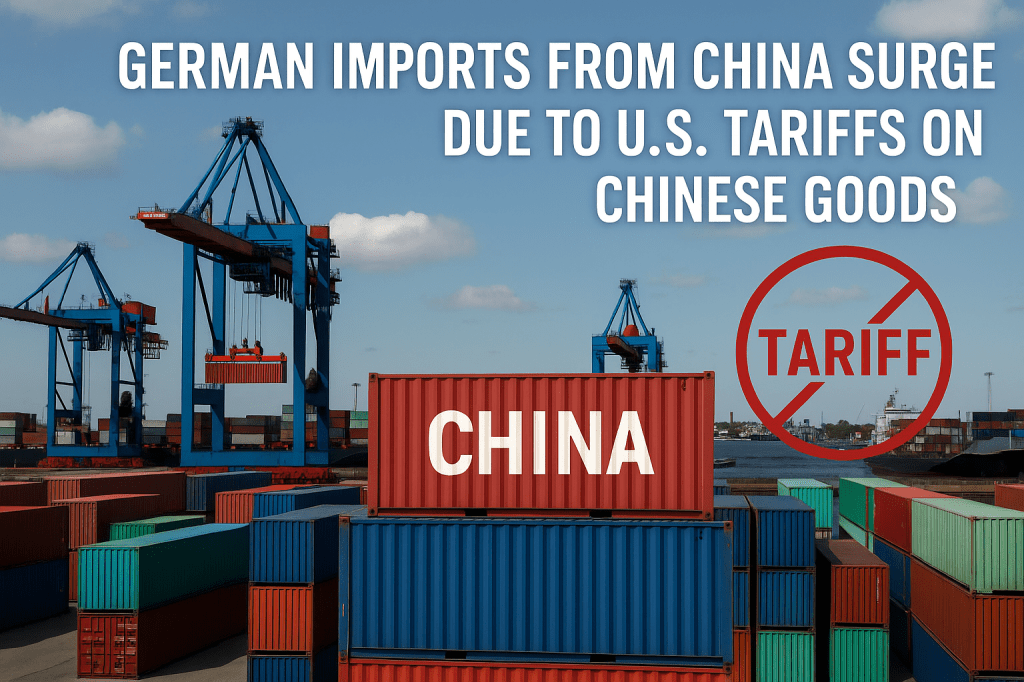
Global trade patterns are being reshaped once again, this time by the ripple effects of U.S. tariffs on Chinese goods. As American restrictions redirected flows, Germany emerged as a key beneficiary of redirected Chinese exports. In the first seven months of 2025, German imports from China rose 10.5% year-on-year, reaching €97.6 billion — a figure that significantly outpaces Germany’s overall import growth of just 4.9%.
Why Germany? The Trade Spillover Effect
When the U.S. tightened tariffs on Chinese products, many exporters sought alternative destinations to sustain their volumes. Germany, with its large consumer base, advanced industrial ecosystem, and integration within the EU’s single market, became an attractive entry point. This redirection underscores how trade policies in one major economy can generate ripple effects across others, particularly when supply chains are deeply interlinked.
Sectoral Shifts in German Imports
The categories driving the surge highlight the structural dynamics at play:
Copper imports jumped 91%, pointing to strong demand in Germany’s manufacturing and renewable energy sectors, where copper is essential for electrical equipment and energy transition infrastructure.
Apparel imports rose 24%, reinforcing China’s enduring cost advantage in textiles despite efforts by European brands to diversify sourcing to countries like Vietnam or Bangladesh.
Toys, games, and sports goods climbed 12%, reflecting consumer demand resilience in lifestyle and recreational sectors even amid broader economic uncertainty.
These numbers suggest not just opportunistic trade diversion but also areas where Chinese firms remain deeply competitive.
Risks of Heightened Price Competition
While cheaper imports may benefit German consumers and firms in the short run, analysts caution against the potential long-term impacts. Increased inflows from China could intensify price competition in sensitive industries, squeezing domestic and European producers who struggle to match Chinese cost efficiencies. This is especially critical in sectors like apparel, where margins are already thin, and in intermediate goods like copper, where downstream industries face cost-pass-through challenges.
Strategic Implications for Germany and the EU
The surge also raises policy questions. Should Germany continue deepening its reliance on Chinese imports at a time when the EU is pushing “de-risking” strategies? There is a fine balance between cost advantages today and potential vulnerabilities tomorrow — particularly if geopolitical tensions escalate or supply chains become weaponized.
Moreover, the trade realignment reflects a broader theme: tariff policies in one country can reconfigure global supply chains in unexpected ways. The U.S. move to shield its industries may, paradoxically, increase Europe’s dependence on Chinese goods, complicating its own industrial and security strategies.
Germany’s rising imports from China demonstrate the interconnectedness of today’s trade system. The immediate effects are visible in growing volumes and sectoral gains, but the strategic implications run deeper. As global trade reshuffles under the weight of tariffs and geopolitics, Germany and the EU will need to balance economic pragmatism with long-term resilience — a task that may prove as challenging as it is urgent.#GermanyImports
#ChinaTrade
#USTariffs
#GlobalSupplyChains
#PriceCompetition
#CopperDemand
#ApparelIndustry
#EUDeRisking
#TradeDiversion
#GeopoliticsAndTrade
 "Connecting communities, empowering nations: Unifying the Regional and Global Economy ."
Leave a comment