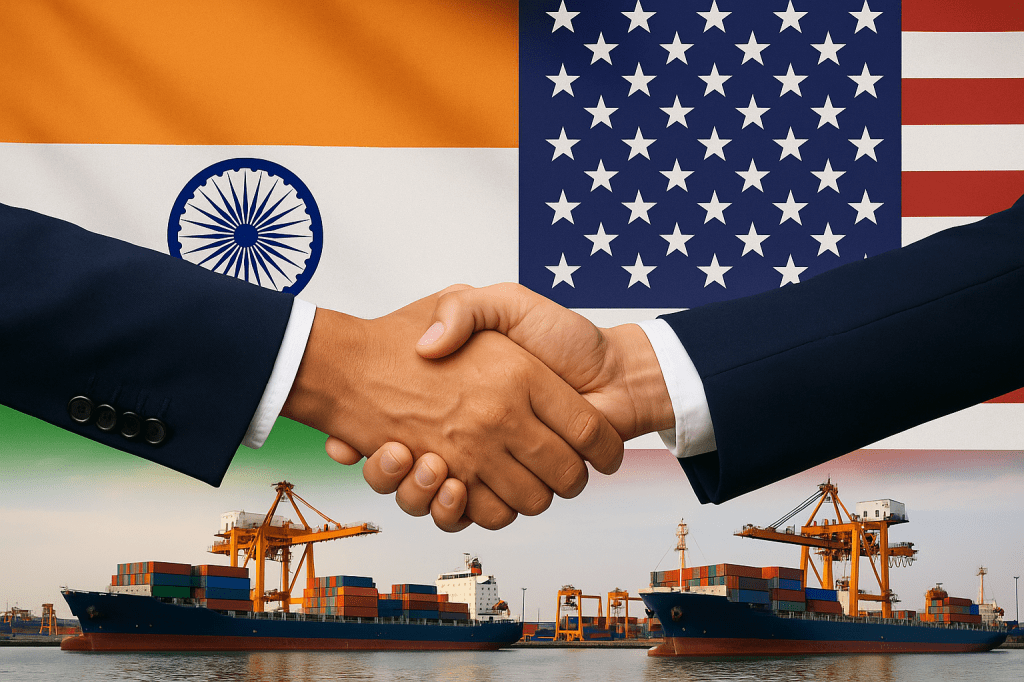
The long-anticipated trade agreement between India and the United States, originally expected by July 9, has now been extended to July 31, 2025. This extension, while not entirely unexpected, highlights the complexity of ongoing negotiations between the two nations. It also signals the high economic and strategic stakes involved for both sides.
The deal, currently focused on trade in goods, deliberately excludes more contentious areas such as services, labor mobility, and intellectual property rights, which have historically stalled progress. The U.S. Trade Representative has cleared the terms of the agreement, but they still await the final green light from President Donald Trump. On the Indian side, Chief Negotiator Rajesh Aggarwal and his team, having just returned from talks in Washington, are preparing for another round of discussions in the coming days.
The urgency of the deal stems from the looming tariff threats announced earlier by the U.S. administration. As part of its broader strategy to reset trade relationships, President Trump had proposed sweeping 25% tariffs on imports from key trading partners like Japan, South Korea, and India. Though these tariffs were initially slated to come into force on July 9, the deadline extension buys crucial time for both sides to avoid a damaging escalation.
At stake for India is market access to its largest export destination, particularly for sectors like textiles, pharmaceuticals, leather goods, and auto components. A failure to reach an agreement could see Indian goods subjected to higher tariffs, thereby eroding their price competitiveness in the U.S. market. Analysts estimate that India could lose nearly one-third of its direct exports to the U.S. if punitive tariffs are imposed without a negotiated settlement.
For the U.S., the deal offers an opportunity to penetrate India’s highly protected agricultural and dairy markets, a long-standing demand of American negotiators. However, this remains a red line for Indian policymakers who are cautious about exposing millions of small and marginal farmers to global competition. This clash of priorities has been one of the key roadblocks in reaching a consensus.
The timing of the extension is also politically significant. Both countries are navigating internal and external pressures—India from its agricultural constituencies and domestic industry, and the U.S. from its need to appear tough on trade ahead of a critical election cycle. This makes the task of balancing optics and outcomes particularly delicate.
Despite these challenges, the extension should not be seen as a breakdown, but rather as a strategic pause. It allows both governments the “elbow room” needed to finalize an agreement that is mutually beneficial and politically defensible. It also underscores a shared recognition of the importance of bilateral trade in a world increasingly shaped by protectionist tendencies and shifting geopolitical alignments.
In the coming weeks, attention will remain sharply focused on Washington, where the next and possibly final round of negotiations will take place. Whether the extended deadline leads to a breakthrough or another postponement will depend on how much each side is willing to compromise in the face of domestic sensitivities and global economic uncertainty.
In short, the extended deadline is not just a procedural development—it is a critical window of opportunity. Whether it results in a win-win trade pact or further trade tensions will define the course of India-US economic relations for the foreseeable future.
#IndiaUSTradeDeal #TariffDeadline #TradeNegotiations #USIndiaRelations #BilateralTrade #DonaldTrump #MarketAccess #IndianExports #TradePolicy #EconomicDiplomacy
 "Connecting communities, empowering nations: Unifying the Regional and Global Economy ."
Leave a comment