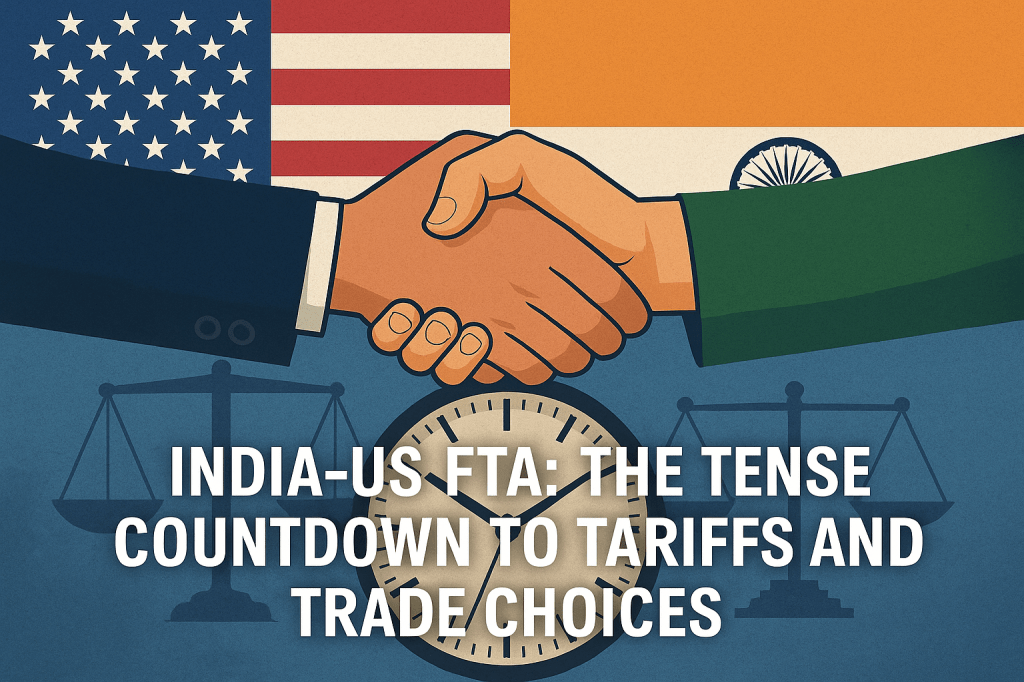
As the world watches with bated breath, India and the United States find themselves at the crossroads of a historic trade negotiation. With the July 9, 2025 deadline looming, the prospect of a Free Trade Agreement (FTA) between the two countries—once hailed as a defining feature of a new era in strategic and economic cooperation—now seems increasingly complex and fraught with discord.
The latest flashpoint in this evolving drama is the announcement by the Trump administration of a 10% base tariff on all imports and a 26% reciprocal tariff specifically targeting Indian goods. The move, effective July 9, has escalated tensions and triggered serious pushback from New Delhi. India, in turn, has readied a slate of retaliatory duties totaling $723.75 million—a calculated mirror to the anticipated losses from the US tariffs. Both nations are gearing up for what could become a bitter tariff exchange, just as they claim to be inching closer to a deal.
At the core of this standoff lie deep structural disagreements. The US is pushing hard for greater access to India’s agricultural and dairy markets, a politically sensitive sector in India employing millions of marginal farmers and workers. Indian negotiators, keenly aware of the social impact and electoral ramifications, are resisting what they see as undue pressure to open their economy in a way that could displace livelihoods and threaten food sovereignty. Other sticking points include US concerns about India’s import duties on auto components, steel, and agricultural goods, and India’s frustration over the lack of progress on easing visa restrictions and tech-related barriers.
Despite months of diplomatic overtures—including a high-visibility visit by Prime Minister Modi to Washington in February 2025—the gap remains wide. Both sides continue to voice optimism, but substantive agreement on critical areas seems elusive. Commerce Minister Piyush Goyal has reiterated that India will not “compromise national interest” for a deadline-driven deal, sending a clear signal that the government’s red lines are firm.
Even as these tough negotiations play out, there is speculation about a “mini-trade deal”—a tactical compromise that could help both sides save face and provide limited tariff relief without addressing the larger structural demands. Yet the political and economic calculus in both capitals suggests that such a stopgap may only delay the inevitable reckoning.
Meanwhile, the impact on trade remains mixed. Indian exports to the US surprisingly rose to $17.25 billion in May 2025, indicating that exporters have not yet felt the full brunt of the US tariff rhetoric. However, concerns are growing in India’s export community, especially in sectors like pharmaceuticals, apparel, and auto components, where future shipments could be priced out of competitiveness if tariffs persist.
Strategically, India is hedging its risks. The country has accelerated negotiations with the European Union and has successfully wrapped up an FTA with the United Kingdom. These efforts are a clear signal that India is building alternative trade corridors to reduce dependence on the volatile US market, especially under an administration that prioritizes protectionism over multilateralism.
The broader context also deserves attention. India is at a crucial juncture in its export-led growth strategy. Aligning with large economies like the US is vital for technology transfers, global value chain participation, and geopolitical leverage. Yet, any agreement must balance openness with developmental imperatives, especially job creation in rural and manufacturing sectors. A misstep in these negotiations could alienate India’s vast agrarian voter base or undermine its push for industrial self-reliance.
As the July 9 deadline draws closer, the world is watching whether India and the US can navigate their competing interests to craft a sustainable, future-oriented trade deal—or whether they’ll settle for an uneasy truce masked as a mini-deal. Either way, this moment will shape the contours of global trade and Indo-US relations for years to come.
#IndiaUSFTA
#TradeNegotiations
#TariffWars
#EconomicDiplomacy
#AgricultureTrade
#StrategicPartnership
#Geopolitics
#GlobalTrade
#IndoUSRelations
#ExportPolicy
 "Connecting communities, empowering nations: Unifying the Regional and Global Economy ."
Leave a comment