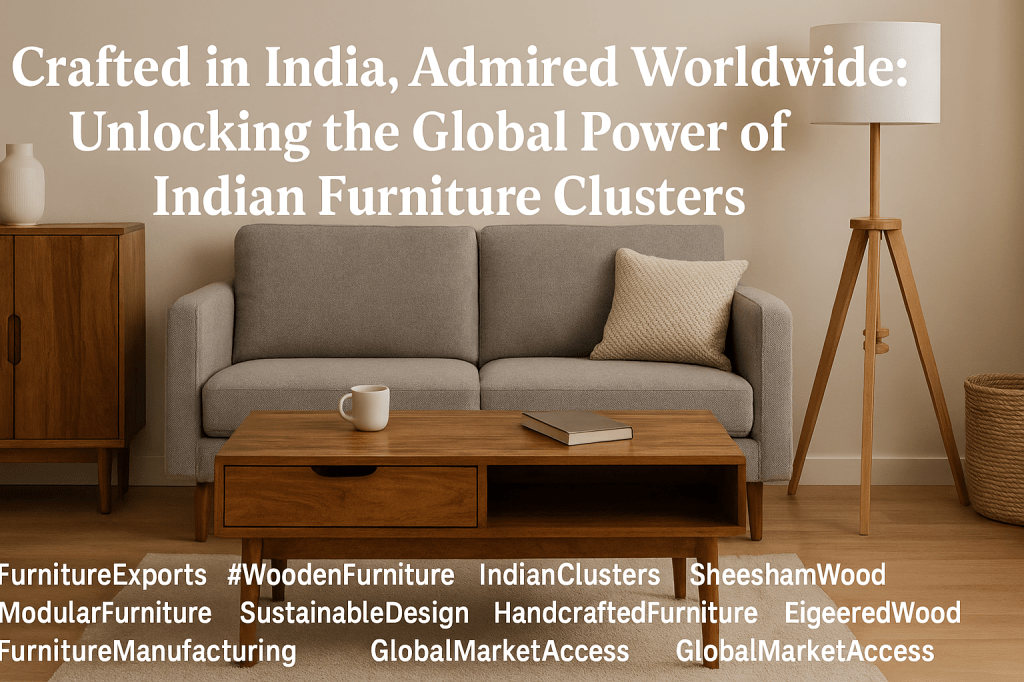
India’s furniture and wood products sector stands at the confluence of traditional craftsmanship and modern innovation, offering a broad spectrum of products that cater to domestic as well as international markets. With materials ranging from solid woods like Sheesham and Mango to engineered wood and eco-friendly composites, the Indian furniture industry is well-poised to tap into global markets where authenticity, durability, and affordability are valued.
A Legacy of Craftsmanship Meets Global Demand
India’s rich legacy in woodworking, particularly in carving, joinery, and hand-finishing, makes it uniquely placed to serve diverse export markets—from the premium handcrafted segment in Europe to the price-sensitive mass market in Southeast Asia and Africa. Traditional Indian hardwoods such as Sheesham (Indian rosewood) and Teak are globally recognized for their robustness and aesthetic appeal. Mango wood, often viewed as a sustainable choice, is increasingly gaining ground in contemporary designs due to its affordability and light grain structure.
This strong raw material base is further complemented by a large pool of skilled artisans and evolving industrial practices. As global consumers move toward sustainably sourced, long-lasting products, Indian manufacturers can leverage both ecological narratives and competitive pricing to scale their exports.
Rise of Engineered and Mixed-Material Furniture
While the premium export market still favors solid wood, engineered wood—including MDF and particle board—is fast emerging as a preferred alternative in modular and ready-to-assemble furniture. Indian companies are now innovating with mixed-material designs that incorporate metal, glass, plastic, rattan, and wicker, allowing flexibility in meeting global aesthetic trends, including minimalism, Scandinavian designs, and eco-modern sensibilities.
The ability to manufacture both traditional wooden furniture and modern, modular products gives India a strategic edge in diversifying its export portfolio.
Online Retail Boom Strengthening Export Readiness
E-commerce platforms like Pepperfry, Wooden Street, Urban Ladder, and IKEA India have not only deepened the domestic market but also created infrastructure for cataloguing, standardization, and mass customization—key requirements for export success. These firms often invest in quality assurance systems, warehousing logistics, and modular packaging—practices that naturally align with global compliance requirements.
Additionally, cash on delivery, EMI options, warranties, and return policies offered by online players have created a consumer culture that demands accountability and quality—skills that exporters can now readily apply to meet global buyer expectations.
Major Industrial Clusters: The Backbone of Furniture Export
India’s furniture industry is strongly rooted in geographically concentrated production hubs that specialize in particular styles, materials, and production techniques. These clusters represent not only manufacturing capacity but also innovation, specialization, and cultural heritage.
Here are the key clusters driving India’s furniture and wood product exports:
- Jodhpur (Rajasthan): Famous for antique and handcrafted solid wood furniture, particularly from Sheesham and Mango wood. A leader in ethnic Indian furniture exports to Europe and the U.S.
- Moradabad (Uttar Pradesh): Known for wooden handicrafts and home decor, including inlay work and mixed-material pieces combining wood with brass or glass.
- Yamunanagar (Haryana): A major hub for plywood and engineered wood manufacturing, with high volumes of processed panels feeding both domestic and international furniture units.
- Bengaluru and Mysuru (Karnataka): Home to contemporary furniture makers and modular design facilities. Bengaluru also hosts several contract furniture exporters serving the hospitality and IT sectors.
- Kochi and Thrissur (Kerala): Traditionally strong in Teak wood craftsmanship, especially high-end furniture, cabinetry, and boat building—a niche export category.
- Chennai and Puducherry (Tamil Nadu): Emerging as centers for boutique and designer furniture, especially leveraging colonial designs and reclaimed wood.
- Mumbai and Pune (Maharashtra): These cities anchor urban-style furniture design, often producing minimalist and industrial-themed furniture for metro living.
These clusters not only bring scale but also contribute to regional employment, SME growth, and global supply chain integration. Many are connected through India’s Export Promotion Councils and are beginning to adopt international certifications, such as FSC (Forest Stewardship Council) and ISO 9001.
Challenges and the Road Ahead
Despite its potential, India’s furniture export sector faces several critical challenges:
- Fragmented Industry Structure: The dominance of unorganized MSMEs often limits scalability and uniformity in quality.
- High Logistics and Compliance Costs: Inland logistics and last-mile port connectivity can significantly impact the landed cost of exports.
- Lack of Branding: Unlike Vietnam or Italy, India has yet to build a global brand identity in the furniture sector.
- Technology Gap: Limited automation and digital design capabilities constrain production flexibility and speed.
- Sustainability Compliance: With global buyers increasingly demanding traceability and eco-certification, Indian producers must invest in sustainable sourcing and carbon footprint reduction.
Conclusion: A Global Opportunity in the Making
India’s furniture and wood products industry is on the cusp of a major export revolution. With a blend of traditional craftsmanship, growing modern manufacturing capabilities, and a strong e-commerce backbone, the sector can cater to a wide array of global consumers. Strategic interventions like cluster modernization, design innovation, better port logistics, and global branding could catapult India into the top league of global furniture exporters. By focusing on quality, sustainability, and customization, India can transition from being a high-potential player to a dominant force in the global wood and furniture market.#FurnitureExports
#WoodenFurniture
#IndianClusters
#SheeshamWood
#ModularFurniture
#SustainableDesign
#HandcraftedFurniture
#EngineeredWood
#FurnitureManufacturing
#GlobalMarketAccess
 "Connecting communities, empowering nations: Unifying the Regional and Global Economy ."
Leave a comment