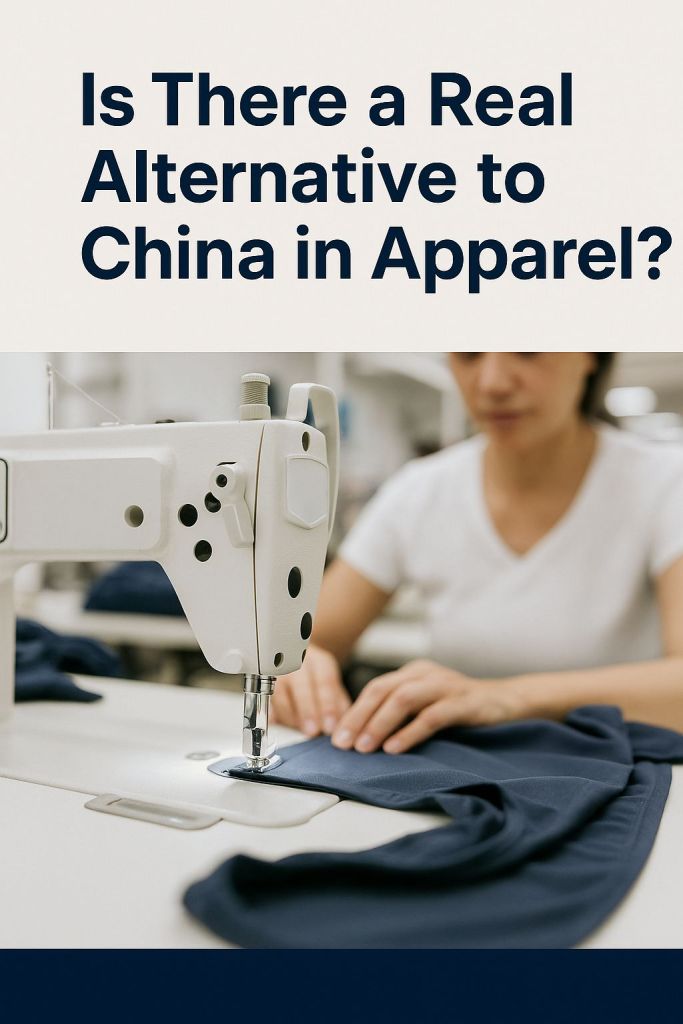
The global apparel industry is undergoing a significant transformation as retailers and fashion brands re-evaluate their sourcing strategies to reduce dependency on China. The reasons are manifold: rising labor costs in China, increasing geopolitical tensions, trade tariffs, and the desire to diversify supply chains following the COVID-19 disruptions. But the critical question remains—can any country truly rival China’s dominance in apparel exports?
As the numerous countries currently export apparel to the USA, including Bangladesh, Vietnam, India, Indonesia, Pakistan, and Mexico, among others. While these countries play a role in the global textile supply chain, their ability to replace China in scale, speed, and infrastructure remains a matter of strategic deliberation.
China has built a highly integrated textile ecosystem over decades. It offers unmatched advantages in terms of logistics, manufacturing scale, skilled labor, and digital supply chain integration. For instance, China’s “one-stop-shop” capability allows raw materials to be sourced, processed, stitched, and shipped under one roof, drastically reducing lead times and operational costs. This is a feature many emerging exporters still struggle to replicate.
However, countries like Bangladesh and Vietnam have shown remarkable growth. Bangladesh, benefits from low labor costs and a large, skilled workforce. Vietnam, with its proximity to China and favorable trade agreements like the CPTPP and the Vietnam–EU FTA, offers both efficiency and geopolitical flexibility. India, although slower in execution, holds significant potential due to its large domestic textile base and growing investment in production-linked incentive (PLI) schemes.
In Latin America, countries like Mexico and Honduras offer nearshoring advantages for the U.S. market, cutting down delivery times and mitigating supply chain disruptions. These nations also benefit from regional trade agreements such as USMCA, giving them preferential market access. Meanwhile, Turkey and Italy serve as high-end, fast-fashion manufacturing hubs for Europe and the U.S., but their labor and production costs make them less competitive for basic apparel.
Critical factors affecting the transition away from China include the need for substantial investment in port infrastructure, compliance with environmental standards, energy availability, and labor rights regulations. Many of the alternative countries, while capable of handling medium-scale orders, still lack the agility and scalability that China provides at a global level.
Moreover, the fragmentation of sourcing among multiple countries introduces new challenges. Managing quality control, maintaining supply chain transparency, and ensuring regulatory compliance across diverse jurisdictions can be costly and complex for global brands.
In essence, while there are many contenders seeking to fill the space partially vacated by China, there is no single country that currently matches China’s end-to-end manufacturing capacity and strategic infrastructure. The future likely lies in a multipolar sourcing model—where retailers diversify across several nations like Bangladesh, Vietnam, India, Mexico, and Turkey, depending on product category, price point, and speed-to-market needs.
Hence, the question should not be whether there is one real alternative to China, but how effectively global brands can build a resilient, balanced, and diversified supply chain across a network of reliable partners. The road ahead for the apparel industry is not about replacing China—it’s about building smarter, more flexible sourcing ecosystems for an increasingly uncertain world.
#ApparelExports
#ChinaSourcing
#GlobalSupplyChain
#BangladeshTextiles
#VietnamManufacturing
#IndiaPLI
#Nearshoring
#TradeDiversification
#FashionRetailStrategy
#TextileInfrastructure
 "Connecting communities, empowering nations: Unifying the Regional and Global Economy ."
Leave a comment