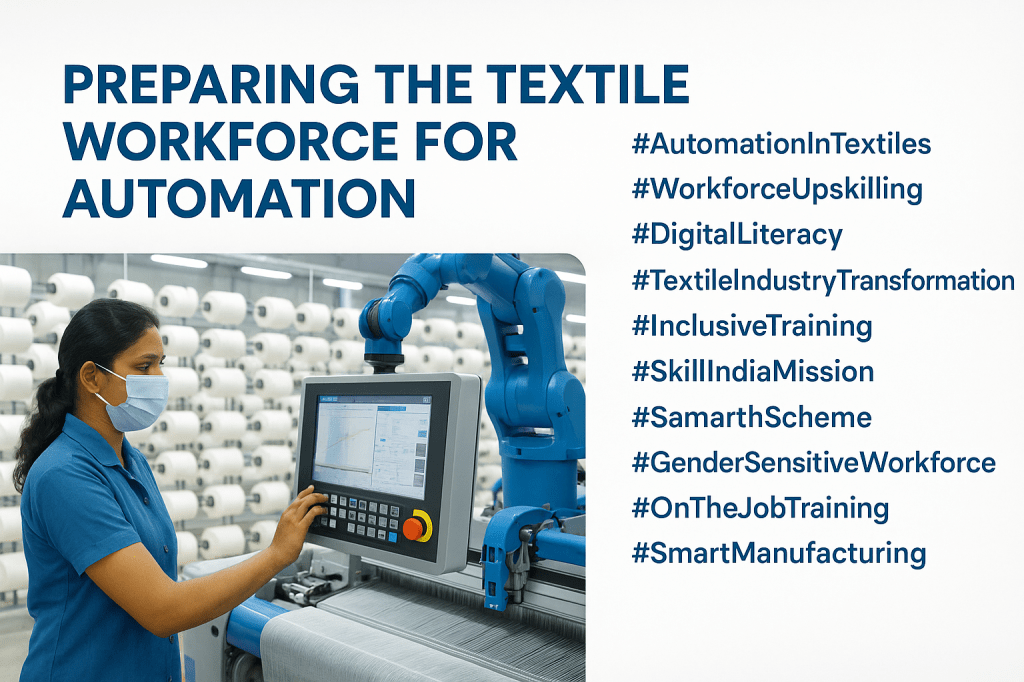
As the global textile industry rapidly integrates automation to stay competitive, improve productivity, and enhance quality, the human element remains critical. Automation does not signal the replacement of the workforce, but rather a transformation of roles and the emergence of new skill requirements. For countries like India, where textiles form the backbone of both export and employment, preparing the workforce for automation is not only a necessity but a strategic imperative.
One of the most important steps companies can take is to invest in upskilling and reskilling programs that align with evolving technological demands. Workers must learn to operate, troubleshoot, and maintain automated systems such as robotic sewing machines, computer-controlled looms, and AI-enabled quality inspection tools. In addition to technical knowledge, digital literacy has become essential. As textile operations become more data-driven, employees need to understand production management software, digital interfaces, and analytics platforms that drive modern decision-making.
Emerging roles are increasingly centered around data interpretation, process optimization, and preventative maintenance—skills traditionally absent in blue-collar job descriptions. To build these capabilities at scale, companies must leverage national initiatives. India’s Samarth Scheme and Skill India Mission offer structured support to train textile workers. These programs, when used effectively, can bridge the skill gap while reducing the financial burden on employers.
Equally vital is collaboration with academic and vocational institutions. Textile firms should co-develop curricula with polytechnics and skill training centers, ensuring students are trained in machine interfacing, industrial IoT, and process automation even before they enter the workforce. This supply-chain approach to workforce development enhances readiness and reduces onboarding costs.
Beyond institutional learning, on-the-job training and continuous learning are key. Workshops, real-time demonstrations, and mentorship from experienced technicians help employees internalize new skills while boosting morale. Companies that foster a culture of continuous learning—where adaptability is celebrated—can ensure long-term workforce resilience. This is especially critical in an industry that continues to see technological upgrades year after year.
The process of automation can provoke fear and resistance among workers, particularly when the perceived outcome is job loss. This underscores the importance of change management. Transparent communication about the purpose, timeline, and outcomes of automation initiatives helps build trust. Moreover, involving workers in the transition process—through feedback mechanisms and pilot program participation—can reduce anxiety and strengthen alignment between management and labor.
An often overlooked but critical aspect of workforce transformation is inclusivity, particularly with respect to gender. Automation, if not planned inclusively, risks further marginalizing women workers who dominate roles in garment stitching and finishing—segments most prone to automation. Targeted training programs—especially mobile or flexible learning formats—can help women workers acquire technical and supervisory roles. By proactively designing gender-sensitive upskilling pathways, companies can ensure that automation does not widen socio-economic gaps but instead becomes a driver of equity.
There are already successful examples to draw inspiration from. In Tamil Nadu, several spinning and weaving mills have introduced robotic quality control systems and automated looms, and re-trained their workforce to support these systems, leading to increased efficiency and product quality without job losses. These success stories not only offer templates for implementation but also help overcome skepticism among stakeholders.
Evaluation and adaptability are essential throughout this journey. Companies must track the effectiveness of training programs, monitor workforce integration, and update strategies as technologies evolve. Establishing internal metrics—such as productivity changes, machine downtime reduction, or employee satisfaction—helps measure ROI from workforce transformation efforts.
In conclusion, preparing the textile workforce for automation is not just about adapting to machines—it’s about investing in people. It requires a thoughtful combination of skill development, institutional partnerships, inclusive strategies, and open communication. Companies that act now to prepare their workforce for this transition will not only protect livelihoods but also position themselves as global leaders in a modern, efficient, and equitable textile industry. Automation in textiles, when guided by a human-centered approach, can become a source of growth that benefits business and society alike.
#AutomationInTextiles
#WorkforceUpskilling
#DigitalLiteracy
#TextileIndustryTransformation
#InclusiveTraining
#SkillIndiaMission
#SamarthScheme
#GenderSensitiveWorkforce
#OnTheJobTraining
#SmartManufacturing
 "Connecting communities, empowering nations: Unifying the Regional and Global Economy ."
Leave a comment