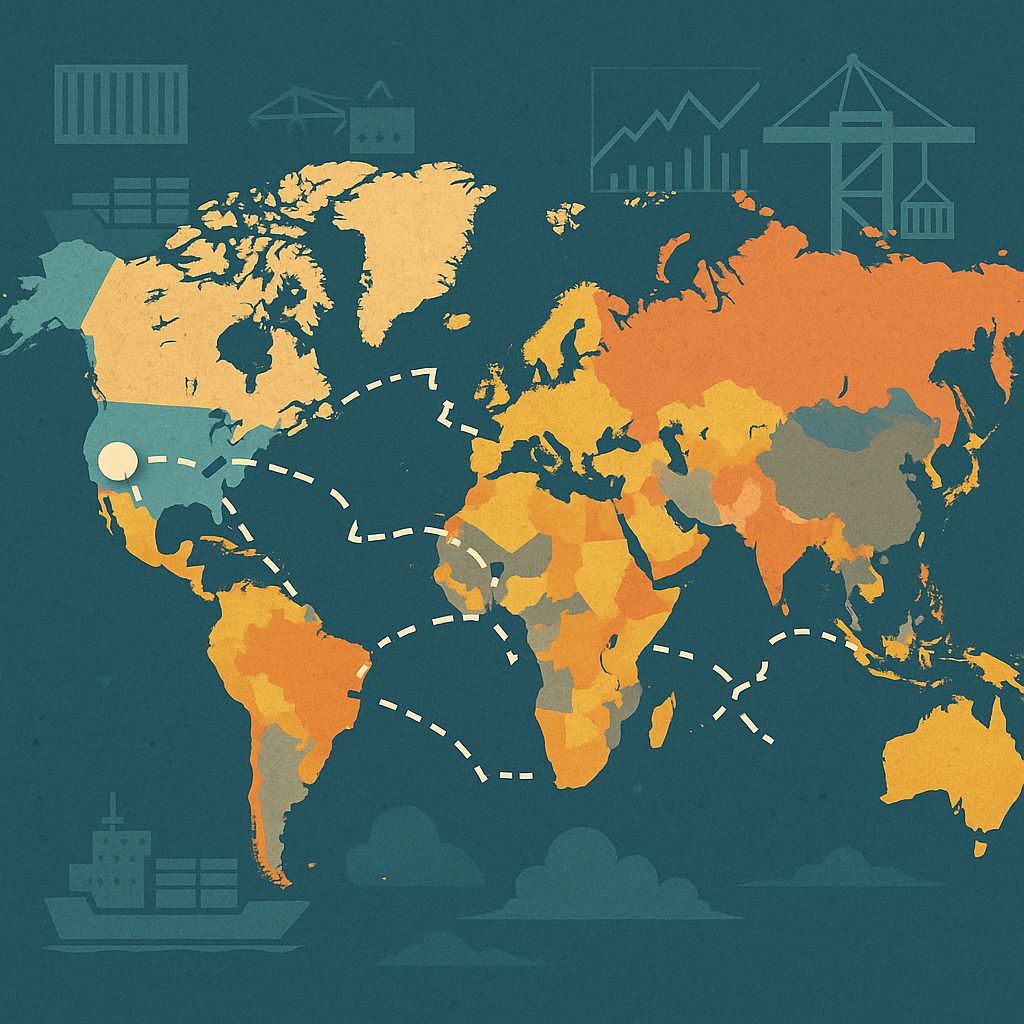
In an increasingly globalized world, the economic decisions of powerful nations do not remain confined within their borders. A prolonged trade conflict between two major economic powers—who together account for a significant portion of global output and trade—can have far-reaching implications, especially for emerging economies. The World Trade Organization (WTO) has cautioned that such confrontations could destabilize the global trading system, ultimately hurting the very economies that can least afford the disruption.
While advanced economies may have the financial muscle and policy bandwidth to absorb the shocks of escalating tariffs and geopolitical tensions, emerging economies are often left to navigate uncertainty with limited resources. The ripple effects are complex, multifaceted, and, in many cases, regressive.
Value Chains and Production Networks
Many developing nations have, over the last two decades, integrated themselves into global value chains as suppliers of raw materials, intermediate goods, or low-cost manufacturing services. These interconnected networks thrive on predictability, low transaction costs, and trust in the multilateral trading system. When powerful trading partners impose unilateral restrictions or tariffs, it creates fragmentation in production networks—causing delays, cost escalations, and re-routing of supply chains that bypass smaller players.
For example, electronic components, textiles, and auto parts industries in Southeast Asia, South Asia, and Latin America are highly dependent on stable trade flows among larger economies. Any disruption among the top-tier markets directly weakens the demand and flow of intermediate goods produced by these developing nations.
Commodity Price Volatility and Export Vulnerability
A significant number of emerging economies are reliant on commodity exports such as metals, minerals, agricultural goods, and energy. Trade disputes among large economies tend to depress global demand or distort trade routes, creating sudden surges or collapses in commodity prices.
Such volatility can severely affect government revenues, particularly in countries where a high percentage of fiscal budgets is tied to resource exports. It also threatens rural livelihoods, smallholder farmers, and industrial workers who are disproportionately impacted by falling global prices and shrinking export orders.
Capital Flight and Financial Fragility
Trade tensions often trigger broader financial market reactions—risk aversion, tighter liquidity, and investor caution. For emerging markets, this translates into capital outflows, currency depreciation, and higher costs of external borrowing. Countries with weaker macroeconomic fundamentals or higher exposure to dollar-denominated debt face amplified risks.
History has shown that during periods of global trade uncertainty, foreign direct investment tends to decline, while stock markets in developing regions underperform. This leads to delayed infrastructure projects, job losses, and reduced consumer and investor confidence—fueling a vicious cycle of underdevelopment.
Policy Constraints in Fragile Economies
While advanced economies can deploy stimulus packages, cut interest rates, or provide subsidies to support affected sectors, emerging markets often face fiscal constraints. High debt levels, low tax bases, and inflation concerns prevent governments in these regions from responding effectively.
In some cases, monetary tightening may be required to protect the domestic currency, but this comes at the cost of dampening economic growth. The inability to absorb external shocks while maintaining internal stability becomes a defining challenge.
Risks of Retaliatory and Protectionist Thinking
A further concern is the erosion of trust in multilateralism. When trade norms are flouted by leading economies, it sets a precedent. Developing countries, observing these shifts, may resort to protectionist measures of their own—raising tariffs, introducing import bans, or favoring local industries through opaque incentives.
While such measures may offer temporary relief, they undermine long-term competitiveness and discourage innovation and foreign investment. More importantly, they risk reversing decades of progress toward more open, rules-based international trade.
Pathways for Resilience and Strategic Realignment
Emerging economies must recognize the structural nature of such global shifts and respond proactively. Key strategies include:
1. Diversification of Trade and Investment Partners: Reducing reliance on any single large market or region by fostering trade relationships across South-South corridors, regional blocs, and alternative partnerships.
2. Strengthening Domestic Production Capabilities: Building resilient local industries, encouraging value addition, and reducing dependence on imported intermediates.
3. Engaging with Global Institutions: Advocating for equitable trade rules, dispute resolution mechanisms, and development-focused reforms within multilateral bodies like the WTO.
4. Investing in Human Capital and Digital Infrastructure: Preparing the workforce for flexible employment opportunities and enhancing technological adaptability to minimize future disruptions.
Trade conflicts are not isolated events—they send tremors throughout the global economy, often shaking the foundations of the most vulnerable nations. For emerging economies, the imperative is clear: resilience must be built through diversification, deeper regional integration, and a renewed commitment to inclusive, rules-based trade systems.
The message from the WTO is not merely a warning—it is an opportunity for transformation. For emerging markets, adapting to this evolving global landscape will require strategic foresight, coordinated policymaking, and an unyielding focus on sustainable growth.
 "Connecting communities, empowering nations: Unifying the Regional and Global Economy ."
Leave a comment