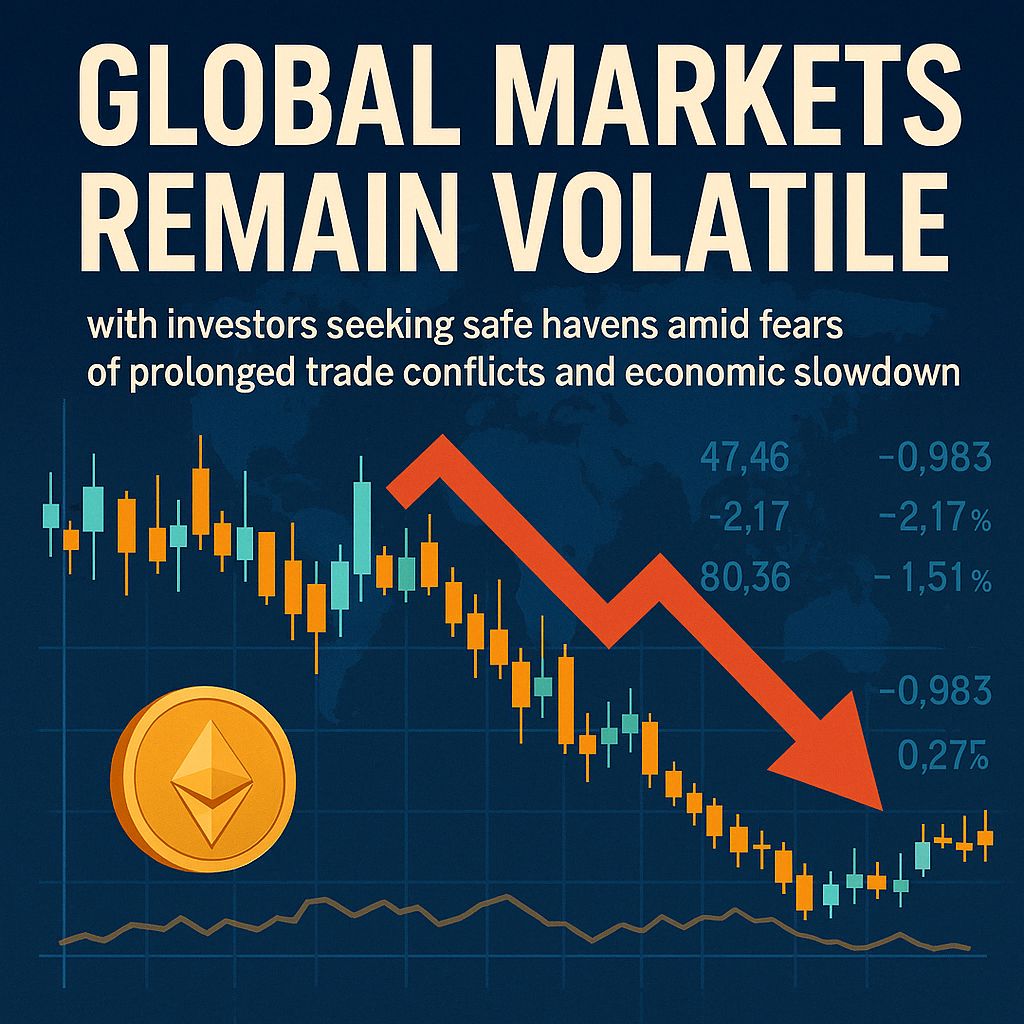
In recent months, global markets have been marked by sharp swings and heightened uncertainty. Investors, wary of prolonged trade conflicts and the specter of a global economic slowdown, are increasingly shifting their assets toward traditional safe havens such as gold, government bonds, and stable currencies. This trend reflects deeper anxieties about the direction of the world economy and the geopolitical forces that are reshaping global trade patterns.
At the heart of the market volatility is a growing fear that the world is entering a phase of prolonged economic fragmentation. Escalating trade disputes—once dismissed as short-term tactical moves—have now matured into structural shifts in how countries engage with each other economically. This includes the imposition of tariffs, reconfiguration of supply chains, and national security concerns that are bleeding into trade and investment decisions. As a result, global trade volumes have slowed, and investor sentiment has turned cautious.
Data from the World Trade Organization (WTO) indicates that global merchandise trade volume growth slowed to below 1% in the past year, compared to an average of 3% over the past decade. Meanwhile, the IMF has revised its global GDP growth projections downward, citing increased economic fragmentation and reduced investor confidence. Central banks around the world, including the Federal Reserve and the European Central Bank, have also signaled caution, emphasizing the need for policy flexibility in an environment defined by unpredictability.
The impact of this uncertainty is reflected in capital flows. Gold prices have risen by over 15% year-on-year, while yields on U.S. Treasury bonds have dropped significantly, a classic sign of a flight to safety. Meanwhile, equity markets have experienced notable corrections, particularly in sectors exposed to international trade, such as manufacturing and technology.
Importantly, this volatility is not evenly distributed. Emerging markets, particularly those with high external debt and dependence on exports, are facing sharper shocks. Currency depreciation, rising borrowing costs, and falling investor inflows are compounding the stress in these economies. On the other hand, countries with strong domestic consumption bases or those less integrated into volatile global supply chains are better positioned to weather the storm.
Investors and policymakers alike are recalibrating their strategies. Diversification is becoming a cornerstone of portfolio management. There is renewed interest in domestic infrastructure, green technology, and supply chain resilience. Governments are being pushed to craft balanced policies that can simultaneously support economic growth, ensure fiscal discipline, and respond to external shocks.
In this environment, agility and foresight are critical. While markets may continue to fluctuate in the near term, long-term stability will depend on how quickly the global community can adapt to the new realities of trade, geopolitics, and investment. In the end, volatility may well be the new normal—but within it lies the potential for a more sustainable and balanced global economic architecture.
#GlobalMarkets
#TradeTensions
#EconomicSlowdown
#InvestorSentiment
#SafeHavenAssets
#GoldPrices
#WTOData
#EmergingMarkets
#MonetaryPolicy
#SupplyChainResilience
 "Connecting communities, empowering nations: Unifying the Regional and Global Economy ."
Leave a comment