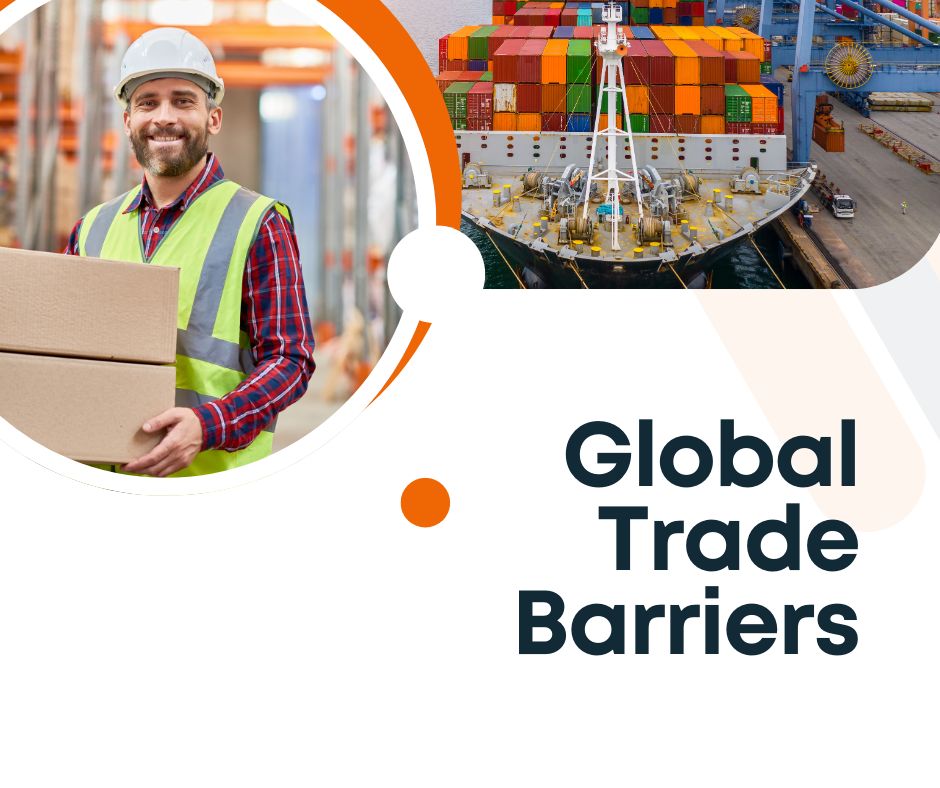
Global trade barriers have become a significant obstacle to international trade, shaping the performance and competitiveness of exporting nations. Indian exporters, despite their growing influence in the global market, face numerous hurdles due to the rising tide of protectionist policies implemented by various countries. These barriers, which include tariffs, non-tariff barriers (NTBs), and quotas, pose considerable challenges to India’s export growth by limiting market access and increasing compliance costs.
Tariffs: The Direct Barrier to Market Access
Tariffs are one of the most common tools used by countries to protect their domestic industries. Indian exporters often face higher tariff rates in several key markets, which reduces the competitiveness of their products. For example, the European Union (EU) imposes an average tariff of 8-10% on Indian textiles, a major export sector for India. Similarly, the United States has applied tariffs ranging from 15-25% on certain Indian steel and aluminum products. These tariffs not only increase the cost of Indian goods in foreign markets but also make it difficult for Indian exporters to compete with countries that benefit from lower tariffs due to free trade agreements.
Non-Tariff Barriers: A Hidden Challenge
Non-tariff barriers (NTBs), including standards, regulations, and quotas, have become a growing concern for Indian exporters. These barriers are often more difficult to navigate because they involve complex and varying rules across different countries. For instance, Indian agricultural products face stringent sanitary and phytosanitary (SPS) measures in the EU and the United States. The compliance costs associated with meeting these regulations can be significant, particularly for small and medium-sized enterprises (SMEs) that lack the resources to navigate these bureaucratic requirements.
According to the World Trade Organization (WTO), the use of NTBs has increased by nearly 30% in the last decade, especially in developed economies like the EU, Japan, and the US. For Indian exporters of pharmaceuticals, textiles, and agro-products, NTBs such as quality standards, labeling requirements, and environmental regulations present ongoing challenges. In many cases, Indian exporters are required to undergo expensive certification processes, further increasing the cost of doing business in these markets.
Quotas: Limiting Export Potential
Quotas, another form of trade barrier, place limits on the quantity of goods that can be exported to certain markets. Indian exporters have faced quota restrictions in key sectors such as textiles and leather goods. For example, in the past, countries like the United States and Canada imposed textile and apparel quotas under the Multi-Fiber Arrangement (MFA), severely limiting the amount of Indian goods that could enter these markets. Although the MFA was phased out in 2005, the legacy of quotas continues to affect Indian exporters in newer forms, such as voluntary export restraints and product-specific restrictions.
Impact of Trade Barriers
According to the Ministry of Commerce and Industry, India’s exports grew by only 6.03% in 2022-2023, down from 26.5% the previous year. This slowdown is attributed, in part, to rising global trade barriers. For example, Indian steel exports to the US fell by 40% in 2023 after tariffs were increased under Section 232 of the US Trade Expansion Act. Similarly, India’s pharmaceutical exports to the EU have faced a drop of nearly 5% due to stringent regulatory standards imposed by the European Medicines Agency (EMA).
Moreover, a report by the Federation of Indian Export Organisations (FIEO) highlighted that Indian exporters spend an average of 10-15% of their revenue on compliance with foreign trade regulations. For SMEs, this burden is particularly high, leading to reduced profitability and stifling their ability to scale operations.
Reasons for Trade Barriers
Several factors contribute to the rise of trade barriers, particularly in developed economies. Protectionist policies are often driven by the desire to safeguard domestic industries from foreign competition. For instance, tariffs on Indian steel and aluminum by the US were justified as measures to protect American jobs in the face of rising global competition. Similarly, NTBs are frequently employed under the guise of consumer safety, environmental protection, or quality control. While these measures serve legitimate purposes, they often have the unintended consequence of discriminating against foreign products, particularly those from developing nations like India.
Another reason for trade barriers is the growing trend of regionalism. Countries are increasingly entering into regional trade agreements (RTAs), such as the European Union (EU) or the Comprehensive and Progressive Agreement for Trans-Pacific Partnership (CPTPP), which provide preferential treatment to member nations while placing non-members like India at a disadvantage.
The Way Forward for Indian Exporters
To overcome these challenges, Indian exporters need a multi-faceted approach. The government has already taken steps by entering into Free Trade Agreements (FTAs) with countries like the UAE, Australia, and the UK to reduce tariff and non-tariff barriers. Additionally, India’s push for “Atmanirbhar Bharat” (self-reliant India) aims to strengthen domestic industries, making them more competitive in the face of global trade barriers.
However, more needs to be done in terms of capacity building and ensuring that Indian exporters, especially SMEs, have the necessary tools and resources to comply with international standards. Strengthening trade negotiations to secure better market access for Indian goods and services is also essential.
Global trade barriers continue to pose significant challenges for Indian exporters, affecting their competitiveness and market access. As tariffs, NTBs, and quotas become more prevalent, Indian exporters must adapt to an increasingly protectionist global trade environment. While government initiatives such as FTAs and trade facilitation efforts are a step in the right direction, it is crucial to address the compliance costs and support exporters in navigating these complex barriers. Only then can India fully realize its export potential in the global marketplace.
 "Connecting communities, empowering nations: Unifying the Regional and Global Economy ."
Leave a comment