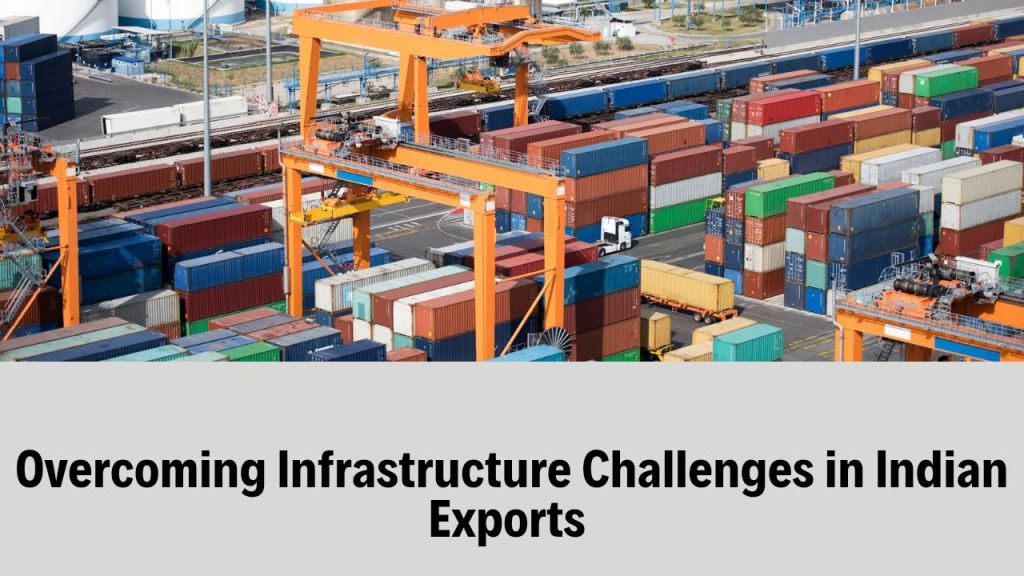
India’s export sector has long been a driver of economic growth, contributing significantly to the country’s GDP and employment. However, the potential for Indian exports remains underutilized due to critical infrastructure deficiencies that hinder competitiveness in the global market. Inadequate ports, roads, and cold storage facilities not only lead to transportation delays but also significantly increase costs, ultimately making Indian products less attractive to international buyers. When compared to competing nations, such as China and Vietnam, India’s infrastructure lags behind, putting it at a disadvantage in the global trade arena.
The Infrastructure Challenge
India’s exports are predominantly reliant on agriculture, textiles, and manufacturing sectors, all of which require efficient transportation and storage facilities. However, the country’s export infrastructure presents several bottlenecks:
1. Ports: India has a coastline of over 7,500 kilometers, with 13 major ports and 205 minor ports, yet it still lags behind in port efficiency. Indian ports are often congested, lacking the advanced automation and handling equipment seen in ports like Singapore and Shanghai. The average turnaround time for a ship at an Indian port is around 2-3 days, while it takes less than a day at major Chinese ports. This delay adds to the cost of exports, increasing the time products take to reach global markets.
2. Roads and Connectivity: Despite recent improvements in road infrastructure under initiatives like the Bharatmala Pariyojana, India’s road connectivity still falls short when compared to its Asian peers. Poor-quality roads and last-mile connectivity issues slow down the transportation of goods from production centers to ports. For instance, the World Bank’s Logistics Performance Index (LPI) for 2023 ranked India 38th, while China ranked 26th and Vietnam 39th. This gap highlights the need for significant investment in logistics infrastructure to reduce delays and boost the overall efficiency of supply chains.
3. Cold Storage Facilities: A significant portion of Indian exports, particularly in the agriculture and food sectors, require cold chain logistics to maintain the quality of perishable goods. However, the lack of adequate cold storage facilities and the fragmented nature of the cold supply chain remain persistent challenges. According to the National Centre for Cold Chain Development (NCCD), India needs an additional 10 million metric tons of cold storage capacity. In contrast, countries like China have invested heavily in modern cold chain solutions, ensuring that their perishable goods maintain quality from farm to foreign markets, giving them a competitive edge.
The Cost of Infrastructure Deficiencies
The implications of these infrastructure gaps are far-reaching. According to a 2023 study by the Federation of Indian Export Organisations (FIEO), logistics costs in India account for about 14-16% of GDP, compared to 8-10% in China and 7% in the United States. High logistics costs make Indian exports more expensive, reducing their competitiveness in price-sensitive global markets. Furthermore, delays in transportation reduce the freshness and quality of perishable goods, impacting sectors like agriculture, dairy, and seafood, which are critical to India’s rural economy and export portfolio.
For instance, India is one of the world’s largest exporters of agricultural products, but post-harvest losses due to inadequate cold storage facilities are estimated at around 20-30% of total produce, according to a report by NABARD. In comparison, China has significantly reduced post-harvest losses by investing heavily in cold chain infrastructure, ensuring better price realization for farmers and greater export competitiveness.
International Comparison: Learning from Competitors
Countries like China and Vietnam have aggressively invested in export infrastructure to streamline logistics and reduce export costs.
China: With its “Belt and Road Initiative” (BRI), China has not only improved its domestic infrastructure but also extended its influence to international trade routes, further facilitating faster and more cost-effective exports. Chinese ports like Shanghai and Shenzhen are among the most automated and efficient in the world. Additionally, the Chinese government has invested in a modern rail and road network that enables seamless transportation of goods from inland production hubs to coastal ports.
Vietnam: Known as one of Asia’s fastest-growing exporters, Vietnam has invested heavily in upgrading its ports and logistics infrastructure, which has directly contributed to its rising global trade profile. With efficient free trade agreements, strong government focus on improving logistics, and proximity to major shipping routes, Vietnam’s exports grew by 13.5% in 2023, despite global economic challenges.
In contrast, India’s infrastructure has not kept pace with its growing economy, leading to delays and high costs that erode its global competitiveness. For instance, Indian ports still rely heavily on manual operations, and the hinterland connectivity remains suboptimal, with long transit times between production centers and ports.
Government Initiatives and the Way Forward
Recognizing these challenges, the Indian government has launched several initiatives to address infrastructure bottlenecks:
National Logistics Policy 2022: This policy aims to reduce logistics costs to 8% of GDP by 2030, through the development of integrated logistics parks, multimodal transport networks, and improved port operations. The policy is expected to bring Indian logistics costs in line with global standards and improve export competitiveness.
Bharatmala Pariyojana: This road development program aims to improve connectivity, especially in border areas, to facilitate smoother transportation of goods. The government has already completed more than 10,000 km of highways under this initiative, and several more projects are in the pipeline.
Sagarmala Project: Launched to enhance port connectivity and capacity, Sagarmala aims to modernize Indian ports through automation, improved handling capacity, and better hinterland connectivity. The project also emphasizes the development of coastal shipping and inland waterways, which could significantly reduce the cost of transporting goods to ports.
Dedicated Freight Corridors: The government is developing dedicated freight corridors (DFCs) to ease congestion on the Indian rail network, allowing for faster movement of goods across the country. Once completed, these corridors will significantly reduce transit times for exports.
India’s export potential is vast, but the country’s infrastructure deficiencies pose significant challenges to realizing this potential. If India is to compete effectively with global players like China and Vietnam, it must address these bottlenecks by investing heavily in modernizing its ports, improving road and rail connectivity, and expanding cold storage facilities. By doing so, India can not only reduce its logistics costs but also ensure that its products reach global markets faster and in better condition, ultimately boosting its competitiveness on the world stage.
With strategic investments and the right policies, India has the potential to transform itself into a global export powerhouse, creating jobs, boosting GDP, and ensuring long-term economic growth.
 "Connecting communities, empowering nations: Unifying the Regional and Global Economy ."
Leave a comment