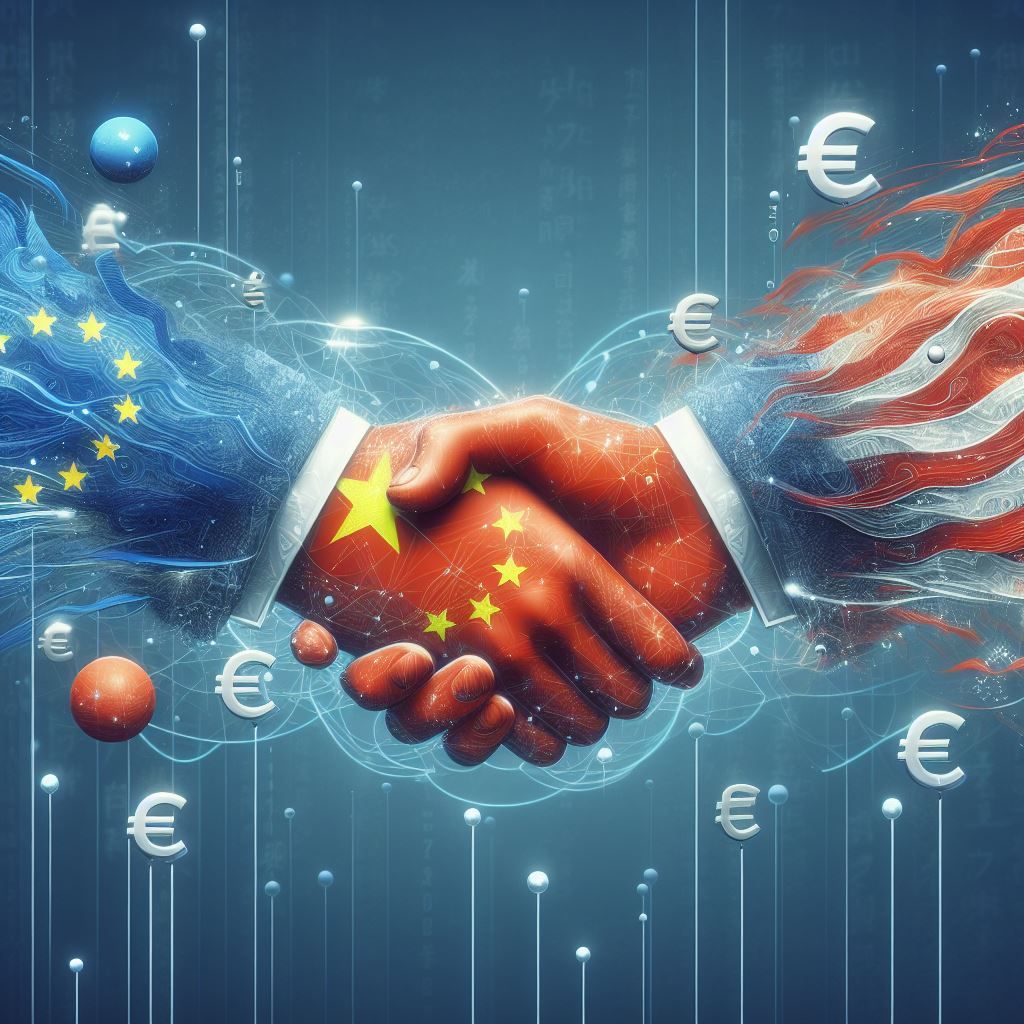
In the ever-changing dynamics of the global economic landscape, the relationship between China and the European Union (EU) has become increasingly complex and multifaceted. As the two economic powerhouses grapple with persistent tensions and economic disputes, the latest developments in their bilateral trade and investment ties reveal a delicate balance between cooperation and competition.
The Shifting Sands of Trade Tensions
The ongoing trade tensions between China and the EU have been a prominent feature of their economic relationship in recent years. The EU’s concerns over China’s economic practices, such as the dominance of state-subsidized industries and perceived unfair trade practices, have led to the implementation of various trade defense measures. The EU has initiated anti-dumping and anti-subsidy investigations, targeting imports of products like electric vehicles from China, in an effort to create a level playing field and protect its domestic industries.
These trade defense actions, along with the EU’s foreign direct investment screening mechanism and the proposed foreign subsidies regulation, reflect a growing emphasis on economic security and resilience. The European Commission’s executive vice president, Valdis Dombrovskis, has warned that the EU-China relationship stands at a “crossroads,” underscoring the need for the bloc to be more assertive in addressing unfairness and safeguarding its economic interests.
Amid these tensions, the EU has also been actively strengthening its economic and trade ties with other regions and countries, including Belgium. The bilateral economic and trade volume between China and Belgium has seen a significant year-on-year increase, with Belgium becoming China’s seventh-largest trading partner within the EU. This diversification of trade and investment partnerships suggests a strategic shift in the EU’s approach to managing its economic relationships.
The Pursuit of Balanced Trade Relations
In the face of these challenges, both China and the EU have expressed a desire to rebalance their trade relations and find a more sustainable path forward. The visit of Chinese President Xi Jinping to Paris in 2023 was seen as a significant step in this direction, with both sides emphasizing the importance of dialogue and cooperation in the current international climate.
However, the path to achieving a more balanced and mutually beneficial economic relationship is not without its obstacles. Persistent political tensions, such as the ongoing disputes over issues like human rights and the status of Taiwan, have the potential to undermine efforts to deepen economic ties.
The European Commission’s plans to unveil measures to protect sensitive economic assets from being usurped by geopolitical rivals, including China, further highlight the complexities involved in managing the EU-China economic relationship. These measures, which include more rigorous screening of foreign investments and tighter controls on exports, reflect the EU’s determination to safeguard its technological and economic sovereignty.
Opportunities and Challenges
Despite the challenges, there remain opportunities for China and the EU to deepen their economic cooperation and find common ground. The growing emphasis on sustainability and the shared commitment to addressing global challenges like climate change could provide a platform for collaborative initiatives in areas such as clean energy, green technology, and sustainable finance.
Moreover, the potential for increased cooperation in sectors like healthcare, digital transformation, and research and development could unlock new avenues for economic growth and innovation. The EU’s efforts to strengthen its economic ties with other regions, such as India, could also create opportunities for trilateral or multilateral economic partnerships involving China, the EU, and other key players.
To capitalize on these opportunities, both China and the EU will need to navigate the complex geopolitical landscape with a clear-eyed understanding of their respective priorities and concerns. Effective communication, a willingness to compromise, and a shared commitment to mutually beneficial outcomes will be essential in forging a more stable and productive economic relationship.
Building Resilience and Mutual Prosperity
As the China-EU economic relationship stands at a crossroads, the path forward will require a careful balancing act. Both sides must find ways to address their legitimate concerns and grievances while also recognizing the interdependence and potential for mutual benefit that underpins their economic ties.
Strengthening dialogue and finding creative solutions to complex issues will be crucial. This could involve exploring new models of economic cooperation, such as joint ventures, technology-sharing arrangements, and collaborative research initiatives, that foster a more equitable and sustainable relationship.
Moreover, both China and the EU will need to invest in building economic resilience and self-reliance, while also maintaining open and rules-based trade and investment frameworks. This will require a nuanced approach that balances the pursuit of national and regional interests with a commitment to multilateralism and global cooperation.
As the world navigates an increasingly volatile and unpredictable economic landscape, the China-EU relationship will continue to be a significant factor in shaping the global economic order. By embracing a spirit of pragmatism, flexibility, and a shared vision for sustainable prosperity, these two economic giants can navigate the challenges and seize the opportunities that lie ahead, setting the stage for a more stable and mutually beneficial economic future.
The latest data paints a nuanced picture of the China-Europe economic landscape. Key highlights:
1. Shifting Trade Deficit: The EU’s trade in goods deficit with China narrowed by €106 billion (-27%) in 2023, reaching €291 billion. This was driven by declining Chinese imports, particularly in telecommunications, and rising EU exports, notably in motor vehicles.
2. Surging EU Investments: EU investments in China skyrocketed by 92.2% year-on-year in 2022, with Germany leading the charge at 52.9%. Major deals, like BMW’s acquisition of its China joint venture, fueled this investment surge.
3. China’s Outsized Role: China remains the EU’s largest import source, accounting for 20.8% of total EU imports in 2022, valued at €626 billion. It is also the 3rd largest destination for EU exports, which reached €230 billion (9% of total).
4. Top Traded Goods: Machinery, vehicles, chemicals, and electronics dominate the EU-China trade basket. China’s key exports to the EU include telecom equipment, data processing machines, and electrical machinery, while the EU exports motor vehicles, electronic components, and auto parts.
5. Investment Trends Shift: Chinese investment in Europe (EU-27+UK) declined to a decade low of €7.9 billion in 2022, amid increased scrutiny of Chinese investments and pandemic-related disruptions.
Overall, the data reveals a multifaceted economic relationship between China and Europe, characterized by both cooperation and competition across trade, investment, and sectoral dynamics. The evolving trends underscore the complex and interdependent nature of this critical economic partnership.
References
[1] European Investment in China: Prospects for 2023 – China Briefing https://www.china-briefing.com/news/european-investment-in-china-prospects-for-2023/
[2] Trade (% of GDP) – China – World Bank Data https://data.worldbank.org/indicator/NE.TRD.GNFS.ZS?locations=CN
[3] EU trade in goods with China: Less deficit in 2023 – Eurostat https://ec.europa.eu/eurostat/web/products-eurostat-news/w/ddn-20240304-2
[4] [PDF] EU TRADE AND ECONOMIC RELATIONS IN NUMBERS http://eu.china-mission.gov.cn/eng/mh/201906/P020210831560714104728.pdf
[5] EU–China Economic Relations to 2025. Building a Common Future https://www.bruegel.org/book/eu-china-economic-relations-2025-building-common-future
[6] EU-China Relations: Trade, Investment, and Recent … https://www.china-briefing.com/news/eu-china-relations-trade-investment-and-recent-developments/
[7] Chinese FDI in Europe: 2022 Update – Rhodium Group https://rhg.com/research/chinese-fdi-in-europe-2022-update/
[8] China’s FDI In Europe – The Diplomat https://thediplomat.com/2023/06/chinas-fdi-in-europe/
[9] China–European Union relations – Wikipedia https://en.wikipedia.org/wiki/China%E2%80%93European_Union_relations
[10] Chinese Investment in Europe: A Country-Level Approach https://www.realinstitutoelcano.org/en/monographs/chinese-investment-in-europe-a-country-level-approach/
[11] On China’s Expanding Influence in Europe and Eurasia https://carnegieendowment.org/2019/05/09/on-china-s-expanding-influence-in-europe-and-eurasia-pub-79094
[12] Economic Relations, Trade and Investment – EEAS – European Union https://www.eeas.europa.eu/delegations/china/economic-relations-trade-and-investment_en?s=166
[13] China (CHN) Exports, Imports, and Trade Partners – OEC World https://oec.world/en/profile/country/chn
[14] China-Europe investment disrupted as EU countries tighten FDI regimes https://www.ibanet.org/china-europe-investment-disrupted-as-EU-countries-tighten-FDI-regimes
[15] Foreign direct investment into China slumps to worst in 30 years https://economictimes.indiatimes.com/news/international/business/foreign-direct-investment-into-china-slumps-to-worst-in-30-years/articleshow/107800058.cms
[16] China – European Commission – International Partnerships https://international-partnerships.ec.europa.eu/countries/china_en
[17] The Silk Road Economic Belt and EU-China Security Cooperation https://www.sipri.org/research/peace-and-develoment/private-sector-and-peace/eu-china-cooperation-silk-road-economic-belt
[18] China, the EU and Economic Development in Eastern Europe … https://www.zois-berlin.de/en/research/externally-funded-projects/china-the-eu-and-economic-development-in-eastern-europe-and-eurasia
[19] European Union Exports to China – 2024 Data 2025 Forecast 2000 … https://tradingeconomics.com/european-union/exports/china
 "Connecting communities, empowering nations: Unifying the Regional and Global Economy ."
Leave a comment