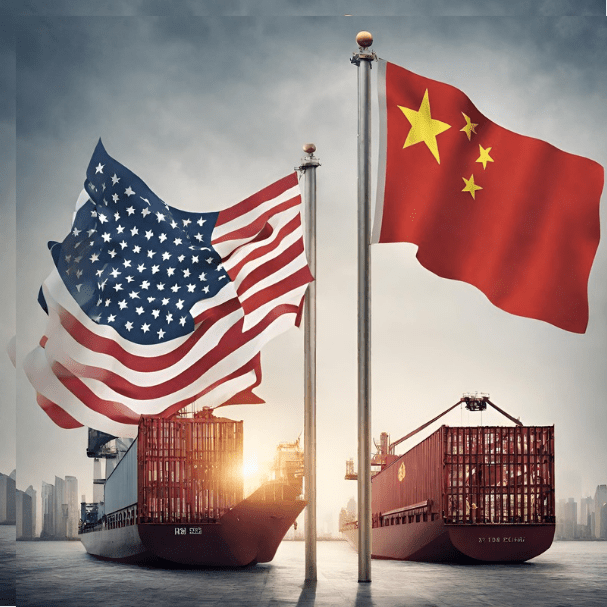
In the vast tapestry of global trade, two economic powerhouses stand out like beacons, their interactions with the world’s factory, China, shaping the course of international commerce. India and the United States, though separated by geography and history, find themselves in a dance of economic diplomacy, each navigating the intricate web of trade relations with the Asian giant.
India: A Growing Market with a Sizeable Deficit
For India, the story of its trade with China has been one of exponential growth and a persistent challenge – the ever-widening trade deficit. Since the early 2000s, the two nations have witnessed a remarkable surge in their commercial ties, with China emerging as India’s largest trading partner. This remarkable transformation can be largely attributed to China’s ability to produce competitively priced manufactured goods, which have found a ready market in the rapidly growing Indian economy.
However, the nature of this trade relationship has not been without its complexities. While Indian exports to China have seen steady growth, they have failed to keep pace with the surge in imports, leading to a significant and widening trade deficit for India. This imbalance is largely due to the fact that China’s primary imports from India are raw materials, while its exports to India are predominantly finished goods, creating an inherent asymmetry in the trade dynamic.
This lopsided trade relationship has not gone unnoticed in New Delhi. Recent years have seen increased political and strategic unease between the two nations, particularly in the wake of border tensions. As a result, India has made a concerted effort to diversify its trade partnerships, seeking to reduce its dependence on China and explore new avenues for economic cooperation.
US: A Mixed Bag with Security Concerns
Across the Pacific, the United States has had a more complex and multifaceted relationship with China when it comes to trade. The world’s two largest economies have navigated a delicate dance, marked by periods of cooperation and competition, as the US has sought to address its burgeoning trade deficit with China.
At the heart of the US-China trade relationship lies a critical issue – intellectual property rights. The United States has long been vocal in its concerns about intellectual property theft and unfair trade practices employed by Chinese entities, a major sticking point in the ongoing trade negotiations between the two nations.
However, the US-China trade dynamic extends beyond mere economic considerations. Increasingly, the United States views China’s growing economic and military might with strategic concern, leading to a policy of “strategic decoupling” – a concerted effort to reduce the economic interdependence between the two countries, particularly in sensitive sectors.
Unlike India’s trade relationship with China, which is primarily focused on the exchange of goods, the US-China trade ties encompass a broader range of products, including raw materials, technology, and high-value services. This diverse trade portfolio has added another layer of complexity to the negotiations, as the US seeks to address its concerns across multiple fronts.
Key Points of Divergence
While both India and the US have grappled with the challenges posed by their trade relationships with China, the nature of these challenges and the strategic considerations behind them differ significantly.
One key point of divergence lies in the nature of the trade itself. India’s imports from China are predominantly finished goods, while the US imports a wider range of products, including raw materials and high-tech components. This distinction shapes the respective nations’ trade strategies and priorities.
Another crucial difference lies in the strategic outlooks of the two countries. India’s trade calculations are heavily influenced by its geopolitical context, particularly the ongoing border tensions and political unease with China. This has pushed India to actively seek to diversify its trade partnerships, reducing its reliance on China. In contrast, the US’s trade decisions are more heavily weighted towards concerns over intellectual property protection and national security, leading to a more proactive effort to decouple economically from China.
Looking Ahead: The Future of Trade
As the global economic landscape continues to evolve, both India and the US are poised to play pivotal roles in shaping the future of international trade. One common thread that binds their strategies is a growing emphasis on diversification – a concerted effort to reduce their dependence on China and explore new avenues for economic cooperation.
For India, this diversification strategy may involve strengthening trade ties with other nations in the region, such as the members of the Association of Southeast Asian Nations (ASEAN). Additionally, India may seek to leverage its growing prowess in the technology sector to forge partnerships with like-minded countries, potentially reducing its reliance on Chinese-manufactured goods.
Similarly, the United States is actively exploring ways to secure its technology supply chains and protect its intellectual property, which could lead to a further decoupling from China in certain sensitive sectors. This shift may open up new opportunities for collaboration with India, as both nations seek to build resilient and reliable global supply networks.
The evolving geopolitical landscape in Asia will undoubtedly shape the future of trade dynamics between these economic titans. The ongoing rivalry between the US and China, and India’s strategic calculations vis-à-vis its northern neighbor, will play a crucial role in determining the course of these trade relationships.
In the ever-shifting world of global commerce, the contrasting trade relationships between India, the United States, and China offer a fascinating case study. While India grapples with a widening trade deficit and the political complexities of its ties with China, the US navigates a more diverse and strategically charged trade landscape, focused on intellectual property protection and national security concerns.
As these two economic powerhouses chart their course through the turbulent waters of international trade, one thing is clear: their ability to adapt, innovate, and forge new partnerships will be the key to their continued economic success and global influence. The outcome of this dynamic interplay will undoubtedly reverberate across the world, shaping the future of global commerce for years to come.
 "Connecting communities, empowering nations: Unifying the Regional and Global Economy ."
Leave a comment