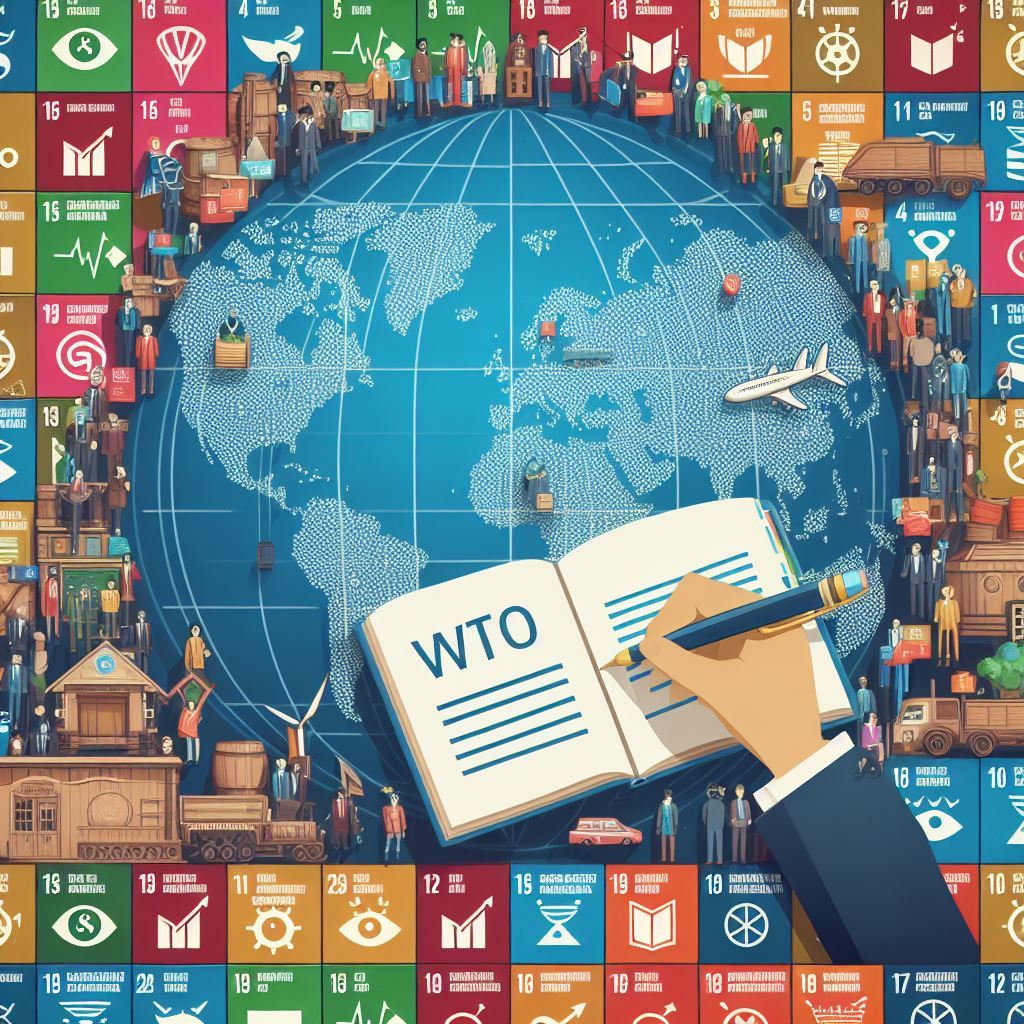
Trade is undoubtedly a double-edged sword when it comes to achieving the Sustainable Development Goals (SDGs). On one hand, it has the potential to be a powerful driver of economic growth, poverty reduction, and development. On the other hand, it comes with significant risks of exacerbating inequality, harming the environment, and undermining local livelihoods. In order to harness the positive impacts of trade while mitigating these risks, careful consideration and comprehensive strategies are needed.
One of the major positive impacts of trade is its potential for poverty reduction and economic growth. Trade can create jobs, generate income, and increase access to goods and services, leading to improved living standards. Export-oriented industries, in particular, can provide valuable income for developing countries, which can then be invested in crucial sectors such as education, healthcare, and infrastructure. This can have a long-lasting impact, as increased investment in these areas can result in improved human capital and overall development.
Another significant positive impact of trade is its contribution to food security. Trade ensures access to diverse and affordable food sources, especially for countries that are reliant on imports. This is particularly important for countries that face climate or resource constraints, making it difficult to produce certain food staples domestically. International trade allows these countries to access the necessary food items, ensuring that their populations have enough to eat. This is crucial in achieving SDG 2, which aims to end hunger, achieve food security, and improve nutrition.
Trade also enables the transfer of technology, knowledge, and skills, fostering innovation and allowing developing countries to leapfrog stages of development. Open trade allows for the diffusion of advanced technologies in key sectors such as agriculture. Access to these technologies can greatly improve crop yields and enhance food security, contributing to SDG 2. Moreover, the transfer of technological expertise can also benefit other sectors such as healthcare and manufacturing, enabling countries to develop their capacities and contribute to sustainable development.
Furthermore, trade can play a role in climate change mitigation. It can facilitate the diffusion of environmentally friendly technologies, such as renewable energy sources and energy-efficient products. By promoting the trade of these technologies, countries can contribute to global efforts to combat climate change. Additionally, trade in carbon credits can create incentives for reducing greenhouse gas emissions, which is crucial for achieving SDG 13, which addresses climate action.
However, along with these positive impacts, trade also presents several challenges and risks that need to be addressed. One of the main challenges is the unequal distribution of benefits. Trade benefits may not be distributed evenly, potentially widening the gap between the rich and the poor. Unfair trade practices and the exploitation of labor in developing countries can exacerbate inequality and exploit vulnerable populations. This highlights the need for fair trade practices that ensure fair prices for producers in developing countries and protect labor rights.
Another significant challenge associated with trade is environmental degradation. Unsustainable production practices and resource extraction can lead to deforestation, pollution, and biodiversity loss. Additionally, the transportation associated with trade contributes to greenhouse gas emissions. This calls for the need to encourage sustainable production practices and responsible consumption patterns that minimize environmental impacts. It is crucial to ensure that trade is aligned with SDG 12, which aims to ensure sustainable consumption and production patterns.
Furthermore, unfair competition from imports can harm local producers, particularly small-scale farmers, leading to job losses and economic instability. This undermines local livelihoods and poses a challenge to achieving the SDGs. To address this issue, it is essential to support developing countries in building their capacity to participate in trade effectively. This includes investing in infrastructure development, trade finance, and skills training to enable local producers to compete on a fair footing.
In navigating the complexities of trade, several strategies are crucial. Firstly, promoting fair trade agreements that ensure fair prices for producers in developing countries and protect labor rights is essential. This can help address the unequal distribution of benefits and contribute to more equitable trade practices. Secondly, encouraging sustainable production practices and responsible consumption patterns is vital in minimizing environmental impacts. This can be achieved through incentives and regulations that reward environmentally friendly practices and discourage unsustainable ones.
Capacity building is another key strategy in harnessing the positive impacts of trade. Supporting developing countries to build their capacity to participate in trade effectively can ensure that the benefits are more evenly distributed. This includes investing in infrastructure development, trade finance, and skills training to enable these countries to fully engage in international trade.
Moreover, multilateral cooperation plays a crucial role in managing trade sustainably. Establishing strong international trade rules that promote sustainable development and address concerns about inequality and environmental damage is essential. This requires collaboration between nations to create a framework that ensures responsible trade practices and safeguards against negative impacts.
In conclusion, while trade can be a powerful tool for achieving the SDGs, it needs to be managed responsibly and sustainably. The positive impacts of trade, including poverty reduction, economic growth, and technology transfer, can significantly contribute to sustainable development. However, to fully harness these benefits, it is vital to address the challenges and implement appropriate safeguards. Promoting fair trade practices, encouraging sustainable production and consumption, supporting capacity building, and fostering multilateral cooperation are key strategies in ensuring that trade contributes to a more equitable and sustainable future for all. By doing so, we can leverage the potential of trade to achieve the SDGs and create a world that is prosperous, inclusive, and environmentally sustainable.
 "Connecting communities, empowering nations: Unifying the Regional and Global Economy ."
Leave a comment