From Agrarian Safety Nets to Informal Enterprise Shields
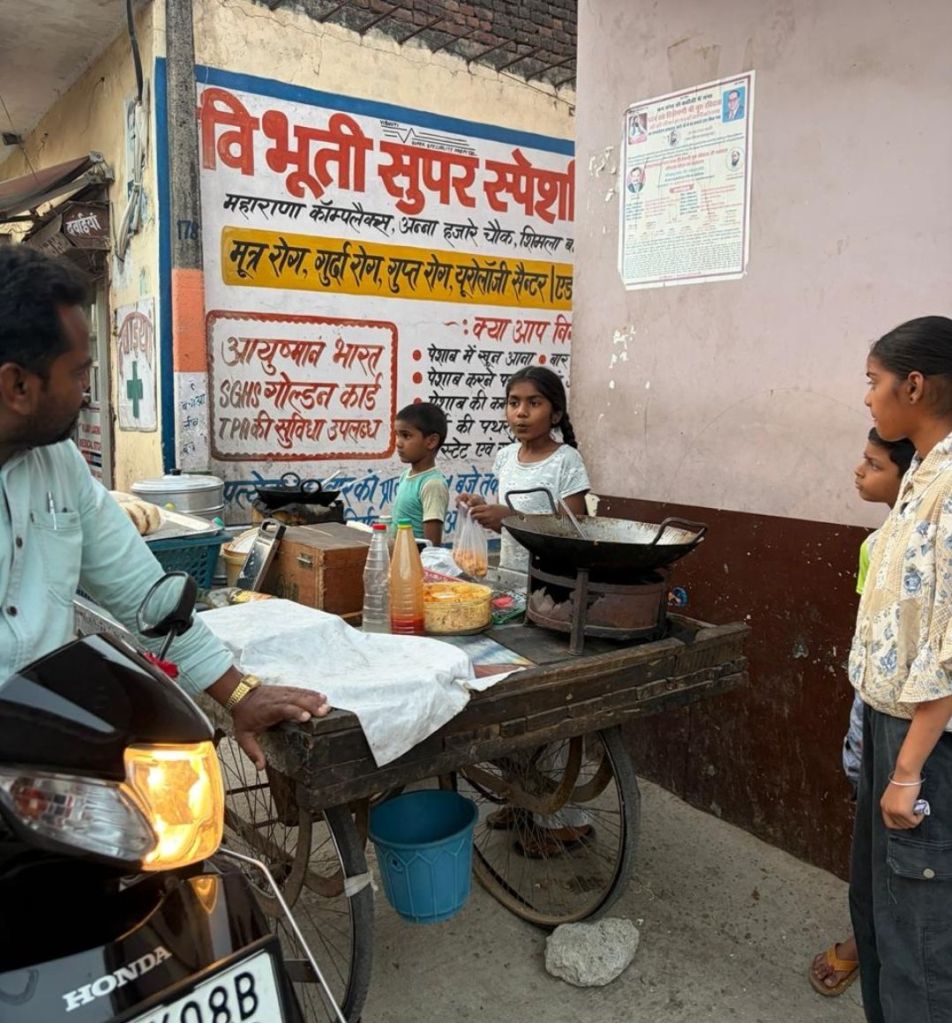
Historically, rural India depended on land, kinship networks, and community solidarity as its primary social security system. Illness, death, or economic shocks were absorbed within extended families and agrarian livelihoods. However, with rapid urbanization of villages—particularly in peri-urban belts around expanding cities—this traditional safety net has weakened. In its place, a new, informal system is emerging: micro enterprises. These are not just economic units but survival mechanisms. Rakha’s story, where a young student runs a small momo and chowmein cart after losing her father to cancer, reflects a structural shift. The ability to enter a low-cost business with minimal barriers is becoming the first line of defense against economic shocks.
Urban Demand Meets Rural Adaptation
Urbanized villages create a unique economic ecosystem. Rising demand for fast food, convenience products, and services—driven by nearby urban populations—generates micro-market opportunities. Unlike traditional rural settings, these villages have higher cash flows, better connectivity, and exposure to urban consumption patterns. Rakha’s earnings of around INR 150 per day, though modest, represent more than income; they signify liquidity, autonomy, and resilience. Data across India suggests that nearly 30–40% of non-farm rural employment now comes from such micro and informal enterprises, especially in peri-urban regions. This is not accidental—it is a response to the structural pull of urban markets.
Low Entry Barriers as Invisible Insurance
What makes micro enterprises powerful is their accessibility. No formal education, minimal capital, and basic skills are sufficient to start. In economic terms, this creates a decentralized “insurance system” where individuals can quickly pivot to income-generating activities during crises. Rakha’s ability to start a food cart while continuing her education illustrates this flexibility. Unlike formal insurance—which requires premiums, documentation, and time—micro enterprises provide instant, albeit small-scale, income support. This is particularly critical in a country where a large proportion of the workforce remains outside formal social security frameworks.
The Informality Trap: Security Without Stability
However, this model comes with deep structural limitations. Micro enterprises offer survival, not security. Income volatility, lack of health insurance, absence of credit access, and vulnerability to local enforcement or eviction make these livelihoods fragile. Rakha’s daily earnings may cover immediate needs, but they cannot address long-term risks such as healthcare costs, education continuity, or capital expansion. In many cases, such enterprises operate in a legal grey zone—without licenses, protections, or institutional support. Thus, what appears as resilience may also mask systemic exclusion.
Gender, Age, and the Burden of Adjustment
Rakha’s story also reveals a critical social dimension. The burden of economic adjustment often falls on women and children in vulnerable households. Young individuals entering micro entrepreneurship after school hours reflect both resilience and a silent crisis—where education and childhood are negotiated against survival needs. While these enterprises enable participation, they also risk perpetuating cycles of informality and limited upward mobility if not supported by policy interventions.
From Survival to Structured Inclusion
Looking ahead, the challenge is not to replace micro enterprises but to strengthen them. The future lies in integrating these informal units into broader economic and social security frameworks. Digital payments, micro-credit, skill development, and localized insurance products can transform such enterprises from subsistence activities into growth-oriented units. Urbanized villages can evolve into micro-cluster economies, where small vendors like Rakha become part of organized supply chains, benefiting from scale, branding, and institutional support.
Recognizing Informal Insurance Systems
Policymakers need to recognize that micro enterprises already function as de facto social security systems. Instead of viewing them as peripheral, they should be central to urban-rural transition strategies. Linking them with schemes such as health insurance, pension systems, and credit guarantees can create a hybrid model—combining flexibility of informality with stability of formal systems. Without this, the risk is clear: a large segment of the population will remain trapped in low-income, high-risk livelihoods.
The Silent Backbone of Resilience
Rakha’s momo cart is not just a story of survival; it is a reflection of a broader economic transformation. In the absence of formal safety nets, micro enterprises are quietly becoming the backbone of resilience in urbanized villages. They absorb shocks, provide dignity, and sustain households in times of crisis. Yet, their true potential will only be realized when they are supported, protected, and integrated into the formal economic architecture. The future of inclusive growth in India may well depend on how effectively we bridge this gap between survival and security.
#MicroEnterprises #UrbanizedVillages #InformalEconomy #SocialSecurityGap #RuralUrbanTransition #LivelihoodResilience #WomenEntrepreneurs #PeriUrbanEconomy #InclusiveGrowth #EconomicSurvival
 "Connecting communities, empowering nations: Unifying the Regional and Global Economy ."
Leave a comment