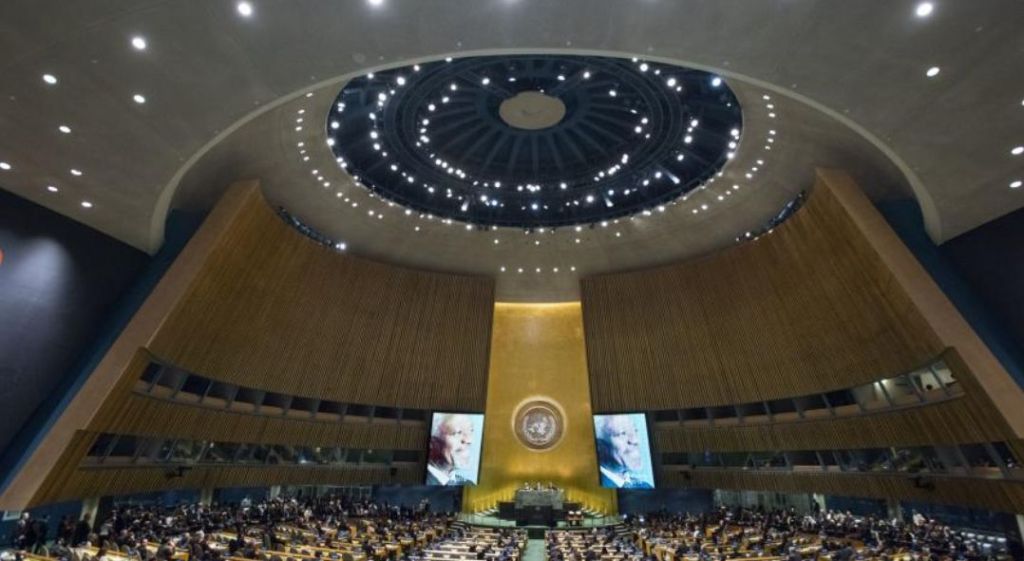
The architecture of global governance was born in the aftermath of the World War II with a clear ambition—to prevent conflict, stabilize economies, and provide collective solutions to global challenges. Institutions such as the United Nations, World Trade Organization, and International Monetary Fund emerged as pillars of this order. For decades, they functioned—imperfectly but effectively—under a largely Western-led consensus. However, the 21st century is witnessing a profound shift: the erosion of that consensus and the rise of a fractured, multipolar world where cooperation is increasingly subordinated to strategic competition.
Erosion of Multilateral Norms in a Multipolar World
The defining challenge today is not the absence of institutions, but the weakening of their normative authority. The rise of geopolitical rivalries—particularly between major powers—has transformed multilateral platforms into arenas of contestation rather than cooperation. Policies associated with figures like Donald Trump have accelerated unilateral tendencies, but the deeper structural issue lies in the transition from a unipolar to a multipolar order. Emerging powers are no longer passive participants; they demand voice, influence, and recognition. Yet, instead of reforming institutions to accommodate this shift, the system has drifted into fragmentation—regional blocs, bilateral arrangements, and strategic alliances increasingly bypass multilateral frameworks.
Legitimacy Crisis and Representation Deficit
At the heart of the crisis lies a legitimacy deficit. Institutions like the IMF and World Bank continue to reflect an outdated economic hierarchy, where voting rights and quotas do not align with contemporary economic realities. Countries such as India and China, despite their significant global economic weight, remain underrepresented in decision-making structures. Similarly, the UN Security Council—with its entrenched veto powers—mirrors the geopolitical realities of 1945 rather than 2026. This mismatch has led to growing disillusionment, particularly among Global South nations, who perceive these institutions as instruments of selective governance rather than equitable global stewardship.
From Rule-Based Order to Power-Based Negotiation
Historically, global governance operated on the premise of a “rules-based order.” Today, that framework is increasingly replaced by power-based negotiation. Trade disputes bypass the WTO’s dispute settlement mechanism, financial crises are managed through ad hoc coalitions rather than IMF-led frameworks, and climate negotiations struggle to move beyond declaratory commitments. The inability of multilateral institutions to enforce compliance—relying instead on voluntary adherence—has reduced their effectiveness. In essence, global governance is shifting from institutional authority to negotiated pragmatism, where outcomes depend more on geopolitical leverage than on agreed rules.
Failure to Deliver Global Public Goods
Perhaps the most critical indictment of current multilateralism is its inability to deliver global public goods. Whether it is climate change, pandemic preparedness, or conflict resolution, institutional responses have been reactive, fragmented, and often inadequate. The COVID-19 pandemic exposed glaring coordination failures, while climate negotiations continue to fall short of actionable commitments. This reflects not just institutional inefficiency but a deeper political unwillingness to prioritize collective outcomes over national interests. The result is a paradox: global challenges are intensifying precisely when global cooperation is weakening.
Institutional Paralysis and the Politics of Veto
The structural design of key institutions further compounds the problem. The veto power within the UN Security Council has often led to paralysis in addressing conflicts, while underfunding limits the operational capacity of many UN agencies. Similarly, the WTO’s consensus-based decision-making has slowed reforms, and its dispute settlement mechanism has faced operational setbacks. These design flaws, once considered safeguards of sovereignty, now act as barriers to timely and effective action in a rapidly changing global landscape.
Reform Imperatives: Between Possibility and Resistance
Reform proposals have been widely discussed but sparingly implemented. Updating IMF quotas, introducing double-majority voting systems, expanding the UN Security Council, and rethinking WTO rules around Special and Differential Treatment are all on the table. Initiatives like UN reform agendas and SDG review mechanisms signal intent, but progress remains incremental. The core challenge is political—reforms require those who benefit from the status quo to concede power, a proposition that has historically faced resistance.
India’s Strategic Position: Between Critique and Engagement
India occupies a unique position in this evolving landscape—as both a critic of the existing order and an active participant in shaping its future. Through platforms like the G20 and BRICS, India has consistently advocated for greater representation of the Global South and more equitable governance structures. At the same time, it has pursued strategic autonomy, balancing engagement with multiple power centers. India’s approach reflects a pragmatic recognition: while the current system is flawed, disengagement is not an option; reform must be pursued from within.
The Future: Towards Networked Multilateralism or Managed Fragmentation?
Looking ahead, global governance is unlikely to return to its post-war idealism. Instead, two possible trajectories emerge. One is “networked multilateralism,” where flexible coalitions, regional groupings, and issue-based alliances complement formal institutions. The other is “managed fragmentation,” where global governance becomes increasingly decentralized, with parallel systems competing for influence. The direction will depend on whether major powers can reconcile strategic competition with cooperative necessity.
Reimagining Governance for a New Global Reality
The crisis of global governance is not merely institutional—it is fundamentally political and philosophical. It raises a critical question: can a world defined by national interests still sustain collective solutions? The answer will shape not just the future of multilateral institutions but the trajectory of global stability itself. Without meaningful reform and renewed political commitment, the risk is clear—a world where institutions exist, but governance fails.
#GlobalGovernance
#MultilateralInstitutions
#Geopolitics
#MultipolarWorld
#UNReform
#WTOCrisis
#IMFQuotaReform
#GlobalSouth
#InstitutionalLegitimacy
#StrategicAutonomy
 "Connecting communities, empowering nations: Unifying the Regional and Global Economy ."
Leave a comment