Historical Evolution of Development Finance and the Global South
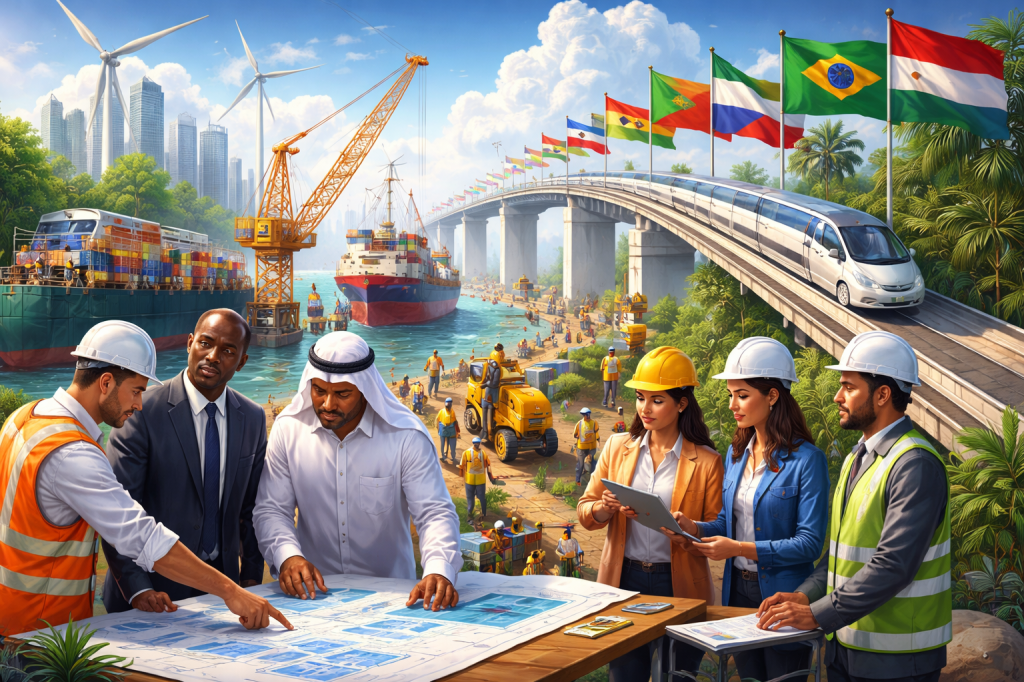
The idea of development and inclusive growth in the Global South has evolved significantly over the past seven decades. After the Second World War, newly independent countries across Asia, Africa, and Latin America sought pathways to accelerate economic growth, reduce poverty, and build modern infrastructure. International financial institutions such as the World Bank and regional development banks became key sources of financing for large public investments in transport, energy, agriculture, and social sectors.
During the early decades of development planning, infrastructure and industrialization were considered the backbone of economic transformation. Countries like India adopted state-led industrialization models, while many others focused on export-oriented manufacturing. However, development financing remained heavily dependent on external borrowing, concessional loans, and bilateral aid. Over time, this dependency created structural vulnerabilities, especially when global economic conditions shifted. The Global South therefore gradually began seeking alternative models of cooperation and financing that could reduce reliance on traditional Western-dominated financial institutions.
Debt Crisis and Structural Vulnerabilities in Developing Economies
One of the recurring challenges faced by developing economies has been the cycle of debt accumulation and financial vulnerability. Many countries in the Global South borrowed heavily to finance infrastructure and social development programs, particularly during periods when global liquidity was abundant and interest rates were relatively low.
However, when economic shocks occur—such as global recessions, commodity price collapses, or sudden increases in interest rates—the burden of external debt becomes difficult to sustain. Several developing countries today spend a large share of their public revenues on debt servicing rather than investing in long-term development priorities. According to international estimates, a growing number of low- and middle-income countries are either already facing debt distress or are at high risk of entering such a crisis.
This situation highlights a deeper structural issue: development financing mechanisms have not evolved fast enough to address the financing needs of rapidly growing economies. Without reforms in global financial governance and debt restructuring frameworks, many countries risk falling into a prolonged cycle of fiscal stress and slow growth.
South–South Cooperation: A New Development Paradigm
In response to these challenges, South–South cooperation has emerged as a powerful alternative framework for development collaboration. Unlike traditional donor-recipient models, South–South partnerships emphasize mutual learning, technology sharing, and collaborative investment among developing countries.
Countries such as India, China, Brazil, Indonesia, and South Africa have increasingly expanded their economic engagement with other developing regions through technical assistance, concessional credit, and joint infrastructure projects. This cooperation is not only financial but also institutional and technological. Agricultural modernization programs, digital governance systems, renewable energy technologies, and healthcare innovations are increasingly being shared among countries in the Global South.
Such partnerships are gradually creating a more diversified ecosystem of development financing, reducing dependence on a limited number of traditional donors and strengthening economic ties across emerging economies.
Infrastructure as the Foundation of Economic Transformation
Infrastructure remains one of the most critical drivers of inclusive growth. Reliable transport networks, energy systems, logistics corridors, and digital connectivity are essential for integrating domestic markets and linking developing countries to global value chains.
Yet the infrastructure financing gap in the Global South remains enormous, estimated to be in the trillions of dollars annually. Many developing economies struggle to mobilize sufficient domestic resources to finance such investments, making international partnerships crucial.
Infrastructure development has therefore become not only an economic priority but also a strategic instrument in global geopolitics. Large-scale infrastructure initiatives are increasingly shaping trade routes, supply chains, and regional economic integration.
The Belt and Road Initiative and the Transformation of Global Connectivity
One of the most ambitious infrastructure programs of the twenty-first century is the Belt and Road Initiative (BRI), launched by China to enhance connectivity across Asia, Europe, Africa, and beyond. Through investments in railways, highways, ports, pipelines, and digital infrastructure, the initiative aims to reshape global trade corridors and stimulate economic development across participating regions.
For many developing countries, the initiative has provided access to financing for projects that might otherwise have remained unimplemented due to limited domestic resources. However, the initiative has also generated debates about transparency, debt sustainability, and geopolitical influence. Critics argue that some projects may contribute to rising debt burdens, while supporters emphasize the role of BRI in addressing the massive infrastructure gap across the Global South.
Regardless of these debates, the initiative has fundamentally changed the landscape of development finance by introducing new players, financing models, and geopolitical considerations into global infrastructure development.
Alternative Infrastructure Partnerships and the Emergence of Strategic Competition
As global infrastructure initiatives expanded, advanced economies introduced alternative frameworks aimed at promoting transparent, sustainable, and high-quality infrastructure development. One such initiative is the Partnership for Global Infrastructure and Investment (PGII), which seeks to mobilize large-scale public and private investments in infrastructure projects across developing regions.
These initiatives reflect the growing strategic competition between major economic powers to shape the future of global connectivity. Infrastructure investments are no longer purely economic projects; they are also instruments of geopolitical influence, technological leadership, and supply chain security.
For countries in the Global South, this evolving environment presents both opportunities and challenges. Access to multiple sources of financing can increase bargaining power and accelerate development, but it also requires careful strategic planning to ensure that projects align with national economic priorities.
The Middle East Crisis and Its Implications for Global Development
Recent geopolitical tensions in the Middle East have further complicated the global development landscape. Disruptions in key maritime trade routes, particularly around the Red Sea and surrounding regions, have significantly affected global shipping patterns and logistics networks. These disruptions have increased transportation costs, extended delivery times, and introduced new uncertainties into international trade.
For many developing economies, especially those dependent on exports and global supply chains, such disruptions can have significant economic consequences. Higher freight costs and supply chain disruptions can reduce export competitiveness, increase inflationary pressures, and slow economic growth.
At the same time, the crisis highlights the strategic importance of diversified trade routes, resilient logistics networks, and regional connectivity initiatives. Infrastructure corridors, alternative shipping routes, and digital supply chain management systems are becoming essential tools for mitigating geopolitical risks in global trade.
Inclusive Growth in a Fragmented Global Economy
As geopolitical tensions intensify and global supply chains become more fragmented, the challenge of achieving inclusive growth in the Global South becomes even more complex. Economic development must not only focus on increasing GDP growth but also ensure that growth translates into improved livelihoods, employment opportunities, and social equity.
Technological transformation will play a crucial role in this process. Digital infrastructure, artificial intelligence, and renewable energy systems offer opportunities for developing countries to leapfrog traditional stages of development. At the same time, policy frameworks must ensure that technological progress benefits small businesses, workers, and local communities rather than concentrating gains in a few sectors.
A Futuristic Outlook: Toward a Multipolar Development Finance System
The future of development finance is likely to be shaped by a more multipolar and diversified financial architecture. Traditional multilateral institutions, emerging development banks, sovereign wealth funds, and private capital markets will increasingly coexist as sources of development financing.
Countries in the Global South will need to navigate this complex landscape carefully, balancing economic opportunities with financial sustainability. Strategic investments in infrastructure, technology, and human capital will be essential for achieving long-term inclusive growth.
Ultimately, the success of development efforts will depend not only on the availability of financing but also on the quality of governance, transparency of projects, and the ability of nations to integrate economic growth with social and environmental sustainability. In a world marked by geopolitical uncertainty and economic transformation, the Global South stands at a critical juncture—where the choices made today will shape the trajectory of development for decades to come.
#GlobalSouth
#DevelopmentFinance
#DebtCrisis
#SouthSouthCooperation
#InfrastructureDevelopment
#BeltAndRoadInitiative
#PGII
#MiddleEastCrisis
#InclusiveGrowth
#GlobalEconomicGovernance
 "Connecting communities, empowering nations: Unifying the Regional and Global Economy ."
Leave a comment