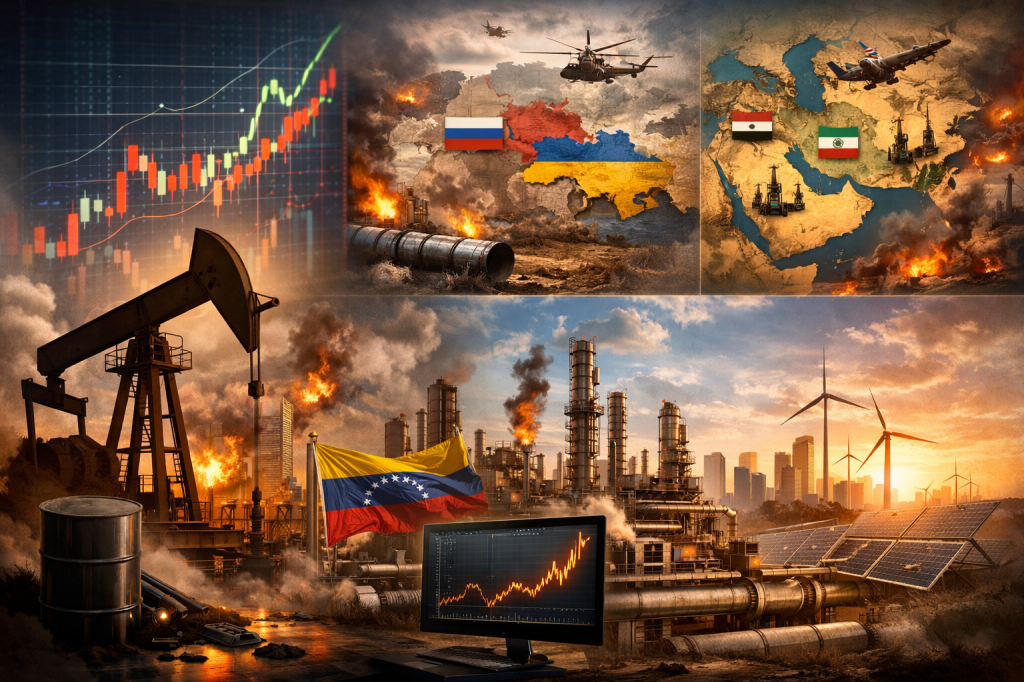
Oil markets have always been more than a story of barrels and balances; they are a mirror of global power, conflict, and expectations about the future. The recent move of crude prices to two-week highs reflects not a sudden structural shortage, but a familiar cocktail of geopolitical anxiety layered over shifting monetary signals. History suggests that oil rarely rises quietly—its rallies are usually accompanied by fear, diplomacy, or both.
Demand Expectations in a Tight Monetary World
Signals from central banks that demand conditions may strengthen have once again pulled oil into a speculative upswing. Even in an era of energy transition, crude remains deeply sensitive to expectations of industrial activity, transport demand, and global growth. When policymakers hint at resilience in consumption, traders quickly reprice oil upward, often ahead of any physical tightening. This dynamic has been visible since the 1970s, when oil stopped being a purely physical commodity and became a macro-financial asset.
Conflict Premiums and the Fragility of Supply
The Russia–Ukraine conflict continues to cast a long shadow over energy markets. While global supply chains have adjusted since 2022, disruptions, sanctions, and infrastructure risks still inject a persistent risk premium into prices. Similarly, labor unrest and production uncertainty in Venezuela revive memories of how quickly barrels can disappear from global markets due to political stress rather than geological limits. These episodes reinforce a historical lesson: oil supply is not constrained only by geology, but by governance and geopolitics.
Middle East Ceasefires and the Illusion of Stability
Temporary ceasefires in the Middle East offer moments of calm, but they rarely eliminate volatility. Markets have learned, through decades of conflict, to treat stability in the region as conditional and reversible. Even when immediate supply routes remain unaffected, the mere possibility of escalation keeps traders cautious. This embedded uncertainty has become a structural feature of oil pricing rather than a short-term anomaly.
Power Politics and Short-Term Price Spikes
Warnings and diplomatic posturing involving major oil-producing states often generate sharp but temporary price movements. History shows that such spikes tend to fade once production adjusts or alternative supplies come online. However, these moments matter because they reveal how oil remains a geopolitical lever. Political signals can move prices faster than fundamentals, reminding the world that energy security is inseparable from foreign policy.
Volatility as the New Normal
Looking ahead, oil markets are likely to remain volatile even as the world transitions toward cleaner energy. The paradox of the coming decade is that declining long-term reliance on oil may actually increase short-term instability. Underinvestment in upstream capacity, combined with geopolitical fragmentation, could make supply more sensitive to shocks. At the same time, financial markets will continue to amplify these shocks through rapid repricing.
In this future, oil will no longer dominate growth narratives, but it will still dominate crisis narratives. Prices may spike not because oil is scarce in the long run, but because the world is navigating a complex transition where geopolitics, policy uncertainty, and legacy energy systems collide. The lesson from history is clear: oil’s role may evolve, but its capacity to unsettle global markets is far from over.
#OilGeopolitics
#EnergySecurity
#CrudeOilPrices
#GeopoliticalRisk
#MiddleEastStability
#RussiaUkraineConflict
#VenezuelaOil
#MarketVolatility
#GlobalEnergyTransition
#SupplyShock
 "Connecting communities, empowering nations: Unifying the Regional and Global Economy ."
Leave a comment