For much of the post–Cold War era, global business operated under a comforting assumption: policy was the backdrop, markets were the stage. Governments set rules, firms optimized within them, and success was largely a function of efficiency, scale, and timing. That mental model is now obsolete. We are entering a phase where policy is no longer a background condition—it is a core business variable, shaping costs, access, technology choices, and even corporate survival.
Historically, periods of rapid globalization thrived on regulatory convergence and predictable rules. From the 1990s to the mid-2000s, trade liberalisation, investment treaties, and financial integration allowed firms to design supply chains purely on cost minimisation and speed. Policy shocks existed, but they were episodic. Today, policy intervention is continuous, strategic, and structural. Carbon regimes, industrial subsidies, export controls, localisation mandates, and security screening are not temporary distortions; they are durable features of the economic landscape.
What makes this shift profound is not just the volume of regulation, but its intent. Policy is no longer reactive—it is directional. Governments are explicitly steering capital towards preferred technologies, regions, and sectors. Energy transition policies are rewriting the economics of power, transport, and materials. Data sovereignty rules are reshaping digital business models. National security frameworks are redefining what can be traded, where it can be produced, and with whom firms can partner. In effect, states are reclaiming their role as architects of markets rather than referees on the sidelines.
This reconfiguration demands a different corporate logic. Firms that continue to treat policy as a compliance cost or a short-term risk will struggle. The most successful enterprises of the next decade will be those that align capital allocation, technology choices, and supply chains with long-term policy direction rather than short-term market cycles. Investment decisions will increasingly be judged not just by internal rates of return, but by their policy compatibility—carbon intensity, strategic relevance, employment impact, and geopolitical acceptability.
Technology choices sit at the centre of this transition. Automation, artificial intelligence, clean energy systems, and advanced manufacturing are no longer neutral productivity tools; they are politically charged assets. Governments are subsidising some technologies while restricting others, creating asymmetric advantages across firms and countries. Choosing a technology stack today is implicitly choosing a regulatory future. Those who misread policy signals risk stranded assets, blocked market access, or sudden loss of competitiveness.
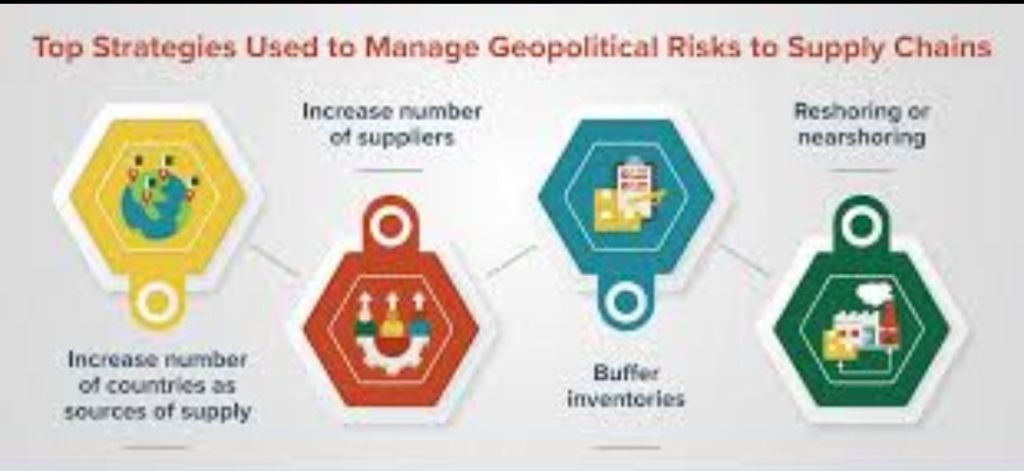
Supply chains, once engineered for efficiency and resilience, are now being redesigned for policy compliance. Diversification is no longer about reducing operational risk alone; it is about navigating sanctions regimes, trade preferences, and local content rules. The emerging global system rewards firms that can demonstrate traceability, sustainability, and strategic alignment. Speed and scale still matter, but legitimacy in the eyes of regulators and societies increasingly determines who gets to operate and expand.
From a historical perspective, this moment resembles earlier inflection points—the rise of welfare states after the Great Depression, the regulatory overhaul following the financial crises of the twentieth century, or the industrial planning of post-war reconstruction. In each case, businesses that anticipated policy direction prospered, while those that resisted were forced into adaptation or decline. The difference today lies in the global simultaneity of change: multiple policy regimes are evolving at once, often in conflicting directions, creating a fragmented yet intensely regulated world economy.
Looking ahead, the frontier of competition will shift from pure market efficiency to strategic alignment. Firms will need policy intelligence alongside market intelligence, regulatory foresight alongside financial forecasting. Corporate strategy will increasingly resemble geopolitical navigation, balancing opportunity with compliance, innovation with acceptability. In this new era, policy is not an external constraint—it is the market itself.
The future belongs to businesses that understand this reality early: those that treat policy as a design parameter, not an afterthought. In doing so, they will not only survive the coming decade of disruption, but shape the contours of the next global economic order.#PolicyAsMarket
#StrategicCapital
#GeopoliticalEconomy
#IndustrialDirection
#RegulatoryPower
#SupplyChainRealignment
#TechnologySovereignty
#CarbonConditionality
#StateLedMarkets
#LongTermAlignment
 "Connecting communities, empowering nations: Unifying the Regional and Global Economy ."
Leave a comment