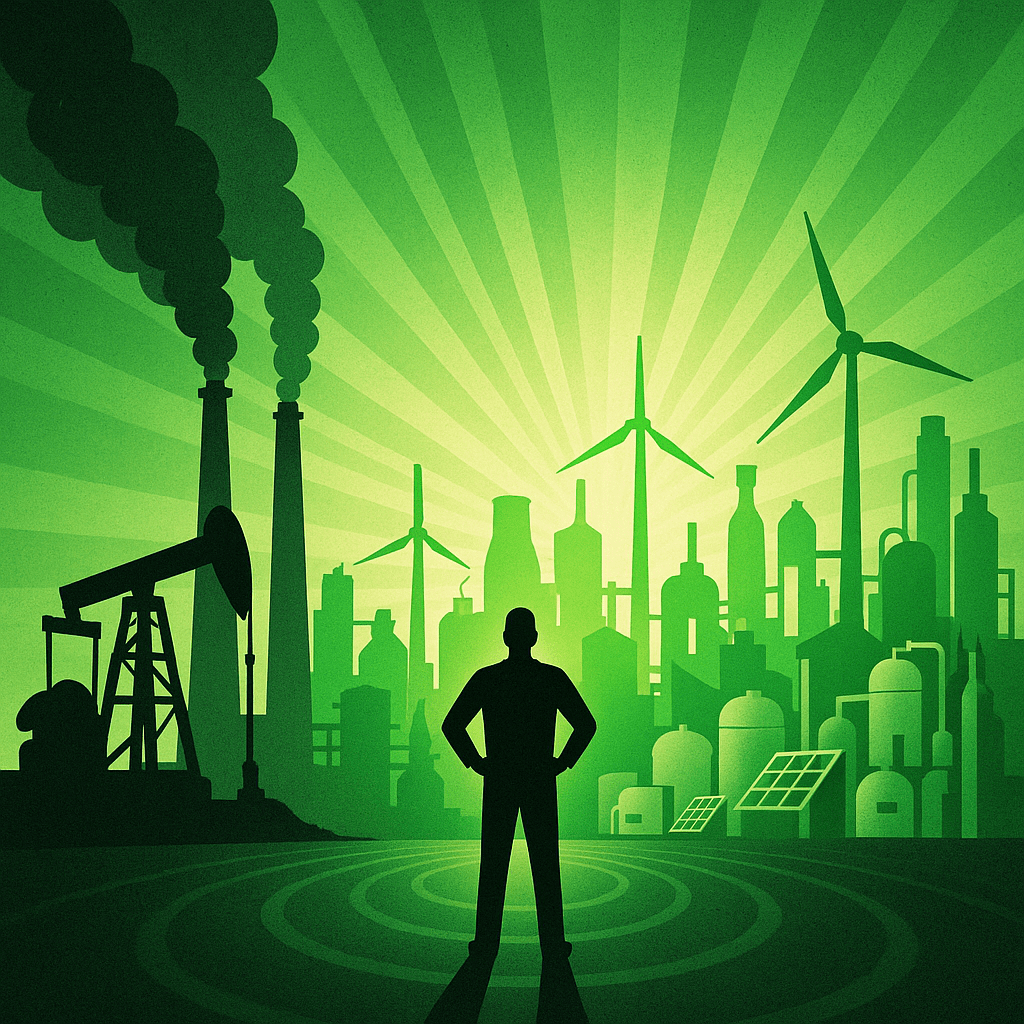
The climate conversation at COP30 in Belém added another chapter to the long and uneven story of global climate diplomacy. For many observers, this summit symbolised a shift: the world is no longer debating whether to transition to a low-carbon economy — it is negotiating how fast, who pays, and what industrial pathways define the next economic era.
Leaders endorsed a broad push toward green industrialisation. This was not merely rhetorical ambition; it reflected the emerging reality that economies of the future will be shaped by renewables, clean-technology manufacturing, and climate-aligned heavy industry. Pledges centred on hydrogen, ammonia, green steel, battery storage and clean manufacturing suggest that climate action is becoming deeply tied to industrial competitiveness rather than just environmental advocacy.
Yet, beneath the hopeful momentum, geopolitics left visible cracks. The final declaration notably did not commit to a full phase-out of fossil fuels — a gap driven by resistance from key hydrocarbon-dependent states. This hesitation is not new. Historically, climate agreements—from Kyoto to Paris—have been shaped by compromise, reflecting the tension between energy security, political influence, and economic transition. COP30 continues that pattern: ambition constrained by reality.
A Historical Turning Point — or Another Deferred Leap?
Looking back, climate policy evolution often appears cyclical rather than linear. Early treaties focused on emissions reporting, later agreements shifted to renewable deployment, and now the conversation has entered a third phase: industrial decarbonisation. The idea of “green steel” or “climate neutral shipping fuels” was unthinkable a decade ago. Today, they define the next competitive frontier.
However, just as policy ambition rises, the financial landscape appears more volatile. A recent Deloitte outlook warns that 2025 is proving difficult for global renewable investment pipelines. Policy uncertainty — especially in the United States following the restructuring of clean-energy credits under the “One Big Beautiful Bill Act” — has slowed new wind and solar deployment. Developers and financiers are cautiously reassessing risk, especially in markets where clean-energy economics still rely on predictable incentives.
This contrast — strong global intention but inconsistent execution — exposes a deeper challenge: climate transition is not only technological, it is institutional and political.
Why This Moment Matters for the Next Decade
COP30 sends a clear message: the journey to a climate-aligned world will not be frictionless. Transition demands capital, policy stability, supply-chain rewiring, and social consensus. Countries capable of building strong industrial ecosystems — including skilled labour, regulatory predictability, green finance mechanisms, and technological sovereignty — will dominate the next era of global competition.
For emerging economies, this presents both risk and opportunity:
Risk, because late transition can lock economies into obsolete carbon-intensive assets.
Opportunity, because green manufacturing, hydrogen corridors, and low-carbon material production can open new export pathways and reshape global trade.
The transition narrative is no longer about environmental urgency alone. It is about economic survival, strategic autonomy, and technological leadership.
A Futuristic Outlook: Green Industry as Geopolitics
The coming decade will likely witness:
New industrial blocs formed around hydrogen production, carbon-neutral materials, and energy storage.
Trade frameworks incorporating carbon border adjustments, resource access, and sustainability standards.
A shift in energy diplomacy away from oil alliances toward critical minerals, technology transfer, and green financing agreements.
Countries that move fastest in scaling green industrial ecosystems will shape these rules rather than respond to them.
The World Between Intent and Action
COP30 reflects a world in transition — ambitious, yet uncertain; aligned in vision, yet fragmented in strategy. The refusal to mandate a full fossil-fuel phase-out may disappoint climate activists, but the growing alignment on hydrogen, renewables, and green industrial systems suggests that momentum toward a post-carbon economy is no longer reversible.
The story of COP30, much like previous climate milestones, will not be judged by the text of its final communique — but by the investments, technologies, and green-industry supply chains that emerge over the next five to ten years.
And the real question now is:
Will global leadership match the scale of the crisis, or will future generations look back at COP30 as another missed opportunity?#GreenIndustrialisation
#COP30
#HydrogenEconomy
#RenewableEnergyTransition
#GreenSteel
#ClimatePolicy
#EnergyGeopolitics
#CleanManufacturing
#SustainabilityOutlook
#GlobalDecarbonisation
 "Connecting communities, empowering nations: Unifying the Regional and Global Economy ."
Leave a comment