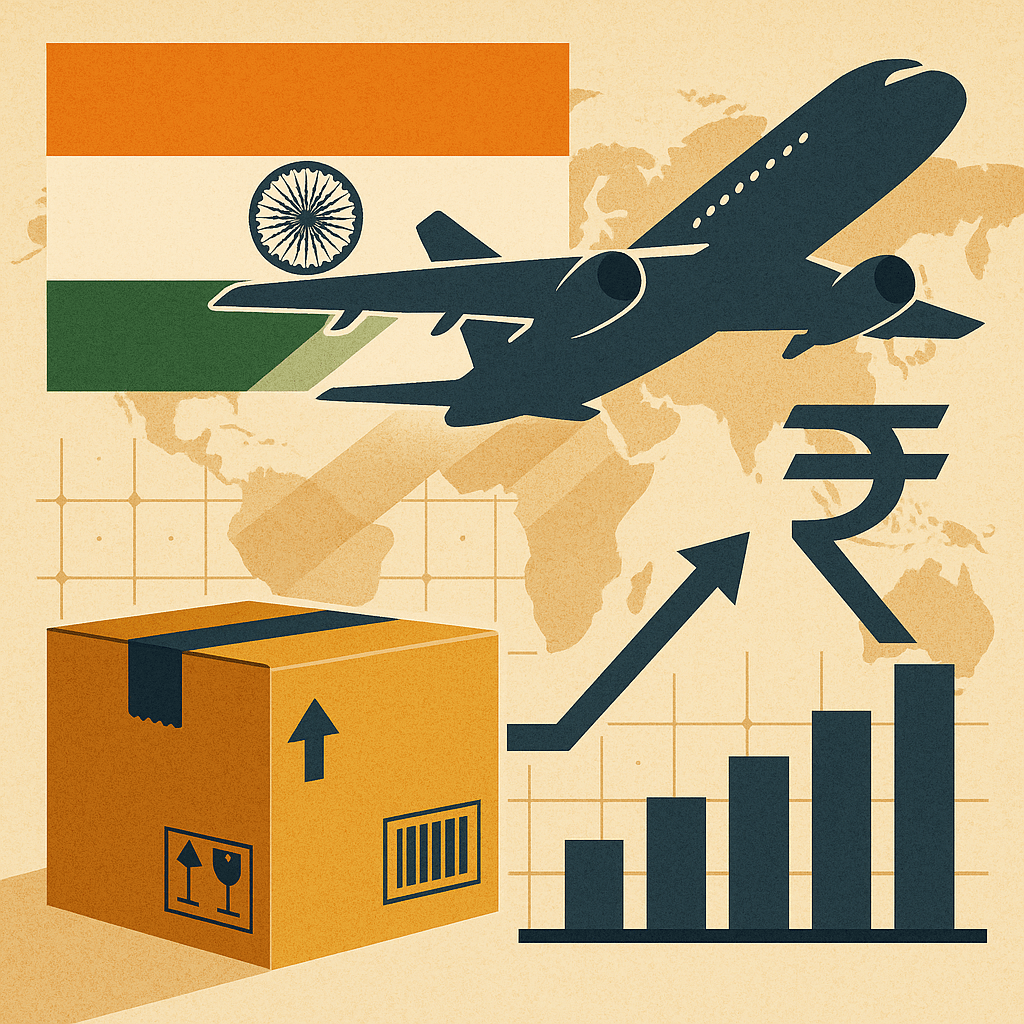
In a world where tariffs, sanctions, and geopolitical trade barriers are redefining global commerce, India’s air-cargo sector is undergoing a structural transformation rather than a cyclical upswing. High-value export segments—pharmaceuticals, smartphones, electronics, precision engineering, jewellery, and even specialized agricultural goods—are increasingly prioritizing speed, reliability, and risk-hedging over traditional cost optimisation. The result is a decisive shift toward air-freight, signalling a deeper reconfiguration of India’s export value chain.
This shift is not merely a response to temporary trade tensions but part of a longer historical arc of how nations redesign logistics during global economic turbulence.
How Global Shocks Create Logistics Shifts
Throughout history, major geopolitical disruptions have re-engineered supply chains:
Cold War & early WTO era (1950s–1990s): Maritime shipping consolidated as the backbone of global trade, driven by containerization and low tariffs.
Post-2008 financial crisis: Just-in-time manufacturing and e-commerce created a surge in express and air-freight movements.
Pandemic & post-pandemic (2020–2024): Supply-chain fragility pushed firms to diversify modes, regions, and stocking strategies.
Tariff wars (2018 onwards): U.S.–China tariffs, EU regulatory walls, and fragmentation of trade blocs fueled a shift toward faster, more secure transport.
India’s present air-cargo boom sits squarely within this historical pattern of logistics adapting to geopolitical constraints.
Why Air-Cargo Is Winning: Tariffs Have Changed the Math
As The Economic Times highlights, exporters across pharma and smartphones—two of India’s fastest-growing high-value sectors—now find that tariff-induced uncertainty makes fast shipping more valuable than low-cost shipping.
1. Time Sensitivity Meets Regulatory Risk
Tariffs delay shipments at ports, complicate compliance, and increase inspection times. Air-freight reduces exposure to these frictions by compressing transit times dramatically.
2. High-Value Goods Justify Higher Freight Costs
Exporters of medicines, semiconductors, and electronics measure logistics in terms of:
value per kg
risk of delay
shelf-life
intellectual property sensitivity
For such sectors, air-cargo is insurance—not just transport.
3. Supply-Chain Diversification: Speed Is a Strategic Asset
Companies diversifying away from China need reliable multi-route options. India has become a preferred node for diversification because air-cargo enhances its responsiveness in global supply chains.
Structural, Not Incremental: India’s Export Model Is Being Rewired
India’s export story is no longer about increasing volumes; it is about moving higher value, higher technology, higher precision products. This represents a structural shift, visible in three emerging trends:
A. Export Complexity Is Increasing
India is transitioning from exporting raw materials and simple assembly goods to:
biosimilars
smartphones
medical devices
advanced textiles
auto components
aerospace parts
Air-freight supports these complexity jumps.
B. Margins Are Higher, Lead-Times Are Shorter
Global buyers now expect:
rapid replenishment
micro-shipments for omnichannel retail
compliance with changing tariff windows
Air-cargo allows Indian exporters to meet these demands more competitively.
C. India’s Logistics Geography Is Being Redrawn
New hubs emerging:
Hyderabad and Ahmedabad for pharma
Bengaluru and Chennai for electronics
Pune and Aurangabad for engineered goods
Delhi-NCR for smartphones and medical exports
These cities are now global gateways—not just manufacturing hubs.
Futuristic Outlook: Air-Cargo Will Shape India’s Export Powerhouse Years
Looking ahead, five forces will define the future of India’s air logistics ecosystem:
1. Rise of Dedicated Freight Corridors & Air-Cargo Villages
Cargo-specific airports and logistics parks (like Hyderabad’s Pharma City model) will become the norm.
2. Robotics, AI & Digital Twins in Cargo Management
Predictive routing, automated warehousing, blockchain-enabled customs, and AI forecasting will reduce friction and costs.
3. Green Aviation & Sustainable Fuels
As Europe tightens carbon borders, India will need sustainable-aviation-fuel (SAF) corridors to remain competitive.
4. Integration with Export-Oriented Clusters
Electronics, pharma, textiles, and precision manufacturing clusters will map production cycles directly to air-freight schedules.
5. Tariff-Fragmentation as the New Normal
With protectionism rising globally, quick-response logistics will be a core competitive advantage—not a supporting function.
A Strategic Moment for India
The rise of air-cargo is a proxy for a larger transformation: India’s shift from low-value, slow-moving exports to high-value, fast-moving global value chains. In a world divided by tariffs and geopolitical blocs, nations that build resilient, high-speed logistics will define the next era of global trade.
India has an opening—one of the rare times when logistics, geopolitics, manufacturing policy, and technology converge. If leveraged well, the air-freight revolution can help India leapfrog into the league of sophisticated export economies.
#AirCargoShift
#HighValueExports
#TariffDrivenTrade
#ExportLogistics
#IndiaSupplyChain
#PharmaAndSmartphones
#GeopoliticalTradeRisks
#FastFreightEconomy
#GlobalValueChains
#FutureOfLogistics
 "Connecting communities, empowering nations: Unifying the Regional and Global Economy ."
Leave a comment