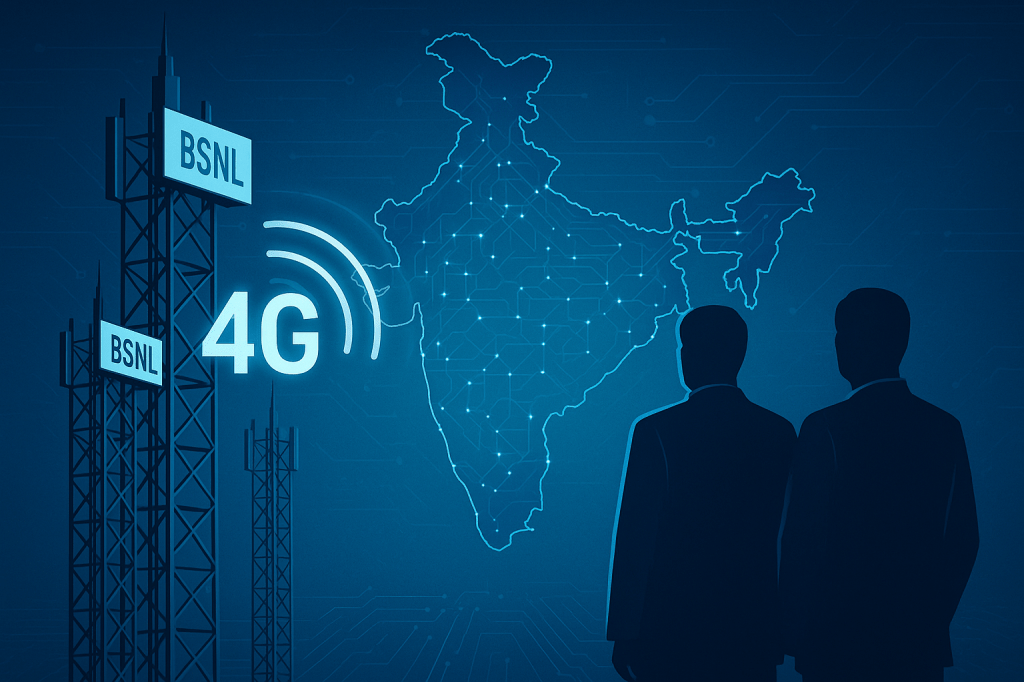
A Historic Leap Toward Technological Sovereignty
India’s unveiling of its first fully indigenous 4G telecom stack is not just a milestone in engineering—it’s a symbol of digital sovereignty and the maturing of the country’s technological ecosystem. Developed jointly by BSNL, C-DOT, TCS, and Tejas Networks, this initiative has placed India among a select group of nations capable of designing, manufacturing, and deploying end-to-end telecom infrastructure.
The stack’s design aligns with India’s long-term digital policy vision—Aatmanirbhar Bharat—by reducing dependence on foreign vendors, ensuring cybersecurity resilience, and laying the foundation for 5G and even 6G transitions. The rollout also promises to bridge the rural-urban digital divide, enabling last-mile connectivity in areas that have historically remained beyond the reach of private telecom players.
This is a striking reversal of history: India once struggled with 2G spectrum controversies and import dependence, but today it builds networks that can be exported. It signals the country’s transformation from a consumer of global telecom technology to a potential exporter of digital infrastructure.
Financial Fragility: The Paradox Beneath Progress
Yet, behind this success story lies an uncomfortable truth—the financial instability of the telecom sector. The troubles of Vodafone Idea (Vi) remain emblematic of the sector’s imbalance. Heavy debt, unresolved Adjusted Gross Revenue (AGR) dues, and limited investor confidence have pushed the company to the brink.
This fragility does not exist in isolation. The telecom industry has historically operated on thin margins due to high spectrum costs, intense price wars, and delayed tariff rationalization. The government’s focus on fiscal recovery through strict enforcement of dues has inadvertently deepened the distress of smaller players.
If Vodafone Idea collapses, the implications would be severe—loss of thousands of jobs, unpaid vendor bills, and a potential ripple effect on the banking sector, which holds significant telecom exposure. The larger question is whether India can truly celebrate self-reliance in telecom technology while its service providers struggle to stay solvent.
The Emerging Duopoly: Innovation at Risk
The erosion of competition is now unmistakable. India’s once-vibrant multi-player market has narrowed into a duopoly dominated by Reliance Jio and Bharti Airtel. While BSNL’s revival with indigenous 4G may offer a partial counterbalance, its public-sector constraints limit its agility and innovation.
The rise of a duopoly poses systemic risks:
Higher tariffs and limited pricing freedom for consumers.
Reduced innovation as market pressure diminishes.
Infrastructural concentration, where rural or low-revenue regions risk being underserved.
In economic history, duopolies tend to stifle dynamism. India’s telecom revolution in the 2000s was driven by fierce competition that forced operators to innovate, cut costs, and expand aggressively. That competitive flame is flickering. If unchecked, the market could drift toward a functional monopoly under two corporate empires, undermining both consumer welfare and long-term sectoral resilience.
Policy Recalibration: Learning from Global Models
India’s Draft National Telecom Policy 2025 presents a blueprint for revitalizing the ecosystem, emphasizing innovation, security, and universal connectivity. However, it must evolve into a decisive reform framework rather than a statement of intent.
Key policy priorities should include:
Financial restructuring for stressed operators through rationalized spectrum pricing, debt restructuring, or partial equity support mechanisms to prevent market collapse.
Regulatory innovation, such as allowing Mobile Virtual Network Operators (MVNOs)—a model that countries like Mexico used effectively to reinvigorate competition.
Continued public investment in R&D and network security to future-proof the telecom ecosystem against cyber threats and supply-chain disruptions.
Encouraging indigenous 5G and 6G R&D, ensuring that India’s next technological leap is domestically driven.
Such policy calibration would align India’s telecom reforms with global precedents while retaining the unique developmental imperatives of an emerging economy.
The Road Ahead: From Technological Milestone to Sustainable Ecosystem
India’s indigenous 4G stack is undeniably a strategic breakthrough—a statement of national confidence in the face of global supply-chain volatility and geopolitical uncertainty. But technology without economic resilience is a short-lived triumph.
The challenge now lies in building a sustainable business ecosystem around this achievement—where financially healthy operators, fair competition, and innovation coexist. The telecom sector is the backbone of India’s digital economy; its fragility could undercut ambitions in AI, fintech, and e-governance.
To truly secure its place as a global telecom power, India must look beyond the symbolism of self-reliance. It must stabilize its market structure, safeguard consumer interests, and incentivize continuous innovation. Only then can the success of the indigenous 4G stack evolve from a milestone to a lasting model of technological and economic sovereignty.
Futuristic Outlook
Looking forward, India’s telecom trajectory will shape its digital GDP and data sovereignty for decades. As 6G research accelerates globally, the ability to integrate indigenous systems with AI-driven network management and satellite connectivity will determine competitiveness.
If India can combine its engineering strength, financial reforms, and regulatory foresight, it could not only break free from dependency cycles but also emerge as a global telecom exporter and standards-setter—a transformation reminiscent of Japan’s and South Korea’s rise in the electronics age.
But that future demands a delicate balance between market discipline and policy pragmatism. Without it, the promise of a self-reliant telecom revolution risks being remembered as a technical triumph built upon economic fragility.
#TelecomReforms #DigitalSovereignty #4GStack #AatmanirbharBharat #DuopolyRisk #VodafoneIdea #SpectrumPricing #BSNLRevival #5GTransition #TelecomPolicy2025
 "Connecting communities, empowering nations: Unifying the Regional and Global Economy ."
Leave a comment