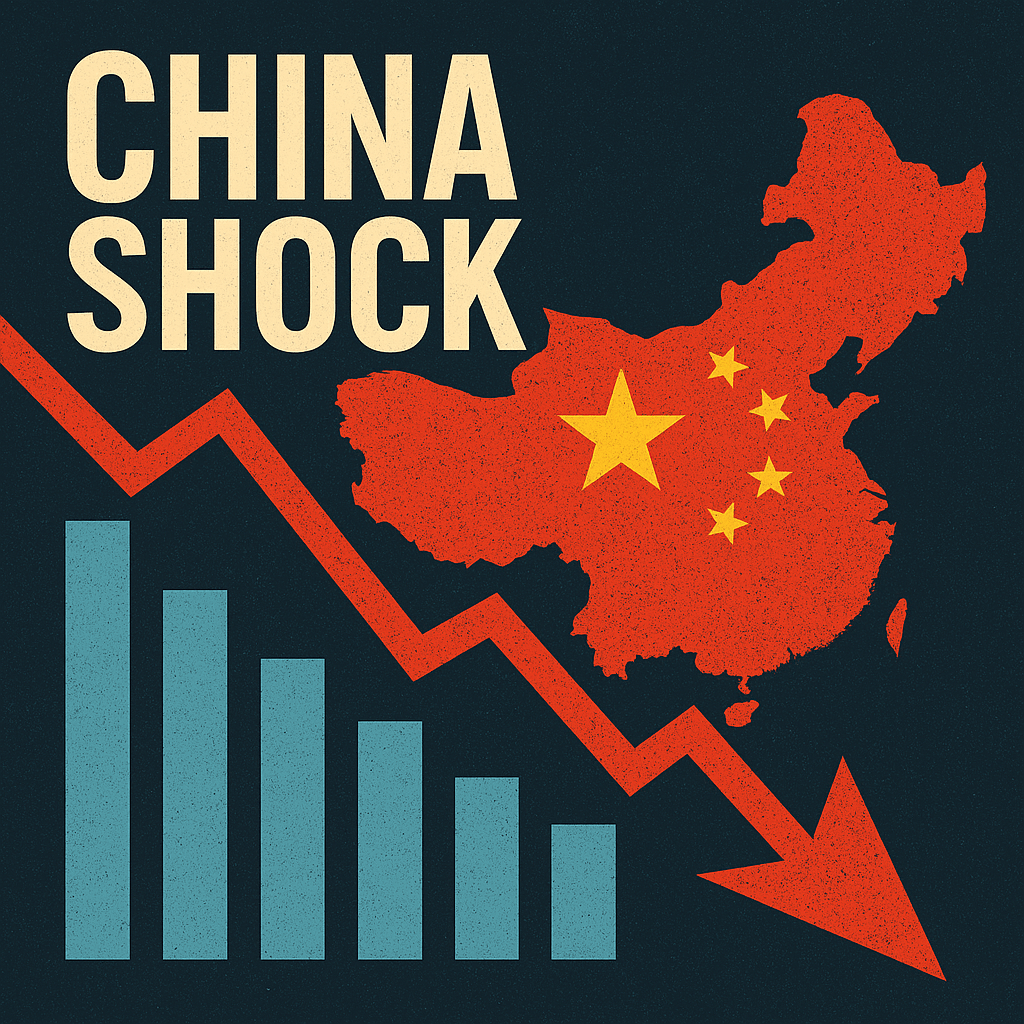
The Shock That Redefined Global Trade
The term “China Shock” describes one of the most transformative economic phenomena of the 21st century — the sudden and massive surge in Chinese exports following its entry into the World Trade Organization (WTO) in 2001. It marked not merely a shift in trade balances, but a structural reordering of global production, labor markets, and economic power. To understand its magnitude, we must trace its historical evolution, the ripple effects across developed economies, and the ongoing reconfiguration of global supply chains that continues to unfold in 2025.
Historical Roots: From Deng Xiaoping’s Reforms to WTO Integration
The origins of the China Shock lie in the economic liberalization policies initiated by Deng Xiaoping in the late 1970s and 1980s, famously encapsulated in his phrase: “It doesn’t matter whether a cat is black or white, as long as it catches mice.”
Under this pragmatic philosophy, China transitioned from a centrally planned economy to a market-oriented system, encouraging foreign direct investment (FDI) and export-oriented manufacturing.
During the 1990s, China intensified its integration with the global economy by building Special Economic Zones (SEZs), which attracted multinational corporations with low labor costs, improving infrastructure, and a disciplined workforce. The WTO accession in 2001 became the turning point: tariffs fell, capital flowed in, and China became the “world’s factory,” producing everything from textiles and furniture to high-tech electronics.
The Scale of the Shock: Impact on Global Manufacturing
Between 2000 and 2007, Chinese exports exploded, altering the economic geography of manufacturing. Studies estimate that 1 to 2.4 million U.S. manufacturing jobs were lost due to direct import competition from China — roughly one-quarter of total job losses in that period.
Communities across the American Midwest, Britain’s industrial north, and parts of continental Europe faced plant closures, declining wages, and economic stagnation.
Economists David Autor, David Dorn, and Gordon Hanson famously demonstrated that these effects were “localized but deep” — concentrated in regions dependent on traditional industries like furniture, apparel, and electronics. Unlike earlier globalization shocks, the China Shock unfolded rapidly, overwhelming local adjustment capacities and social safety nets.
Winners and Losers: A Tale of Global Imbalance
The China Shock was not a uniform tragedy.
While industrial heartlands in the West suffered, consumers worldwide benefited from cheap goods that kept inflation low for two decades. Global corporations reaped profits by outsourcing production and integrating supply chains into China’s manufacturing ecosystem.
China’s rise also lifted hundreds of millions out of poverty within its borders — arguably the greatest economic transformation in human history. The export-led model fueled double-digit GDP growth, enabling China to accumulate massive foreign exchange reserves and invest heavily in infrastructure, innovation, and defense.
However, this asymmetric outcome exposed the fragility of hyper-globalization — where capital and goods flowed freely, but labor and adjustment policies lagged behind.
Beyond the Shock: Structural Adjustments and Technological Change
By the 2010s, the acute phase of the China Shock began to subside. Global demand stabilized, Chinese wages rose, and automation began replacing low-cost labor as the key productivity driver. Yet the adjustment in Western economies remained incomplete. Many affected regions experienced persistent unemployment, political discontent, and the rise of populist movements demanding protectionism and industrial revival.
Critics also highlight that automation and digital transformation, not just Chinese imports, contributed to manufacturing job declines. The intertwining of these forces — trade, technology, and capital concentration — made the China Shock both a symptom and a catalyst of deeper structural change.
The Reverse China Shock: Deindustrialization Comes Full Circle
As of 2025, the world witnesses what some analysts call the “Reverse China Shock.”
Rising labor costs, geopolitical tensions, and U.S. tariffs on Chinese goods are driving manufacturing out of China to Vietnam, India, Mexico, and Indonesia. Meanwhile, China itself is grappling with overcapacity, slowing growth, and an urgent push toward domestic innovation and consumption-led growth.
Ironically, the same dynamics that once challenged Western economies are now confronting China — automation pressures, regional inequality, and the quest to move up the global value chain. Beijing’s current strategy, embodied in policies like “Made in China 2025” and “Dual Circulation,” aims to secure technological self-reliance and internal demand strength to buffer external shocks.
Lessons for the Future of Globalization
The China Shock underscores the double-edged nature of globalization. It expanded global welfare and efficiency but exposed the weaknesses of unbalanced integration — where market logic outpaced policy safeguards.
For the next phase of global trade, three key lessons emerge:
1. Diversification over Dependence: Relying on one nation for global manufacturing proved risky; supply chains must balance efficiency with resilience.
2. Technology as Equalizer: Automation and AI can either deepen inequalities or democratize productivity, depending on policy choices.
3. Inclusive Globalization: Future trade frameworks must integrate social protection and regional development, not just tariff liberalization.
From Shock to Strategy
The “China Shock” is not merely a historical episode — it is a mirror reflecting the evolution of modern capitalism. It transformed trade flows, altered political discourse, and redefined national strategies from Washington to Beijing.
As we enter a new era marked by trade wars, technological sovereignty, and green reindustrialization, the world stands at a crossroads: to repeat the cycles of reactive protectionism or to design a balanced globalization model that combines competitiveness with fairness.
The China Shock may have reshaped the past — but how the world responds to its lessons will define the next industrial century.
#ChinaShock #GlobalTrade #ManufacturingCrisis #Automation #WTO2001 #Deindustrialization #ReverseChinaShock #Globalization #SupplyChainResilience #EconomicTransformation
 "Connecting communities, empowering nations: Unifying the Regional and Global Economy ."
Leave a comment