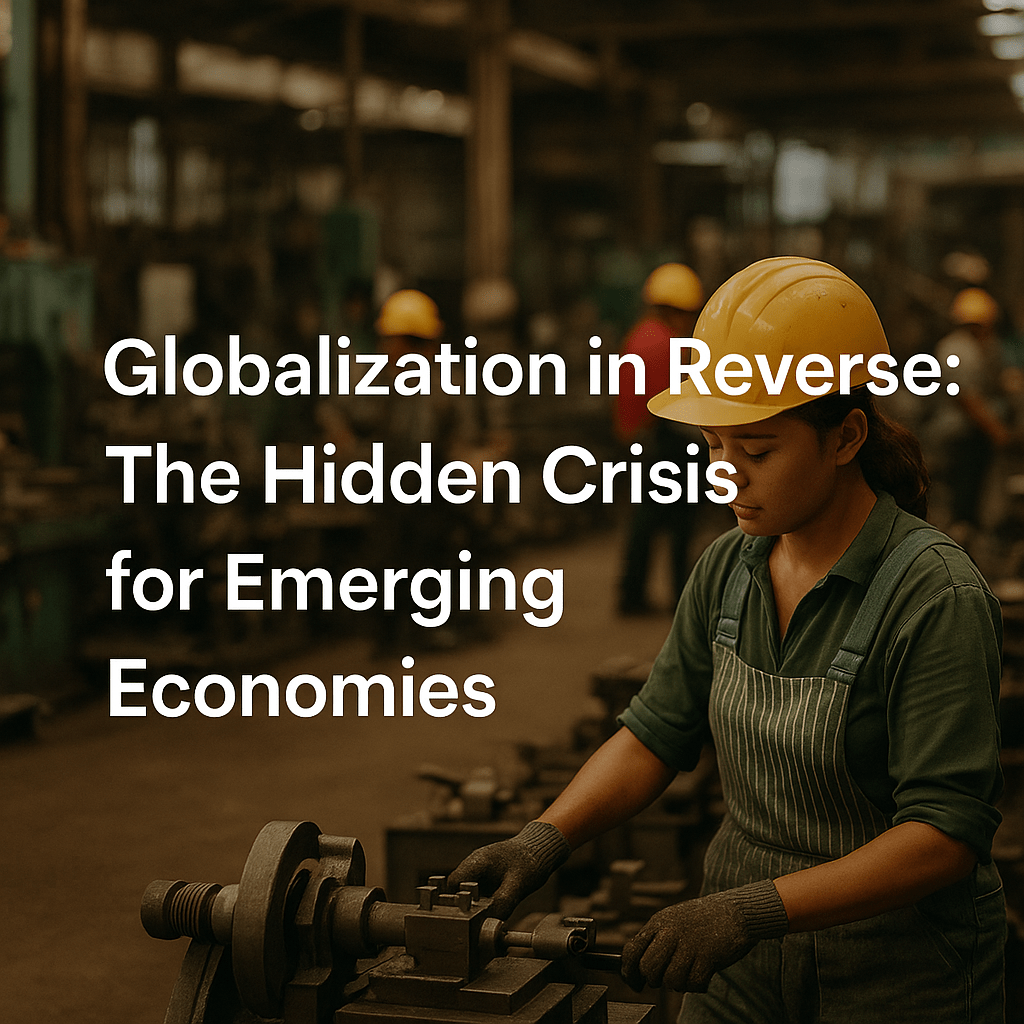
For decades, globalization was hailed as the tide that lifted all boats. Export-led manufacturing turned countries like Indonesia, Vietnam, and Bangladesh into rising stars, pulling millions out of poverty and swelling the ranks of the middle class. But today, we are witnessing a dangerous reversal—a process that I call “deglobalization by stealth.”
Factories are closing not because of inefficiency alone, but because of shifting fault lines in the global economy. Protectionism is no longer an exception; it is fast becoming the norm. Trade wars, tariff walls, and strategic decoupling have rewritten the very rules of global commerce. What makes the crisis sharper is that this reversal coincides with two equally brutal forces: weakening demand in developed economies and the relentless expansion of low-cost Chinese exports that undercut smaller producers.
The consequences are far from abstract. When Indonesian or Bangladeshi factories shutter, it is not just an accounting loss—it is a social earthquake. The middle class, once celebrated as the “stabilizing force of democracy,” is shrinking. Youth entering the labor market find themselves disillusioned, facing a reality where opportunity is scarce, and economic mobility stalls. This disillusionment, if left unchecked, can easily translate into social unrest, populist politics, and a retreat from liberal institutions.
Here lies the paradox: for years, global institutions urged emerging economies to integrate, specialize, and depend on global markets. Now, in a climate of economic nationalism and geopolitical rivalry, the very same model has become their vulnerability. Emerging economies are stuck in a precarious trap—too globalized to insulate themselves, yet too small to shape the rules of the game.
The bigger critique is that policymakers in many of these nations remained complacent, relying excessively on the export-manufacturing ladder while neglecting domestic demand, innovation ecosystems, and social safety nets. In other words, they bet everything on globalization’s permanence, and now they are paying the price for misreading history.
As the world drifts toward fragmented blocs, the question is no longer whether globalization is reversing—it already is. The real question is: Who will bear the cost? From Jakarta to Dhaka, the answer is becoming painfully clear—it is the workers, the youth, and the fragile middle class that once embodied hope.
Perhaps the lesson is sobering but necessary: globalization was never a guarantee of stability. It was always contingent on politics, power, and shifting interests. And now, as those foundations crack, emerging economies must urgently rethink their development playbook—before the promise of prosperity collapses into disillusionment. #Globalization
#Deglobalization
#EmergingEconomies
#MiddleClassCrisis
#Protectionism
#ChinaCompetition
#YouthDisillusionment
#TradeWars
#EconomicNationalism
#SocialUnrest.
 "Connecting communities, empowering nations: Unifying the Regional and Global Economy ."
Leave a comment