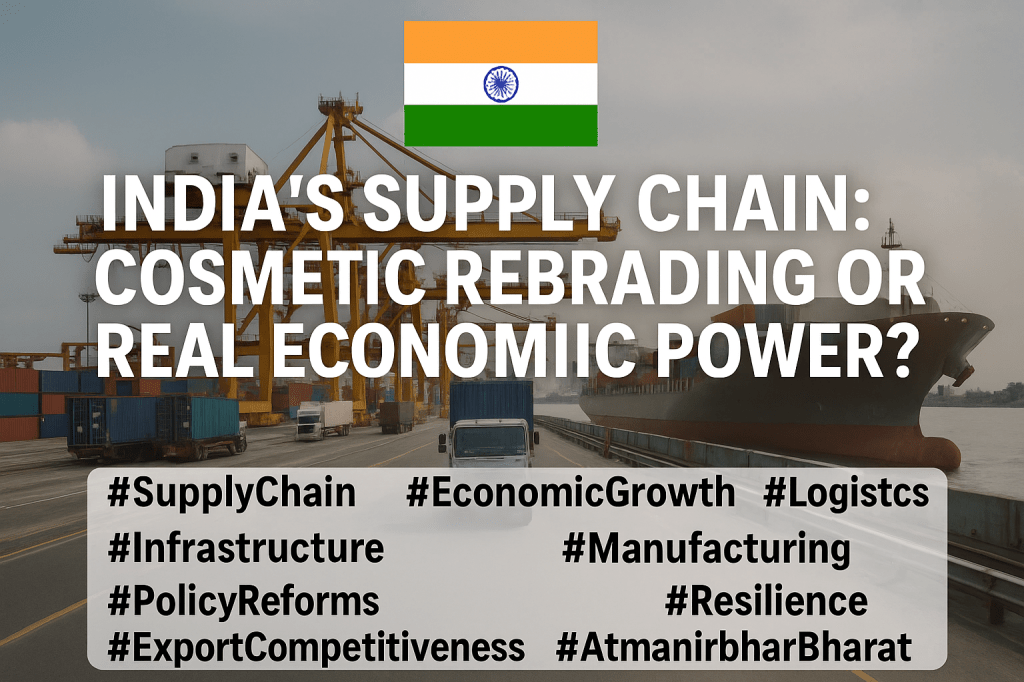
India’s much-touted rise in the global supply chain looks impressive on the surface, but beneath the headline optimism lies a tangled reality that deserves deeper scrutiny. Celebrated as the “China Plus One” alternative, India is being billed as the new darling for multinationals thanks to its cost competitiveness and vast labour force. Yet the ground truth reveals formidable structural barriers—logistics bottlenecks, unreliable infrastructure, and policy bureaucracy—that impede India from genuinely seizing the moment and creating robust value chains.
Hidden Dependencies and Fragilities
Despite government incentives like Make in India and the PLI scheme, India’s manufacturing boom remains deeply dependent on imports of critical raw materials and components—especially from China. Recent Chinese curbs on minerals and rare earths have exposed India’s vulnerabilities, threatening everything from electronics and EVs to the defence sector. Any serious decoupling remains aspirational at best; until domestic extraction and processing scale up, India risks trading one form of dependence for another.
Short-Term Gains, Long-Term Challenges
India’s 8.15% GDP growth and a flurry of foreign investment are encouraging, but the real winners from global supply chain shifts are select sectors, not the broader economy. Multinationals still view Indian industrial capacity with caution: bureaucracy, transport inefficiencies, and inconsistent policy environments make India a challenging destination beyond low-value assembly operations.
Global Power Games and Domestic Impact
India’s supply chain narrative is still shaped as much by international political rivalries as by indigenous innovation. Trade realignments are a response to tariff wars and Western geopolitical agendas—not organic market decisions. Until India solves the foundational issues and transitions from being a stop-gap subcontractor to a source of innovation, its supply chain “success” risks being more cosmetic than transformational.
 "Connecting communities, empowering nations: Unifying the Regional and Global Economy ."
Leave a comment