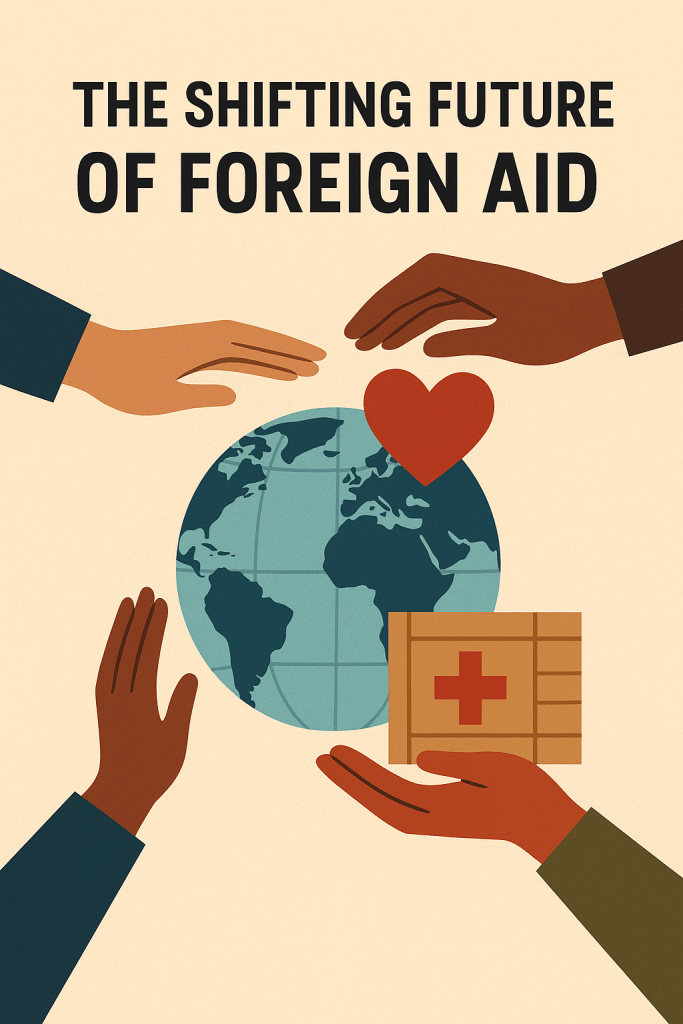
Foreign aid is undergoing a transformation that is both structural and strategic. The post-war model—where a handful of wealthy nations set the tone for global development through consistent, large-scale official development assistance (ODA)—is rapidly eroding. Declining donor commitments, rising localization, and the entry of new private and non-traditional actors are shaping a more fragmented and multipolar aid landscape.
Declining Commitments from Traditional Donors
Major donors such as the United States, Germany, France, and the United Kingdom are scaling back their aid budgets significantly. Projections suggest that by 2025, global ODA could fall by 18% to 29% compared to recent years—amounting to a reduction of roughly $40–$60 billion annually. These cuts are not just accounting adjustments; they represent a structural contraction in the resources available for development and humanitarian relief. The immediate impact is already visible in sectors like food security, healthcare, and emergency response, particularly in vulnerable regions.
Shifting Priorities and Geopolitical Realignment
Rather than being driven primarily by global development goals, aid allocations are increasingly shaped by donor domestic politics and strategic interests. A notable example is the disproportionate redirection of funding toward Ukraine in recent years. While geopolitical priorities are not new in aid politics, the current shift is more pronounced, suggesting a move from the logic of collective humanitarian responsibility toward targeted geopolitical influence.
Localization and the Rise of Domestic Ownership
As donor contributions shrink, local governments, NGOs, and philanthropic networks—especially in emerging economies—are stepping into the gap. This trend toward localization aligns with long-standing calls for aid to be more responsive to local priorities. However, while this shift enhances sovereignty and self-determination, it also raises concerns about whether domestic funding capacity can match the scale of global development needs, particularly in the least developed countries.
Private Sector and New Funding Models
The vacuum left by shrinking state contributions is being filled by philanthropic foundations, impact investors, blended finance models, and corporate social responsibility initiatives. These actors bring innovation, speed, and in some cases, larger-scale resources than traditional donors. Yet their growing influence introduces new governance challenges, including the risk of fragmentation, uneven access, and reduced accountability in the absence of strong international oversight.
Risks to Humanitarian and Essential Services
Cuts in donor funding are already threatening core humanitarian functions. Sudden reductions in U.S. foreign assistance, coupled with the closure or downsizing of agencies such as USAID programs in certain regions, have had cascading effects. In many fragile states, foreign aid underwrites basic public services—from vaccinations to school meals—and its withdrawal can lead to immediate and severe humanitarian crises.
Implications for the Sustainable Development Goals
The decline in ODA widens an already significant financing gap for the Sustainable Development Goals (SDGs). Local actors, while increasingly important, cannot bridge this shortfall alone. Without substantial alternative financing or innovative partnerships, many global development targets risk slipping out of reach.
Governance, Accountability, and the Investment Shift
As funding sources diversify, governance structures and accountability mechanisms will need to evolve. The emerging paradigm is moving away from a “charity” model toward one centered on investment, resilience, and sovereignty. This could improve long-term sustainability, but it also risks sidelining the most vulnerable communities if financial returns become a dominant priority.
Possible Futures: Fragmentation or New Coalitions
The trajectory of foreign aid could follow several paths. In one scenario, continued funding declines and political fragmentation lead to a breakdown of global solidarity. In another, strategic public-private partnerships and regional coalitions emerge to compensate for reduced Western dominance. Some niche donors—such as Japan, South Korea, and Italy—may selectively increase their contributions, targeting areas of national interest or regional influence.
Foreign aid is not disappearing, but it is being redefined. The traditional model of donor-driven development is giving way to a complex web of localized initiatives, private financing, and strategic geopolitical investments. While this evolution brings opportunities for innovation and regional self-reliance, it also demands bold reforms, adaptive governance, and renewed global cooperation to prevent the erosion of hard-won development gains. The coming years will test whether the global community can balance innovation with accountability, sovereignty with solidarity, and investment with inclusivity.
#ForeignAid
#ODA
#Localization
#PrivateSector
#Geopolitics
#SustainableDevelopmentGoals
#HumanitarianCrisis
#Accountability
#PublicPrivatePartnerships
#GlobalSolidarity

 "Connecting communities, empowering nations: Unifying the Regional and Global Economy ."
Leave a reply to mediarteducation Cancel reply